Hohepa Hawkes Bay – the Clive site

Front page news today in the Dom Post is Neil Kirton’s story about the Hohepa Hawkes Bay site at Clive – the site of the adult community (as opposed to the children’s community and the one Hohepa School at Poraiti). The good news is that the site’s vulnerability, accelerated already by climate change, is now being taken seriously, and it is intended that residents will no longer live or sleep there.

So that’s the good news, now made public. But – and there are several buts – did Neil not consult with anyone before going public? Comments are disabled for the article – probably a good thing. Firstly, we don’t talk about disabled people now. They are perhaps folk with “special needs”, who need a bit more care than the average person to look after themselves and be socially acceptable; but they have extraordinary abilities, many of which we look upon and admire. These folk are often very artistic – they do wonderful painting, weaving, sculpture, woodwork, crafts, and are usually very musical, often displaying extraordinary talent. They love to sing and dance. One of the great advantages of Hohepa is an acceptance of them, not wishing to “normalise” them.
They are not materialistic, not competitive, are very tolerant, and enjoy being alive. Most of the people involved in their care admire these residents and their tolerance and levels of enjoyment, while being able to cope with what are at times challenging behaviours.

Next, while the Clive site is termed a “haven”, which is the way many of us see it, there is no mention of anthroposophy in the story! It would have been anthroposophical, by the way, for Neil to have consulted before going public in this manner. Anthroposophy underpins the way things are done here – the philosophy of “curative education”, the wonderful organic food (before this became so important), the celebration of the changes in the seasons, and all aspects of natural beauty, and the “back to basics” principles of the rhythms of life.

The Hohepa community at Clive goes back a long way, to the gift of Sir Lew Harris, who, I gather, was largely responsible for Hohepa owning this beautiful site.

And it is a beautiful site: peaceful, rural, with large, gracious trees, lawns and gardens; places to walk – you can walk along the stop banks; the homes are great – each one a household, so that you get the feeling of being in a peaceful, well-regulated community, rather than an institution. The Hall has been a wonderful venue for many events; the workshops, the shop, and the offices with a separate boardroom are all appreciated too. The iconic site here has been a wonderful venue for the Hohepa fair and Christmas markets, where Hohepa has welcomed the support of the wider Hawkes Bay community.

This site has been vulnerable for a long time. There was a major flood in 1867, but there have been several since then. Ever since Vicky went to Hohepa School in Poraiti in 2006 we have watched the Hawkes Bay river levels with some anxiety, especially during heavy rains. Even during a drought the Clive River always looks very full. People have talked about camping at Clive only to have to leave quickly when rain made camping dangerous. Then in addition to the flooding threat, there is also the risk of abnormally high tides, and storm surges. We have seen how there can be high waves at any coast, in fine, calm weather, apparently without wind to raise their height. While all of New Zealand is vulnerable, and especially the Napier region, and we accept that, one wouldn’t want any of our residents at Hohepa Clive to drown. That would be a ghastly way to go. They need protection against such vicissitudes.

In 2017 the aftermath of Cyclone Debbie struck New Zealand. It was a tough season: there had been major hurricanes in the US, with Harvey causing severe flooding in Houston; Irma causing major damage to the US, and Maria causing devastation in Puerto Rico (and other places). We were very concerned about our eldest son John and his family in Atlanta, where there were several trees down, blocking roads, and schools closed, in addition to the wild weather.

But Debbie was local, and was predicted to strike Auckland. In actuality, it caused major flooding in Edgecumbe, and struck Hawkes Bay with such severity that there were power cuts and several trees down, causing roads to be closed. So the people at Clive could not have (been) evacuated, even if they’d wanted to, never mind that the bad weather was not expected to hit Hawkes Bay. Some Aucklanders felt cheated – I think they got off lightly! This event really brought home to us how dangerous the beautiful site at Clive is now.

Of course you can’t replace the Clive site, with all its history, and memories, of life, death, and festivals celebrating the rhythm of life and the seasons; but you can do the same wonderful things at another site, and make that iconic, too. I am grateful to be a part of this welcoming community.

On the Buses (in Greater Wellington)

Almost one year ago the Wellington Regional Council changed the public transport systems. We had come to terms with the way the system worked, but it had to change. I firmly believe that the “genius” who devised these changes has never traveled on a bus. Dave Armstrong memorably called it the “busastrophe”, although the train system was affected too. I was directly affected: the bus that goes along my street, and stops at the nearest bus stop, no longer goes beyond Johnsonville. I have to change buses to go into town. However I was determined to get to grips with the new system, and not join the crowds of complainants. That was then!

They changed everything – the timetables, the routes, the buses themselves, made 100 bus drivers redundant, and then had a shortage of bus drivers so that some services couldn’t run. They introduced hubs so that instead of taking a bus to one’s destination, one would have to take a bus to one of the new (unfinished) hubs, find the correct bus stop for the remaining journey, change buses, and pay again. They also changed the payment system. They had worked at great legal cost to contract a company to run the system at the lowest cost, achieving savings by – you’ve guessed it – reducing pay, taking on newbies, and then not giving them decent rest, toilet or meal breaks. Many passengers felt sorry for the drivers – the ensuing chaos was certainly not their fault! They were new to driving buses, and didn’t know the changed routes. We passengers missed the familiar faces of former drivers, who for the most part were kind, cheerful and thoughtful.

Recently legislation came into effect providing mandatory breaks. We were advised that to allow for this, some services would be cancelled.

Those of us with Super Gold Cards generally don’t have to get to work on time, so it doesn’t matter so much for us, but the frustrations of those employed, to now have to catch two buses, to see full buses drive past them, or not turn up at all, must have been immense. Never mind that people should be using public transport instead of driving their cars to work, many of them drove to work in order to be sure of getting there at all.

New drivers also did not know the new routes, as they attempted to drive big new double-decker electric buses around Wellington’s many notoriously steep and narrow streets. Shortly after the change, there were Metlink staff on the buses to indicate the routes that should be taken. I guess it’s good that new double-decker buses are electric, and not burning fossil fuels; are they quieter? It’s very hard to have a cell phone conversation on the bus.

Apparently buses no longer stopped at Wellington Regional Hospital (a common destination), or Wellington Zoo. I gather this has changed now.

The hubs were not ready, so in addition to the confusion of buses operating randomly, and the welcomed electronic sign boards often telling nothing, or fables, the stops shifted. There are three official bus stops in Johnsonville, a great many parking spaces have been removed, and one has to cross Moorefield Road – sometimes. The bus stops always seem to be in windy spots. I guess the WRC can’t help that, but the shelters should offer more shelter, as well as seating. The Johnsonville Hub remains difficult to get to – one takes one’s life in one’s hands, looking for a pedestrian crossing, crossing the busy car park, often in the wind, avoiding reversing cars and trucks.

There’s another beef, too: the electronic sign board doesn’t tell which buses go from which stop, so its usefulness is limited. If a bus doesn’t turn up, it disappears from the signboard, after previously showing as Due. This has a certain logic, but how does one know if it’s late, or cancelled? Also, the Number 1 bus can go to Churton Park, Grenada Village, or Johnsonville West. The number 19 loops between Johnsonville and Churton Park, but always says it’s going to Johnsonville, which is technically true; it goes via Churton Park, using a different route from the number 1 to Churton Park. Confusing? You bet. This loop functions half-hourly, so coming from the CBD, one tries to coordinate at Johnsonville and catch the 2:50 pm bus using one’s Gold Card, sometimes unsuccessfully.

The routes are seemingly random, too. One bus to Johnsonville climbs up Onslow Road, going along Homebush Road and through Khandallah, then through Broadmeadows, coming to its destination at a new stop opposite the Johnsonville Railway Station (yes, one has to cross the road, there).

Another bus to Johnsonville takes the Newlands off ramp coming up the Ngauranga Gorge, and does another “scenic trip” through Newlands and Woodridge, thus effectively making it impossible to catch the 2:50 pm loop service to Churton Park. One time a bus came to Johnsonville from the CBD very quickly; maybe this was a one-off. Another time I caught a number 1 to Churton Park, only to have it swing up Stewart Drive towards Newlands. The driver apologized for going in the wrong direction, when this was pointed out to him.

Anyone over 65 holding a Gold Card turns into a pumpkin at 3 pm in Wellington on weekdays, meaning one must board a passenger service (why do I use that old-fashioned word?) before 3 pm if it’s going to be free.

Along with all the changes, the use of a snapper card is strongly encouraged. This means that those using it must log on and off. It’s probably faster overall; the driver seldom has to take issue a ticket, and indeed it’s preferable to have the correct change, if this is necessary.

It used to cost $2 to travel from Johnsonville to Churton Park, now it costs $2.50, if you travel after 3 pm. Recently I saw an older person using a snapper card for after-hours travel, and I decided to get one myself.

When I investigated this, I found that not only were snapper fares cheaper than ticketed fares, the fare was half-price for Green Card (disability) holders. To make this happen, you had to go to the WCC Service Centre next to the Wellington City Library, only to be re-directed (thanks, earthquake engineers), to the relocated office in Manners St, next to the new library site.

The woman there told me to go to the convenience store across the road and buy a Snapper card, then go to Aon House (12th floor) to the Snapper centre to have the Green Card effect applied. I did as requested, finding that you pay $10 for the card, plus whatever balance you would like. I figured this was still worth while, and set off for Aon House. After looking at the street numbers, I figured out that the Aon Centre was at the other end of Willis St, and headed off down that way to the “skyscraper” formerly the State Insurance Building, and before that the BNZ Centre, otherwise known as Darth Vader’s pencil sharpener.

I played around with the lifts there. I pressed 12 as indicated, and the indication was lift E. But I could only see lifts A, B, C and D. I went round to the other side of the cavernous lift block, and there were four more lifts. I took lift E as instructed, but it wasn’t evident which floors it stopped at – they all looked the same! I got out at the wrong level, and had to wait for lift F to take me to level 12. Once there, I walked to the Snapper centre, rang the bell, and sat down and waited. A very helpful young woman eventually came to my assistance. I found that in spite of paying $20 for my snapper card, the value on it now stood at $9.75. Where did that 25c go? Eventually I won, I think, and am now the proud owner of a snapper card, should I need to use it.

The composition of travelers is interesting. Before the changeover, the buses were well patronized by elderly folk, who stayed away in droves while the new system bedded in. However the number 1 buses often seem empty, except just occasionally when they’re not! There is a very full bus from the CBD to Johnsonville just before 3 pm, when seats are hard to find. Usually the drivers are very patient and polite, waiting till you’ve sat down before taking off, although they tend to swing around corners. One time I caught a number 19A from Johnsonville, which was very full. I suspect it had come from town.

Many buses are differently configured. Apparently the authorities removed seats so there would be more room for standing passengers! But there is nothing much to hold on to, especially in the front half of the bus, sometimes even no handholds in a rail attached to the ceiling, and few poles. Some of the luggage spaces have been removed. Many of the seats reserved for elderly or disabled or pregnant customers or mothers with pushchairs are folding ones. Huh? It’s an achievement to catch the right bus, up often steep steps; having achieved that, one doesn’t expect to have to wrestle with the seat! And many of us prefer to be seated looking forward, not backwards or sideways.

On the double-decker buses, one tends to sit behind the stairwell, facing forward, but this has the disadvantage of being a cold spot. One wonders why they have air conditioning on in winter? I aim to sit near the back door, if there’s time, and room, so that I can get out easily, but there tend to be few seats available. One doesn’t want to climb stairs, either to sit upstairs, or to the back or immediate front of the bus. Ultimately, one doesn’t want to fall over!

One of my gripes is the changes to the Porirua buses. One used to be able to catch a bus – 230 or 231 – from either of the stops outside Pataka into Johnsonville or Wellington via Johnsonville. Now you have to go to the Porirua Station – another cold, windy spot. Of course, one can walk between Pataka (with a library, a nice cafe, clean restroom, gift shop and galleries), North City Shopping Centre (with Farmers, several good cafes, and clean restrooms), and Porirua Station, but if the weather’s ghastly you’d prefer not to.
The Airport Flyer is an interesting case. Despite its popularity, the number 91 bus is not part of Metlink (one can only wonder why not), and does not use the snapper card. However the buses have air conditioning (great in summer), a screen that actually works and tells you the news highlights and the weather, and the drivers are very helpful. They take the Gold Card too, of course. I made my way to Queensgate Shopping Centre in Lower Hutt (and back) using public transport, within the off-peak Gold Card hours. Spoiler alert: the 91 bus goes up Molesworth Street and onto the motorway from there, so it’s best to catch it from where it stops in Lambton Quay (outside Farmers). It comes back through the Wellington Railway Station bus stops.

I need to put in a word here for the suburban trains. Generally they provide great service, being clean, busy but uncrowded, with welcoming conductors. They do give you a ticket, although the ride is free. Under the changes, services are usually 20 rather than 30 minutes apart, a welcome change.

This brings me to the hubs. While Wellington Railway Station is a cold and draughty spot, it does have quite good restrooms and a New World Supermarket. It does a good job of providing directions and safe and good access via subway to the various bus stops, for example, there is an elevator to the main bus stops, and a lift to the Northern Suburbs bus stops, where you can sit inside, out of the wind and rain.

I wish there was a better Johnsonville hub, where one could walk safely to the Railway Station, or the various bus stops: it would be helpful to have a single view of how best to get into town. Having said that, buses are probably more frequent, and you can go right to Courtenay Place on most.

I have downloaded the Metlink app on my phone, and try to remember to look up and see what disruptions there may be on today’s route. I find the timetables useful, but the “plan” your journey feature really annoying. It doesn’t work for me, despite my repeated attempts to use it.

To their credit, I believe Metlink have held community meetings (in the evening) and have tried to address the timetabling and capacity problems. But many buses have been cancelled, seemingly without warning, and I believe taxi drivers have done well out of the changes! We keep reading that there is a driver shortage, on buses and trains, to which one can only wonder why previous drivers were made redundant, when they are still such a crucial part of public transport here.

There has obviously been a huge use of technology in these changes. This is fine, when it works to inform people what’s happening!

I am extremely happy to have my Gold Card, indeed I like to use it and venture forth to explore Porirua, Petone and Lower and Upper Hutt, as well as the Wellington CBD, but there are a number of challenges in terms of the hours one can use it (how about 10 am – 4 pm?), and accessibility, which is just awful. And, as I said earlier, the shelters could provide more actual shelter, as well as seats! Surely, if use of public transport is to be encouraged, it must be pleasant and efficient to use, and safe and easy to get to, as well.

I am grateful for the Gold Card, which encourages me to explore, go to the one of the libraries, by a cup of coffee, and perhaps explore the sales. I’m sure it helps the retail and hospitality sectors too. It’s good to get out, whatever adventures one may have along the way.
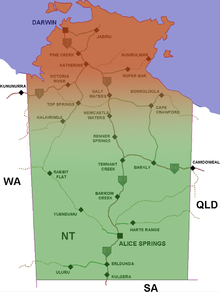

Top End Wedding Review

†††

We recently saw Top End Wedding, and I have to admit I really enjoyed it. The script is well-written, and it’s directed by the same person as The Sapphires, another movie I enjoyed. It is nice to see a good movie (not heart-breaking, like Rabbit-Proof Fence, or the recent movie starring Sam Neill), with an Aboriginal lead.

It’s very Australian, and Aboriginal, and has a welcome lack of alarmingly thin bodies and expensive makeup. It’s nice to have a sense of reality, and real people taking part, and it helps that the lead actors are not only believable, but quite attractive. It’s also quite irreverent. The female lead is half-Aboriginal.

This is of course a rom-com, although as my friend says the setting (the vast Australian Outback) is an important element to the story. Of course there are various plot-holes, where one stretches the imagination, but to me one of the main ones is the sheer distance between places. There is a real fear of insufficient water, not enough fuel, and breakdowns, to say nothing of heat exhaustion. But let’s not let geographical distance get in the way of a good story.

I don’t think I am ruining anyone’s enjoyment by pointing out that the action starts in Adelaide, moves to Darwin, (I’ve been to both of those places), and then to Tiwi in the Tiwi Islands. Does anyone else remember a rather nice TV series set in the Tiwi Islands, a medical drama starring Toni Collette? In reality, one is charmed by the singing and dancing, but surely most young people would want to leave?

In Adelaide recently, we went to the Museum and Art Gallery, and I was very impressed by the Aboriginal artifacts on display, their intricacy,and people’s stories. In fact, I was greatly heartened by the entire exhibition.

In this movie the leads are quite different people, but are attracted to each other, and one can see why. They both find each other physically attractive (what’s not to like?) and while he senses her commitment and dedication to her work and her family (how about sending some of that my way?), and wants some of that, she admires his kindness and acceptance (in spite of them both being lawyers!)

There are plenty of challenges, of course, along with the humour and witty dialogue, which help to disguise the pain (of the relationship breakup between Lauren’s parents) and grief for Ned’s father’s sudden death.

But there is healing too, and in any good wedding, people put pain aside and have a good party. The interaction between Lauren’s mother and her own parents comprises several profoundly moving scenes, including Lauren’s role in the reconciliation.

The journeys are fascinating, although to my mind they don’t really capture the distances involved. Lauren and Ned have several adventures together but Lauren is very fortunate to find her mother eventually, in what is still a vast landscape. There is a very funny scene at the airport when Lauren tries to ring Ned and he fails to answer the phone. When the conversation does eventually take place, somehow it is on speaker-phone and everyone listens and claps. So, shades of Crocodile Dundee, perhaps, another famous Australian movie. This film also went to Kakadu National Park, although I don’t recall much Aboriginal presence in it.

That night, I heard the surprising election result – a conservative government had been returned to power, this in spite of polls and many Australians admiring Jacinda Ardern’s response to the tragedy in Christchurch, and a poll naming her as preferred Prime Minister of Australia. One is reminded again that most countries have both wonderful and terrible attributes. Why is it that right-wing governments almost always narrowly win elections, when so many of us have a social conscience, and are increasingly alarmed at the disparity between great wealth and huge poverty?

The wedding of Ned and Lauren is the crowning moment of the film. It does take place, in an against-all-odds moment, with singing, dancing and great spirituality. One wishes these two a good life. They certainly took some risks, but their love and their wedding make for a great story. They should have some interesting conversations together!

Auckland Revisited

Familiarity – and a sense of dislocation

We flew to Auckland on Tuesday afternoon. We were only just in time for check-in, and by the time we reached security, the first boarding announcement was being made. We were seated together at the back of the plane.

This was an Airbus 320D. It seemed to us that the plane had been stretched, length ways, and the seating was very tight indeed. we are not big people! The safety video featured beautiful people and an amazingly athletic young man.

When we got to Auckland we picked up our rental car, a Hyundai Sonata, and drove to check in to our motel – one of many on Great South Road in Epsom, all of them busy. We were across the road from Dilworth School. The weather there was much like Wellington: a cold wind, flashes of sunshine, and showers of rain – probably more frequent than in Wellington. The school’s church featured an enormously steep roof, reminiscent of a 1960’s style of building.

Our motel was very small – there was a bedroom and bathroom, with a small table and two chairs but no easy chairs, and no sink or microwave. There was a small fridge, a hot water jug and toaster, and minimal crockery.

The bathroom, also tiny, held a shower over a nice bath, and a shelf and a duchess unit – surprisingly, there was room to put our sponge bags. There was no luggage rack, but there were removable hangers in the wardrobe, and good bedside lights, and bedside units with drawers. There was an overwhelming smell of disinfectant – to kill bed bugs, I wondered?

What it did have going for it was a comfortable bed, a heat pump, ample hot water, and a television set with all channels, including Soho. So, barring the smell, and the difficulty in washing mugs and glasses, we were warm and comfortable. Despite the heat pump, there was a lot of condensation each morning we were there. We were thankful for windows that opened, and sunshine most mornings. The traffic noise wasn’t at all bad. There was also a power converter – a boon for overseas travelers.

Auckland is so different from Wellington. It has places of great grace and beauty – St Matthew’s in the City, the Domain, the Art Gallery, the Museum, the Winter-garden, the Harbour Bridge, the Civic Theatre, and many attractive parks, hills and beaches; how then to explain the brash newness and ugliness and the “fly by night” feel of so many of its buildings? It seems to me that the Sky Tower demonstrates this quality of the city well – it’s grandiose but not quite tall enough for its large spire.

The first night I wanted to go to an Italian restaurant we had previously been to and enjoyed, but it was no longer to be found in Greenlane. Instead, we went to another one in Manakau Road. It looked dark and we wondered if it was open, but it was very busy. Nevertheless, we were welcomed in by a very nice Maori woman. We enjoyed the pesto bread and our meals there. It seemed to be run by Maori and Chinese. and, sadly, there was no Italian opera playing, so one could hear others’ conversations, even if one didn’t want to.

Later that evening, back at the motel we watched Chernobyl on Soho, and reread the section of the book Midnight in Chernobyl to compare notes. A dramatisation is always different from a book, but both were very well done. I thought again how nuclear was our own climate change crisis, when many of us were aware of the enormous dangers that nuclear energy posed, while some tried to spin it as a “clean” source of energy. It also seems to me that there are significant differences between creating nuclear weapons (as a one-off, albeit potentially very destructive), and using nuclear energy on a permanent basis as a source of power. Now that climate change threatens disruption to sites of nuclear power plants with flooding and sea-level rise, the danger seems even greater. The accident at Chernobyl reminds us of the unpredictable nature of the many risks involved, as well as the long-term nature of any nuclear contamination. It really messes up human beings as well as the environment for a very long time, way beyond our own and our descendants’ lifetimes.

The next day we visited our friends nearby. We had a nice morning-tea with them, and arranged to return that evening.

We had lunch at Hello Friends + Allies, a good choice. JD had a salad (an Asian Coleslaw) and I had dumplings. We had been there with our son 18 months earlier. While we were there, JD had a busy spell on his phone.

We spent the evening with our friends, and then met them again for morning tea the next day. We both had a good chance to talk to them, both together and separately. It was wonderful to “catch up” and see them again, more than once. With old friends, you just carry on from last time – our relationship is a kind of continuum. Long may it continue. There are many years of shared experiences – raising children, welcoming grandchildren, wonderful trips to Australia and abroad, and now, confronting different challenges – health, relationships, spirituality, and finding new ways of living.

That afternoon, we went to Takapuna. We discovered there was a new tunnel on the motorway on the way to the Harbour Bridge. We visited the BDO building – another monstrosity, in my view! But everyone was very helpful.

Afterwards I wanted to check out the shops – I had remembered the shops at Takapuna as being quite attractive, including a very nice bookshop. But either they had changed, or I was looking in the wrong place. There were lots of cafes and ethnic eateries, but few shops, and no clothing or craft shops. I did see a beautiful Wallace Cotton store, light, bright and sunny, next to a rather sad Paper Plus store, but I was not even tempted to buy anything. JD remarked later that probably most people bought stuff online nowadays.

I sat outside reading the Herald while waiting for JD, but it was quite cold and windy (after being sunny earlier on), so I had a kiddie-sized Movenpick cappuccino ice cream to enable me to sit down inside, while still attempting the Code Cracker.

We drove back to Epsom. In Auckland, sometimes the traffic moves quite fast, at other times it seems grid-locked, when you wouldn’t expect it to be – not peak hours, or school-closing hours.

That evening we went to another restaurant in the Greenlane area. We ordered two entrees and a bread platter – a wise choice. This restaurant didn’t look open, either! It was quite cold there, but interesting – they had a set of Arthur Mee’s Encyclopedia.

The next morning we decided there wasn’t really time to go into the city to the Art Gallery, but instead we got to the Airport really quickly – a surprise. Still, it’s good to have plenty of time and not be in a rush. We flew back on another Airbus 320, just as tight inside, but this time with a personal entertainment system. Sadly, you had to bring your own headphones to use it. Mine were backed away in my stowed luggage.

What a strange place Auckland is – a collection of cities, really. It was disconcerting to find so many of the places we remembered no longer there, in spite of recognition and familiarity with others. Among many visits to Auckland, I remembered in particular the time I walked from Auckland University to our house in Greenlane, and the night I spent there watching Princess Diana’s funeral on television. The traffic noise, and the occasion, made sleeping difficult. That afternoon the National Youth Choir had sung Britten’s War Requiem at the Holy Trinity Cathedral in Parnell. It seemed strangely appropriate.

Easter Traditions

We don’t have any particular Easter traditions. Back in the day, there were Easter eggs (usually marshmallow filled), and Hot Cross Buns. I remember one time going to hear Bach’s St Matthew Passion. Sometimes we went to Taupo to see JD’s parents. I respect the fact that it is a very Holy Time for many Christians. When the boys were growing up there were usually concerts.

Although I’ve looked at Simnel Cake recipes, I’ve never made one. I have searched out the best place to buy buns, and realise it is quite subjective, really. I was never any good at making them and gave up after a while. What’s in them, anyway?

In reality, it is now a time to be got through. It is school holidays, and the local cafe is closed for statutory holidays. One stocks up with library books. The Long Easter weekend (with Good Friday and Easter Monday being statutory holidays) is taken here more seriously than Christmas, with the local supermarket being closed for Good Friday and Easter Sunday. There is no Christmas Eve late night shopping or Boxing Day sales, although there is still wrangling over shopping on Good Friday. One doesn’t want to be on the road at such a busy time. Many cafes, if open, have a surcharge.

A few years ago Easter Egg hunts were a thing. Now many children receive Easter baskets. I guess I am relieved that this is no longer expected of me by my children!

But we do like to speak to all our children at Easter time. This did not go so well this year. We tried to speak to our daughter on Easter Sunday. She said no; her carer she had been to Sunday Service and was busy making a cup of tea. It was suggested we try again later.

When we rang again, she was watching “The Sound of Music” and again wouldn’t speak to us! I guess a lady has the right to say “No”, but JD and I were both disappointed. She had seemed very pleased to see us the weekend before. I always send her something special for Easter.

JD sent a message to our eldest son to ask if it was a good time to ring. It wasn’t convenient. Another son and his family were off to Taupo. JD contacted our youngest son via text, and exchanged messages before he and his wife caught a train.

One son came to visit bringing his daughter. That was a big thrill. It was great to see them both.

So much for Easter traditions! I come from family who although deeply religious, regarded Christmas and Easter as pagan festivals, and did not celebrate them. They celebrated birthdays – back in the day having chicken for dinner was a birthday treat, and I could choose what type of cake I would like. Cynthia and her parents would come to dinner. It was all quite low-key compared to nowadays. I guess I am conflicted now. But I do like to celebrate Christmas and Easter in my own rather understated way. They are special to me, for various reasons.

There are many special dates that we don’t uphold, such as Valentine’s Day, and Halloween. We don’t make a big deal of Mother’s Day or Father’s Day. I hate to see these so commercialized. Mother’s Day is special to me because my eldest granddaughter was born on Mother’s Day in 2012. Not everyone has a mother or a father alive who was kind to them. Birthdays and wedding anniversaries are important, as are Christmas and Easter. Anniversaries of loved ones’ deaths are becoming important.

It’s good to have contact with our loved ones at these special times.


Memories of Notre Dame

How very sad it is to hear about the tragic fire at the Cathedral of Notre Dame. Thankfully, no one was killed there. How much I enjoyed the singing – quite beautiful and different. I remember its sense of permanence, of strength, and of great beauty and solidity.

This has brought back memories of our three visits to Notre Dame, and visits to other famous churches.

The first visit to Notre Dame was in January 1974, when you walked through the vegetable markets (Les Halles) in the Ile de la Cite to get to the Cathedral. We climbed onto the roof. The gargoyles were very scary.

In February 2010 we returned. This time our bags were screened, although entry was free of charge. Bad weather meant we could not climb the tower but we did see Le Tresor.

In July 2016 we came back again, but climbing the tower was now out of the question. An African priest said Mass. I like the way church is part of everyday life in Europe – church services carry on, people go in and out, you can sit down and listen and enjoy what’s being said. They turn the heating on! A friend of mine found it rather dark; for me, it is just there, recognizable, and beautiful. Afterwards we had lunch nearby, admiring the extraordinary exterior.

In 2010 we visited the famous Sacre Coeur at Montmartre, but to me it wasn’t as impressive as Notre Dame.

Back in our 1970’s trip we attended Mass at the cathedral at Toulouse, still in Latin, recognizable to Catholics everywhere, although the homily was in French. At a street market outside JD bought his maroon velvet suit (later worn by some of our boys). He could then wear the suit out to dinner – we had not realised, coming from New Zealand, how formal people were in England and Europe!

In Vienna we visited St Stephen’s Cathedral. What I remember best is the guard’s glee when, after visiting the Catacombs, we had to climb up a ladder and make our way through a trapdoor to get out!

In Milan we saw the famous Duomo, with the statue of Saint Bartholemew holding his skin.

In Italy we went to the Duomo in Florence (Firenze), where we saw one of Michelangelo’s Pieta, and we climbed the dome (for the first time). It was like an eggshell within another eggshell. Before climbing the stairs between the shells, you can walk around the base of the dome (inside) and admire the painted ceiling. What a beautifull place! And how nice to wander around in 1974, when most things were free. In 2010 a child kept jumping on the narrow walkway, which I found quite unsettling.

We visited St Mark’s in Venice in 1974. St Mark’s Square was windswept, but the almost deserted cathedral was quite beautiful, although we were both a bit disorientated and overwhelmed by all the ancient beauty and the history of it all. There were relics there – really!

We also saw St Peter’s at the Vatican twice, in 1974 and again in February 2010, home to Michelangelo’s Pieta of the young Madonna and her Son, Jesus. St Peter’s is vast. There are marks on the floor indicating how small other great cathedrals are, in comparison. The golden altar is very grand, and there are lots of entombed bodies. In 2010 we climbed the spire, but I found it very vertiginous, and was desperate to get down again. The Italians seemed to keep sending tourists up there, despite the cold, wind, and lack of space.

In Palermo in 2010 we saw yet more magnificence, and I kept getting the impression, after being repeatedly charged for everything, that the Catholic Church was very rich indeed.

We went to the small town of Monreale, and waited for the church to re-open, drinking wine and coffee at a cafe and trying not to flush the toilet with toilet paper!
This was one of the famous gold-decorated churches – another style altogether. I am so pleased we saw this. Then we saw the Norman Cathedral in Palermo, more gold decoration.

Have we had enough sumptuous churches, Madonnas, paintings yet?

At the end of our trip in 2010, between catching the overnight train from Palermo and going to Fiumicino Airport to begin our flight back to New Zealand, we visited a special church in Rome: Santa Maria della Vittoria, which housed the famous statue by Bernini, the Ecstasy of St Teresa. We had tried to visit this several times, and it was always locked. But now it was open – there was to be a service. They turned on the heating (you still had to pay 2 Euros for a light to be shone on the sculpture), but we sat down and enjoyed the matter-of-fact rendition of the Mass in Italian.

In London we saw Westminster Abbey, and Southwark Cathedral, which I had thought was the burial place of Geoffrey Chaucer, one of my favourite poets, on whom I’d done an Honours paper. He was also partly the inspiration for my son Geoffrey’s name. Since then I can find no record of Chaucer’s being buried there. But we did visit the Cathedral. At that time it was near a motorway on ramp, mixing beauty and ugliness in a very English way.

We also went to Canterbury Cathedral, twice – the inspiration for T.S. Eliot’s poetic drama Murder in the Cathedral where Thomas Becket was killed. A beautiful and awesome place. In 2010, it was distinguished by having a Starbucks outside.
We have also been to York Minster, twice – another beautiful church, although last time there were places we couldn’t visit because Mediaeval Morality Plays were being performed. The Rose window is lovely, and there is a statue of Constantine outside!
In Glasgow we visited the imposing Cathedral of St Mungo, with mauve stained glass windows, a necropolis nearby, and Blackadder Aisle.

And then there is Cambridge, England – the King’s College Chapel, with its distinctive choir, its Adoration of the Magi by Rubens, and its roof space. We visited this in 2010, climbed the stairs, and looked out over Cambridge and the River Cam. We also attended Evensong. In 2016 we visited the Chapel at Christ’s College, Cambridge – quite a small space, but the scene of many important events.

I also visited the Catholic Cathedral at Lancaster, together with Alfred. This too was memorable. In the UK one is constantly reminded of the sometimes bitter conflict between the Catholic and Protestant faiths.

Bear with me, I am almost done here!

In July 2016 we visited the Sagrada Familia in Barcelona. We were very fortunate to buy tickets to visit the Cathedral on our second day there. What a marvellous place! Light-filled, different, quite wonderful, and quite non-Catholic, to me. What a welcoming, embracing place! It is inspiring, and still unfinished, but amazing. The Spanish designers have been allowed to have their way in creating beautiful spaces.

And, on another note, we visited the Picasso museum in the Gotic quarter, and a church nearby, where there was a service taking place. I recognise the 23rd Psalm: El Signor es mi Pastore…

All cathedrals are different…in my view, God is not confined to church spaces, but many churches have a particular spirituality, and an atmosphere of peace and quiet and joy. In my dreams I will visit Notre Dame again, when it has been rebuilt.


A New Challenge

Suddenly, one evening in March, the central library closed. We were told that afternoon, so there was no chance for a final visit, no time to say Goodbye.

This presents an opportunity, I decided. Where else can I go to drink coffee, read magazines, browse and borrow books, use the restroom, in a warm environment where there are elevators and escalators, and the bus stop is near by? One is not rushed here – there is plenty of room, and plenty of time. The coffee and food aren’t always great, but the staff are cheerful (and helpful, sometimes), and one can linger, guilt-free. Unity Books is nearby, providing inspiration for new books to borrow.

So where can I go now? There must be a nice cafe, with seats with backs, and reasonable coffee…perhaps somewhere like Kaizen in Porirua?
I could go there by bus from Johnsonville, although the WRC in its wisdom changed the bus routes so that the buses to and from Johnsonville don’t stop outside Pataka any more. Now one has to walk to Porirua Station (about 20 minutes) – which is all right on a fine day, but not great when it’s cold, wet or windy.

Walking is usually a challenge in any city. While there are some walkways, pedestrian crossings are few and far between, and it does seem a tad dangerous to walk through a parking lot.

Perhaps I could check out the library at Tawa? The cafes there aren’t up to much. I had got used to WCL, come to terms with it, even had the seniors’ discount applied: they charge for renewals (you can only renew once!), for each day a book is returned late, and for reserves delivered to a local branch.

Outside Johnsonville Library the pedestrian crossing was removed. One must walk up or down Broderick Road to cross at a controlled crossing, an unpleasant chore if it is windy, so often it is preferable to go to Wellington Central Library.

Don’t they want us to use libraries and post offices? One wonders, sometimes. Access is a huge challenge – not just for me, but for parents and young children – or anyone on foot.

A new library is being built in Johnsonville next to the Keith Spry pool. I hope there will be a walkway to it from the shopping centre.

The transport changes are a challenge to which I have bravely risen. I know every bus stop in the Wellington area, and if you miss the bus, there’s usually another one in 30 minutes or so, so one always takes something to read. I’ve learnt to access Metlink on my phone so that I know if buses are replacing trains (a big thumbs down) or there is a delay or a signal failure.

There is a Library in Lower Hutt. Perhaps I will try that.

But WCL has been there for me on many dark, cold days. I will miss it.


Film Review: Daffodils

Yesterday we went to see the movie Daffodils.

This is a New Zealand-made film (about a marriage) with a very effective soundtrack of NZ music. Te Reo does not feature. It is very retro. It’s set in Hamilton.

This is the story of a singer’s parents – meeting, marrying, having a family, and divorcing. But while it is ultimately sad, there are many happy moments.

This story is set few years before JD and I met and got married in 1971, but there are many reminders in it of NZ in the 60’s, and while our parents were quite unlike theirs, there were many echoes in how things were done back then.

Reminders such as the crocheted blanket in the back of Eric’s car, the farewell party when Eric goes overseas, the fact that Rose learns typing at a Secretarial School (Technical College?), the wedding, the wedding photos (happy couple plus parents on both sides),the going away outfit and the decorated car – “just married”. And the scary moment while driving away when Rose wonders what happens now?

The nylon nightie she wears after they are married…
The first present VJD gave me was a very short frilly pink nylon nightie.

Then there is the ghastly flat (perhaps that hasn’t changed so much), the housing…the very beige/brown decor.

The expectations, not discussed….that Eric would continue to go to the pub with his mates, and that their band would practice back in his grotty flat. Eric drinks beer out of a Lion Brown large bottle – you can almost taste it.

It struck me during the film that no one ever asks Rose what she wants, and there is a huge lack of honesty that wouldn’t be acceptable nowadays. Eric and Rose don’t have honest discussions with each other, much less with their parents, who have pretty fixed views about everything (and aren’t prepared to change, or be nice). They love each other, of course.

I was also reminded of telling a friend about the underlying story of the Trojan War, when it occurred to me that no one asked Helen what she wanted, either. It was assumed she should be returned to her boring husband Menelaus – Odysseus visited their rather routine domesticity on his adventures back to his faithful Penelope. The Greeks had returned her to her husband, and honour was seen to be done. Did she want to run away with Paris? Who knows?

But back to Daffodils. Rose’s modest bikini and her chastity (and her husband’s compromises) reminded me that before the advent of the Pill and more reliable contraception, sexual intercourse whether within marriage or not, tended to result in babies, a not always welcome outcome. The fact that women seldom had jobs outside the home meant that young men were often saddled with a baby, and a mortgage.

The good old days, huh? I guess things are better now, in many ways. They are certainly different. People have more choices, and there’s more honesty, and, I trust, more kindness.