“Nous”

Today is Friday May 8th. Kia ora katoa! Kia kaha. It is a lovely fine day, and it’s one of my granddaughters’ 5th birthday.

The knives are out. No one (well, hardly anyone) is satisfied with the government’s swift actions. There is talk of human rights violations, and of suing Dr Bloomfield.  This morning’s newspaper content reminds me of how previously I sought to avoid New Zealand politics. So what does level 2 mean, exactly? I think it means use your common sense. Think about your loved ones, family and friends. Be respectful to other people.  If you get sick, of anything, who will look after you? Whom will you pass an infectious disease on to? What makes sense, in the new environment? Many of us have always been cautious. Under level 2, it makes good sense to be extra cautious.

The points that strike me first this morning are the following:

  • Michael Flynn’s case is to be lifted by the US Department of Justice (he admitted lying to the FBI).  This continues to cause huge shockwaves.
  • One of Trump’s aides has tested positive for Covid 19.
  • In Russia the oligarchs are taking over.
  • The official line is now that the US numbers of deaths and infections have been overstated.
  • China reports that Covid 19 has been found in the semen of infected men.

I listen to Dr John’s daily briefing before my phone conks out (I have been having trouble charging it, lately, and, when charged, it doesn’t last long). He makes the point that, regardless of socio-economic conditions, black people and ethnic minorities are four times more likely to die of this virus than white people.  There is a formal report (ONS) on this issue.

There is still no vaccine, no reliable antibody tests, no effective treatment for the coronavirus. Some otherwise fit and healthy people become very ill and die. If you have trouble breathing, and are put on a ventilator, the odds of recovery are not great – about 9/10 don’t recover. It looks as though it will be around for a long time – perhaps always. Even if New Zealand largely eliminates it, it will still be overseas, probably prevalent in some countries.

It seems to me that during wartime (and this is a war, albeit against an unseen, persistent and pernicious enemy), you have to accept some privations. Many see their military sons and daughters go far away, leaving behind parents, spouses, children and other loved ones, only to die alone overseas, whether by enemy of friendly fire. During World War 2 many English children were evacuated: how terrifying must that have been, for parents, children, and their (sometimes reluctant) hosts? They also endured rationing, which persisted until well after the war. Privations such as power outages continued for some time, while enemy countries such as Germany and Japan, and allies such as the US, and Australia and New Zealand, enjoyed financial success and rebuilt their economies. Victory came at a very heavy price for the United Kingdom.

What we have endured here is nothing compared to those privations. It has been hard, but to have all but eliminated the virus seems a big achievement, when other countries are accepting that they will have some deaths, many sick people, as well as a devastated economy. Whichever way you turn, easing up or imposing more stringent regulations, most nations have to accept Covid 19 affecting some if not many of its people, and the subsequent heavy demand on whatever health services they have, and consequent deaths.

Last night I read about Barbara Tuchman’s book about the 14th century, “A Distant Mirror”. I have read this book, but dismissed it as being somewhat ancient history. It now seems incredibly relevant. Lawrence Wright, author of The Looming Tower, has also written a novel about a pandemic: “The End of October”. It seems very timely now, although it was researched and written before Covid 19 took hold.

It also strikes me that a crisis brings out the best in many people, showing an amazing degree of kindness and selflessness, but it has also brought out the worst in some. That would include:

  • Financial bailouts  for cruise lines, airlines and other examples of big business, from money that is supposed to help people in real need;
  • In Russia and in Italy the oligarchs and the Mafia have taken advantage of this crisis situation.
  • Increased domestic violence in many countries.
  • Mental health issues, especially anxieties and obsessive compulsive disorder.
  • Difficulty in handling naturally occurring traumatic situations, such as death or divorce.
  • Many support networks for older and more vulnerable people unable to operate as they used to.
  • Elimination of democratic principles and intrusions into one’s privacy to monitor health of individuals and societies. I will have more to say about this.

Some of the good things include:

  • Parents seeing more of their children, not less
  • Fathers enjoying playing with their children and sharing domestic tasks.
  • Families cooking together.
  • Much less consumerism.
  • Lack of air pollution – skies are clear again, and streets are empty.
  • The environment has surely benefited from the lock downs.
  • People being creative about showing things online.
  • Lack of obsessions that many used to have – many things we used to think were so important don’t really matter now.
  • Some people taking pay cuts.
  • Smiles and waves.
  • Individuals  moving into bubbles of vulnerable folk such as the elderly or my daughter. Hohepa have been truly amazing, and goodness knows, they have challenging situations to deal with.

I am sure I have omitted other instances, both of scams, and kindness.

At am the figures are as follows: the US has 1,292,987 infections, and 76,942 deaths. The UK has 206,715 infections and (officially) 30, 615 deaths.

Today, my cleaner comes again. What a relief! It is great to see him. We miss the 1 pm briefing, but there are two new cases of Covid 19, and no deaths. One of the cases is a nurse who had been looking after St Margaret’s rest home patients at Waitakere Hospital. The other one is confirmation of a previously probable case, so the total rises by one to 1490.

We are so fortunate to be safe in this country, with strong leadership. Many of us have loved ones overseas, and while we pray for them, they don’t need to worry about us.  No one here should go hungry, or be without medical care.

I, for one, appreciate the steps that have been taken at our local supermarket. There is always someone at the door to greet you and allow you in; you’re not permitted to take bags into the store (this took some getting used to, as previously we had got used to taking reusable bags), and they’ve taken more trouble to wrap individual items and take doors off the self-service cabinet. It’s nice to shop there, and you feel fairly safe.  I am looking forward to having the checkout person pack my goods again, though – I do find it hard to load everything back into the trolley, wheel it outside, and then pack my bags.

This afternoon we are due to have a special afternoon tea with our granddaughter who turns five today. We are honoured to be part of her lovely family’s bubble. This is the first time we’ve interacted with family (not at a distance) since before the level 4 lockdown began on 25 March. We are so honoured to be part of her special day. She has missed (thus far) her last day at kindergarten, and starting school is still a bit of a blur. The children are very affectionate. With us being adult, and them being quite small, they can hug us again. It is good to share experiences together in person.  We agree that we haven’t missed inappropriate advertisements for clothes and travel and things you used to be able to buy at all!

The music for today has to be the Birthday Song.  Nga mihi nui.

Push me/Pull you

Today is Thursday May 7th.  This morning we have a singing session using Zoom at 10:30. So there isn’t a whole lot of time to muck around (or read the newspaper), given that getting ready and moving and starting up the computer takes a while.

What I do learn is the following:

  • Countries who seek to ease lock down restrictions are by and large experiencing more coronavirus infections and deaths; they are then faced with the conundrum of accepting this (wave 2?) or re-imposing some form of social distancing, which may be a hard sell to their people.
  • In most countries large cities are first hit very hard, then the virus spreads to the rural areas.
  • There continue to be concerns about children catching Covid 19 and presenting with unexpected symptoms.
  • Trump’s coronavirus task force is not going to be shut down by Memorial Day (May 25) after all.
  • Three medical staff (doctors?) in Russia have had window accidents, i.e. been pushed out of windows when they protested conditions. One survived, injured, to tell the sad tale.
  • The oil price is negative again.
  • The vice-chairman of Amazon has resigned, apparently unhappy with the way some Amazon staff have been treated.
  • Exxon Mobil has lost a great deal of money.
  • Warren Buffett’s Berkshire Hathaway has sold all its stock in airlines, noting that the future looks different now.
  • Thailand, despite being a poor country, has done rather well.
  • Aeration, as in opening windows, is good, but air-conditioning can be deadly in terms of spreading the virus around (viz. cruise ships).

At 11 am, the US death total is 74,121; two hours later it is 74,799. At 11 am here the UK death total is 30,150.

We have a lovely singing session. It is a joy to see many again, including some who haven’t logged in earlier. The session ends abruptly after 40 minutes – evidently that’s the Zoom limit unless the host buys a premium level of Zoom.

At 1 pm Jacinda Ardern and Dr Ashley Bloomfield give a briefing. The news is good – there is one new case of Covid 19, linked to the Matamata cluster, bringing the total to 1489.  There are no new deaths, and just two patients in hospital, none in Intensive Care. There were 7,323 tests done yesterday, giving a total of 108,023 tests to date. Dr Bloomfield concludes that with respect to masks, there are benefits and disadvantages, and wearing them is not mandatory at this stage.

The Prime Minister next gives us the information we have all been waiting to hear – what will level 2 look like? She is admirably cautious – “we do not want the virus to come back”. No one wants a second wave. She repeats that relaxation of rules overseas has seen the virus bounce back.

Under level 2, bubbles need no longer apply. Workplaces, hair-dressing salons, cafés, restaurants, pubs and shops will be able to open; also churches, museums, and markets. You can have gatherings of up to 100 people; you’re expected to maintain social distancing and good hygiene; in cafés the three S’s apply: patrons must be Seated, Separated from others, and have a Single server. If you can work from home, you should continue to do so. Organisations should continue to keep track of who’s there, as some were doing before the lockdown. Numbers in stores should be controlled. This will assist in contact tracing. Schools and early childhood centres will reopen, but on the Monday following the announcement. And, above all, if you’re unwell, or your child’s unwell, you should stay at home and endeavour not to pass any illness on. But you can have members of your family or friends round for dinner at your house. We’ll be allowed to travel within New Zealand, but not to a convention. I am looking forward to seeing my daughter again, when Hohepa says it’s acceptable.

I am sure that newspapers will rush to explain what’s allowed under level 2. What aren’t mentioned are the following: buffets and shared refreshments, or catered food; libraries; public transport; cinemas; visiting rest homes, retirement villages, and hospitals;  funerals – it may be very difficult to restrict access to them. Organisations need to create rules that work.  That’s probably easier said that done!  But we have a good idea of what’s likely to happen. Oh, and Super Rugby will be on again, but stadia empty. The borders remain closed, and any new arrivals from overseas will still be required to quarantine for 14 days. So that’s a relief.  I suspect in fact that pretty much anything will go. Rules will be honoured in the breach rather than the observance.  I pick that tables will need to be reserved at restaurants – there won’t be much in the way of casual dining. But, no decisions will be taken until May 11.

It occurs to me that I am really pleased that we didn’t take on a boarder earlier this year. That would have been really difficult during the lockdown.

Reopening in the US is a death sentence for many. It’s now officially accepted that there will be deaths as a result.  Evidently Trump and Pence can get Covid 29 tests whenever they want; the rest of the US can’t. Even people returning to work, as restrictions are lifted, can’t get tested. Where testing does take place, the numbers infected are growing and alarming, as are those of deaths. But the federal government seems determined to ignore bad news, as people are scared of returning to their workplaces, where suing management is not an option.  It seems any restrictions or guidelines issued by the CDC or even the White House are optional rather than mandatory.

It seems to, that according to various polls a majority of the US public prefer measures of distancing in order to save lives: the seeming hordes you see in some pictures, at the beach, for example, or protesting, represents a vocal and well-funded minority, Many people are afraid to return to work, and to return to using facilities previously available. As someone asked, would you put your thumb in a ball at a bowling alley? But Americans do have a conflicted idea of just what “freedom” means.  The President has used the Defence Production Act to ensure continuity of the meat supply, in spite of illness, instead of using it to produce much needed equipment for treatment, protection, or testing. The federal government has not provided easy to access financial assistance, so many people are desperate for their pay check, assuming they still have a job. As Dr John Campbell comments, it’s not possible to stay at home if your children are hungry, and depending on your earning something in order to feed them.

It was quite amusing seeing British Prime Minister Boris Johnson being grilled by new Labour Party Leader, Sir Keir Starmer, at question time. The British have failed woefully at managing this crisis, but it is fun to see Bojo having some reasonably able opposition for a change.

The figures from the US generally get update around 11 am our time, so I won’t quote them again.

That’s all for now.  I’m sure we will hear more tomorrow about what level 2 may mean, and when we may expect our recycling collections to resume. I shall have to contemplate getting dressed up again!

This morning we sang Six Ribbons and For the Longest Time, and learnt a new song. That was fun. JD and I have been watching “Normal People” on TVNZ On Demand. It’s a treat to hear Irish accents, and see Trinity College; and doesn’t Marianne wear beautiful clothes?

Quote from “Stalingrad”, which I am presently reading: “People felt both free and orphaned”, page 384. That seems to explain the situation in many places now.

Nga mihi nui.

What’s Next?

Today is Wednesday May 6th. Kia ora katoa! Kia kaha!

What’s next? A body can get used to anything, even being hanged, but now thoughts must turn towards the future, of reopening economies, of relaxing lockdown restrictions, of establishing a new kind of normal.

Tuesday was unpleasant, in terms of the weather. It was much colder than we have experienced here to date, and it rained heavily.

I woke to news of Trump complaining at the Lincoln Memorial that he has been treated worse than Lincoln, amidst alarming talk of the University of Washington changing the assumptions of its models (they had falsely assumed that testing would improve and the level of contact tracing would increase).

There was mixed news here. The government seems to be doing a great job, but the Wellington City Council, not so. Some of the complaints include a lack of openness, warnings about rates increases, bickering and infighting, strange priorities (surely reopening the Wellington Central Library has to be a key priority?), and an odd decision not to get information from NIWA about southern storm warnings, such as the recent high waves that caused such havoc at Owhiro Bay. Now evidently the council is going to build a wall, but not, according to residents, where it is needed.

But there is an article on the Stuff website entitled Ten Reasons to be Optimistic about Jobs and the Economy amid Covid-19, which JD actually agrees with. I do, too.  It is good, too, that Maori and Pacifica are not disproportionately affected here by the virus.

Overseas, the news is mostly not great. England is heading towards having the highest death rate in Europe; ah no, they’re not part of Europe now. China’s economy is down by perhaps 6% (whatever that means); their factories have been severely affected by worldwide fall in demand for anything that they make. It also seems their death figures have been understated. There is also huge suspicion in the US of China, and seeking to blame the Chinese for the virus. Was it created in a lab, and released by accident? Was it created in a wet-market, and transmitted from an animal to a human being? Who knows. Does it really matter, or make any difference now? We have all been hugely affected. The world has literally stopped in its tracks. Many agree that a pandemic was bound to come, sometime soon, and some of us are now thinking that this crisis was not such a bad thing to happen, here in New Zealand, anyway. The effects of climate change are coming, too.

There are efforts to track the progress of Covid 19 as well as its origins. It is a shocking reminder to realise the first reports of a new virus from Wuhan were in early December, through to the first death in the UK on March 5. By the time of Easter (Good Friday was April 10), virtually the whole world was in some kind of lock down, the world economy was paralysed, and personal situations were scary and confusing in many places. No one would have seen this coming, so fast. I reread a newspaper from Saturday March 21, before New Zealand went into lock down, and reporters were musing on the effect already on the tourism industry in small towns of the South Island, on the election, and another retrospective piece seeing what was likely to come here. Medical staff speculated on what might be required of them, if the effects of the virus became much worse here as it had overseas.

There are disturbing reports now from the US, and previously from the UK, of children being ill but in a different way from adults. They may have weird patches on their feet, like frostbite or chilblains, and symptoms of Kawasaki disease; or some in New York have presented with heart failure. These distressing signs are not widely prevalent, but have been noticed.

At the 1 pm briefing there are no new cases, and no further deaths in New Zealand. Four patients are in hospital. In April there were the fewest car deaths since 1946.

In the afternoon, we go shopping at Newlands for groceries (at least I do). I buy quite a lot of things, having to go back to the vegetable section for salad dressing, and then having difficulty finding a birthday card and wrapping paper for my granddaughter. At the checkout, I suddenly feel very tired. It is wearying to unload the trolley, and then put everything back in it, especially when one is trying to protect the eggs, the fresh bread, and some cakes. Anyway, I pay for the goods, and come out to the car and pack everything in the shopping bags I have brought.

Dubya (George W Bush) has released a video which shows kindness and empathy and the need for everyone in the US to work together. It is a wonderful message. While I cannot forgive the invasion of Iraq, this is a wonderful message, and just what the country needs.

I learn in the evening that the UK that there had been over 32,000 deaths in the UK. The US totals were 1.21 million infected, and 69,680 deaths.

On Wednesday morning there is more news. I think the most horrifying is the New York Times suggesting that the US will regard deaths due  to the virus like mass-shooting deaths – part of the price they seem more than willing to pay for “freedom” and defence of their Second Amendment rights. The heading reads “Will We Shrug Off Coronavirus Deaths As We Do Gun Violence?” One commentator pointed out that it was not unreasonable that one might defend one’s home; it is quite something else to openly carry a gun in a threatening manner (she said).  

Meanwhile, the White House is planning to phase out the Coronavirus Task Force, by Memorial Day, according to Vice President Mike Pence.  It seems that Trump has decided that it’s all nothing to do with him, he just wants everything to be as it was with the stock market rising, unemployment falling, his big donors happy, and everything open again, come what may. There are deep divisions across the country with many supporting some level of distancing and precautions. Trump toured a mask-making factory in Arizona today, refusing to wear a mask himself. The background music was “Live and Let Die” by Guns N’Roses.

George Conway, president of the Noble Society (and previous survivor of wind-mill cancer) has released a video, “Mourning in America”. The US President erupts in rage calling him “Moon face” in a tweet. Meanwhile Wendy’s is advertising that it can’t supply hamburgers, because of a meat shortage, and sales of meat are being restricted in stores. One assumes that so many meat processing plants have been affected by infections of Covid 19, that supply has indeed been affected, despite the President’s Executive Order requiring meat processing plants to stay open.

Another frightening development today was the news from California that the virus has mutated into another, more deadly version than its original, and that this deadlier one has wreaked havoc on Italy and New York, in particular. This version may be resistant to whatever vaccines are being developed. With regard to vaccines, China joined other world leaders including the WHO for a common video discussion yesterday. The US was not present. Meanwhile, a US doctor (Rick Bright) who was demoted because of the cronyism around use of hydroxychloroquine and development of a vaccine has now made a formal complaint.

The 1 pm briefing today brings two new cases of Covid 19 – one confirmed case in the Marist College cluster, and one probable at the St Margaret’s Rest Home in Auckland. This brings the official total to 1488. Sadly, there has been another death – a woman in her 60’s who was a resident at the Rosewood Home in Christchurch. She did have pre-existing health conditions. Jacinda Ardern and Dr Ashley Bloomfield front this briefing, and again, I am a bit surprised at how tough the journalists’ questions are.  This has been a war, after all, with war-time like conditions. Jacinda Ardern answers them all graciously, but does point out that her main focus was getting control over the virus, and managing that situation, and that the unfortunate situations she is quizzed about would be distressing in any circumstances.

On Wednesday it is fine and much warmer, in fact it is sunny in the afternoon. We go for a walk to the local store to buy things I couldn’t buy yesterday – there is one punnet of raspberries left, and there are tins of creamed corn. I can also buy packets of fruit biscuits. You can see what the popular items are!

Once again, we are so grateful to be here, in a country where there is good government, plenty of food, and an increased feeling of safety and friendship, and of people going out of their way to be nice. It has done us all good to slow down a bit. 

At the end of the day, figures are as follows: the US has 1,238,030 infections, and 72,284 deaths. The UK has just under 195,000 infections and 29,427 deaths. By contrast, Canada has 63,215 infections and 4,043  deaths. That makes you wonder, does it not?

My favourite piece today is the Tchaikovsky Violin Concerto with Itzak Perlman as soloist. Isn’t he a marvellous That’s it for now. Nga mihi nui.

Staying the Course

Today is Monday May 4th. Kia ora katoa! Kia kaha!

“Let’s not squander the gains we have made”.

The sense I get from this morning’s paper is one of caution, although there are the usual arguments for lifting restrictions vs. we haven’t been severe enough. There is a predominating fear of celebrating too soon, of lifting our guard too quickly. Perhaps there is also some fear of opening things up  again – work, schools, tourism, hospitality, shopping in person, cinemas, libraries, pools etc.

Today the 1 pm briefing is on again, fronted by Dr Ashley Bloomfield. There are no new cases of Covid 19, and no new deaths. Dr Bloomfield allows himself a rare smile of cautious optimism, bur warns that this success reflects New Zealanders’ hard work, and warns that we need to maintain discipline. Any new cases arising from the move to level 3 will show up later this week, and will be a good test of whether the rules are being relaxed too much. Dr B, you’re amazing, and well done, New Zealand. The Prime Minister is due to give a press conference at 4 pm. We will all be agog.

Overseas, people are getting “antsy”; while the dreadful death rates of almost 1,000 a day recorded by some European countries have thankfully declined, and their lock downs are being eased, other countries have still to see the worst of it, with rapidly rising rates of infection, and high death rates almost certain to follow. It seems premature to talk of a second wave of this virus, as some are eagerly doing, when the first wave is still wreaking havoc. Some countries’ leaders are in denial, for example, Brazil’s Bolsonaro; the US seems unique in its inability to manage this crisis and not to care about human suffering and human lives lost.  One thing the US Federal government does succeed in doing, besides being a winner in terms of cases of infection and numbers of deaths, is in sowing chaos amongst those who would seek to manage this better. One feels so sorry for those needlessly suffering in this crisis.  It seems many do not have a choice.

Andrew Cuomo, Governor of New York State, gave another good briefing, shown today. He delivered many useful messages, including the following: there is rightful appreciation shown for health-care staff, ambulance drivers, and other essential workers, but if you really want to help them, then don’t get sick! His leadership has been a bright beacon in a large country crying out for good leadership with a strong sense of decency.

Andrew Cuomo says several interesting things. He mentions changes to the climate, and the difficulties of getting any kind of unity from many different hospitals in New York, many of them private. He talks about a consortium of governors working together to purchase PPE and ventilators so that they are not competing with each other, and a desire to hold stockpiles of PPE, and be prepared for whatever the future holds. He also mentions that the California, in the west, contracted the virus from China, whereas states in the East contracted it mainly from Italy – a seemingly different strand, causing different problems; this would help explain why Italy and then New York were both hit so very hard, for several weeks, and how this came as such a shock.  Both have seemingly good health care systems, and yet both were struck with problems of disease and death beyond anything they’d previously experienced.

Now European countries, and some American states, are seeking to lift their lockdowns, with a view to re-imposing restrictions as necessary, should the virus flare up again. People are enormously relieved , it seems, but there are still many who advise and act with caution. Cuomo also remarked that it is harder to open things up than to shut them down.

Tonight the main figures are as follows: the US has 1.18 million diagnosed infections, and has had 68,286 deaths. Apparently Trump this morning predicted a US death toll of 80 – 90,000. Which model is being used now, one wonders (yesterday he was predicting 100,000). I fear that target may be reached sooner than he expects.

The UK has had 187,000 cases and 28,446 deaths. They haven’t maintained their target of 100,000 tests each day. Their death total now outstrips those of Spain and France and almost reaches that of Italy. All these countries have been very hard hit by the virus. Their wonderful tourist sites looked so attractive without the sightseeing crowds, but I think now we would rather be here.

This morning we have a great video chat with one of my sons and his two children. It is such a treat to see them all! The little boy is talking with lots of words and the baby girl looks so well, happy and growing. She reminds me so much of her father when he was a baby. The little boy shows us where he sleeps now, and demonstrates his building skills. We promise to find and put together some more toys for him.

“Stay the course, finish the job”.

At 4 pm Jacinda Ardern gives a press briefing. She does this alone, and handles reporters’ questions with aplomb. I keep wondering if these journos would address the same questions to a National Party Prime Minister, and give him or her the same grilling? They probably wouldn’t get a chance! She’s been invited by Scott Morrison to join the Australian Cabinet by video for a meeting tomorrow, primarily to discuss trans-Tasman travel. This invitation is unprecedented.

The Prime Minister has undertaken to tell us on Thursday what level 2 Covid 19 restrictions will look like, but a decision to go to level 2 won’t be made until May 11.  Meanwhile, we are all wondering what level 2 will mean for us, and when it may be safe to resume some activities.  I think my initial preference would be to go to a supermarket further than 2 km away, and buy some fine cheese, doughnuts and other goodies. My other wish is to go to a bookshop and buy some new books.

Tomorrow I would have gone to a Tai Chi class, caught the train back into Wellington, had a bite to eat and done some shopping, and caught the bus home. I won’t be doing that, but I will go shopping to buy more food.  I think it may be a long time before we can plan a party, or travel to another part of New Zealand. That would involve driving long distance or flying, and using cafés, bathrooms, and accommodation – all perfectly normal back in the day (late December, was the last time we travelled), but quite scary now. As I say so often, there’s no rush.

With regard to watching television, there is no live sport for JD to watch, and we don’t have Sky anymore, so rather than watching climate change videos and calving glaciers, he watches re-runs of America’s Cup yacht races. New Zealand won the last one, in Bermuda, much to the astonishment of the non-Kiwi commentators (who would have thought – the Kiwis did win it in 1995). Auckland is supposed to host the next race series, although who knows when and where that will be?

I try and be disciplined about television watching, mainly sticking to evenings. After we’ve done current affairs on YouTube, we scan TVNZ1 and Maori Television, then Netflix, Lightbox and TV On Demand to see what’s worth watching.  Sometimes there are good reruns of series available, such as the John Le Carré/George Smiley series.  Usually we find something.

Today it is Sunday in the Northern Hemisphere, and I have not really caught up with the news.  Tomorrow will be different! Lots of beautiful music goes around in my head, but today’s favourite has to be Bach’s Air on the G String. It is evocative of many things.

Nga mihi nui.

Danger de mort

Today is Sunday May 3rd.  Kia ora katoa! Kia kaha!

This morning, the weather is horrid. I go outside to pick up the newspaper, and it is windy (unusual for our house, we’re usually quite sheltered), and raining quite heavily. So one cocoons, guilt-free, inside.

When this crisis began, when we first started to regard this novel coronavirus seriously (remember when none of us had heard of Wuhan?), after the virus came to New Zealand and seemed to be rapidly spinning out of control, there was a favourite saying, that “we are all in this together”.

Yesterday I wrote about the strangely seductive beauty of the novel coronavirus as pictured. It is hard to believe that something so beautiful could be so harmful, setting out, as it does, to wreak havoc on humanity. It reminds me how innocuous, how tempting evil can be; in the Garden of Eden, it was a good apple from a good tree that Eve was invited to eat. Many things have both good and bad inherent in them. That’s why we need to discriminate, to choose the good and abandon the evil. Who would deny that there are positive and negative aspects to the Internet? If there is any good and safe usage of nuclear power, I have yet to learn about it, but there is a certain beauty in splitting the atom. Who could have known it would unleash such power, and such potential destructiveness?

Sadly, it transpires that it is by no means the case that “We are all in this together”.  Certainly, the virus infects anyone, and doesn’t respect state or geographic borders as it makes its way around the world. But some of us are in a much better position to practise what has come to be known as “social distancing”, and some of us have far better health-care systems. Some people have safer workplaces, where their employers take care to ensure that their valued staff work in humane, clean conditions, with the appropriate level of protective equipment, wherever they work. Some governments care about their citizens’ lives and health more than they care about money.

Some of us live in comfortable, warm homes, with enough to eat, a good electricity supply, sound leadership by our government, and in a strong civilised society, where people’s basic needs are taken care of, and no one should go hungry, and the powers-that-be respect scientific thought and care about the environment. While we moan and groan about our deprivations, we are being asked to stay at home and watch television. What could be harder than that?  I realise that while some suffer financial hardship, and some go “stir crazy”, and there are valid concerns about mental health, we are very well off here, in so many ways. For once, being far away at the bottom of the world, seems like an advantage. There is concern about Jacinda Ardern’s popularity. Terms like “hero worship” have been used. I think we (and our children) are just so relieved to be here, and to be relatively safe, having a government that cares about its people, all of them.

It has transpired that most (but not all) of the infections, and subsequent deaths from Covid 19 have arisen from a lack of social distancing.  This virus is extremely infectious, and, so far, extremely efficient in finding hosts in which to burrow and do its damnedest. When it was first so prevalent, we immediately became suspicious of all social surroundings, and shops and cinemas rushed to tell us about their superior cleaning efforts, inviting us to maintain distance between ourselves and others. First, it was remember to wash your hands, properly: never bad advice. Then, the advice was not to embrace loved ones, or even shake hands – I liked the Japanese “namaste” which involved bowing to someone, but not touching them. Then we were asked to maintain a supposed safe distance between oneself and others – two metres, or six feet, in the US. Oh, and if you must fly, wipe your tray table with disinfectant; perhaps your seat too. Keep the middle seat on an aeroplane empty. If you had been in contact with someone who might be infectious, such as a traveller from overseas, you were supposed to “self-isolate” for first 7, then 14 days.

It rapidly became impossible to buy hand sanitiser, or masks, in New Zealand. But the figures kept rising. I still remember our collective horror when a friend told me on March 23 that diagnosed cases in New Zealand had reached 102!

We would normally have hugged each other, but even then we kept a safe distance apart. There was a real sense of fear and panic, that despite faith, we needed to do something to protect ourselves and our loved ones, especially those more vulnerable, like my daughter.  Although there have been several epidemics, this is the first major one to affect New Zealanders so badly in our lifetime, and to have a major impact on the local, and the world’s, people and economies. It is not a war, in the sense of being at war with another nation, or fighting to support an ally who has been attacked. However the imposition of wartime restrictions is, I think, a useful way to regard some of our present “impositions”.  The ban on having funerals has, I think, been extremely difficult.

The government had been toying with various regulations. They banned travel from overseas unless you were a New Zealander returning home; they introduced 5 levels of response for schools; Chinese students were refused entry (Victoria University of Wellington thought this was madness), and they introduced 4 levels of Covid response for the country.  They announced that people over 70 years’ old, or with compromised immune systems, or existing health conditions, shouldn’t go out at all. Bus drivers over 70 were to be withdrawn from Metlink rosters – I think there were about 50 in Wellington. All this time I was recalculating every day just what I could still do. Council facilities like pools and libraries were being closed.  Everyday brought new restrictions, and scepticism from people who thought this was an over-reaction.  But fear turned from asking What can I still do? to regarding everyone as a potential carrier, as infections continued to rise, seemingly from anywhere.

Then the axe fell, and the government announced a level 4 lockdown to go into effect within a couple of days. No takeaways at all! We had some Chinese Fried Rice while we still could.  We also stocked up on goods that would keep well (like tinned food and dare I say it, toilet paper – we experienced no shortage!). We exchanged notes with my husband’s wider family in Australia and beyond. We took photos of a shopping trip to our local supermarket, where I took the last trolley available, sanitiser had run out, and the queue to check-out went right back to the entrance to the store.  They did have shortages, and limited how much you could buy of popular items, but now there is plenty of hand sanitiser, and disinfectant and gloves are in short supply. There have always been some shoppers wearing masks.

This action was not unexpected, and although it was indeed severe, it was a relief in a way. I had chosen not to take part in my usual activities for 14 days after our son arrived from the UK; this was great hardship for me, but by the time the two weeks were up, they had all been cancelled or postponed. So that was that. Time’s up. Your bubble is yourself and your husband.  You (being under 70) can go out to buy food or medicine or go for a walk nearby, nothing else. That’s it.  But, as one was to realise, things could be far worse.

While this virus doesn’t discriminate over its hosts – virtually anyone will do – it is evident that some of us are at greater risk than others. It appears that people of colour are at greater risk, and dying in greater numbers, proportionally to their share of the population in the US and other places. Any institution where people live close together, or are in care, are vulnerable: rest homes, prisons, ships, any dormitories or migrant camps, and those in health and caring professions, for example, prison inmates don’t just get sick, the staff guarding them also get sick.  Meat processing plants are particularly vulnerable; as well as being significantly affected in the US, they have been affected in Ireland, and, we learnt today, in Victoria, Australia. In the US the president claims to be concerned about the food supply. I wonder if many are turning away from eating meat? I read this morning in the New York Times about 98 residents of a care home dying, and about the current insistence that people go back to work, as modern-day slavery, as I wrote about yesterday. People talk about it being a choice between your life, and your livelihood. No one should have to make that kind of choice.

There is a column in the Washington Post headed up “Trump and the GOP have a plan for governing during a pandemic – just don’t”.  Unfortunately, the richest man in the world has deemed that I cannot read this column. But my reaction would be that it would be easier if Trump and co. just didn’t govern. Instead he lies, makes false claims, sows chaos and disinformation, and co-opts his mates to receive huge bailouts while forcing low-paid people back to work. Where is the care or justice in that? Evidently he aims to replace an HHS watchdog who raised the alarm about severe shortages in hospitals. Meanwhile the issue of folk who are sick and dying is juxtaposed with that of armed protesters in Michigan, wanting “freedom” from their current impositions, and seeming not to give a toss about their fellow-citizens.

At 8 pm the figures for the US are 1.16 million infections, and 67,067 deaths. The figures for the UK are 182,000 infected and 28,131 deaths.  According to Dr John, there is still “a small window” to mitigate the worst effects of this pandemic. This sounds like the approach of climate change, whose effects, like those of the virus, are coming upon us at logarithmic speed.

Today, for the second day running, there is no 1 pm briefing. There are two  new cases of Covid 19, bringing the total to 1,487. There have been no further deaths.

This afternoon there is to be a stay-at-home “concert” by the NZSO at 4 pm, playing Beethoven, but due to technical difficulties, this has been deferred to 6:30 pm.

Today I am going to quote the opening lines of Milton’s great epic poem, Paradise Lost.  I think it is quite wonderful. It’s written in “blank verse”, that is, iambic pentameter, with five beats to the line. Shakespeare wrote all his plays in blank verse, too, and sometimes varied it with great skill.

Milton’s epic starts as follows (see below). It begins “in medias res”, in the middle of things, as is the classical epic tradition; he also calls on a Muse to help him – “Sing, heavenly muse…”. It’s placed firmly in the Judaeo-Christian tradition by mentioning “till one greater Man”, referring to the Lord Jesus, and invoking the record of the creation of the world in Genesis, with “In the beginning (the first words of the book of Genesis) how the Heavens and Earth rose out of Chaos”.

There are many classical allusions, but you don’t have to be a great classical scholar to appreciate this poem. Milton composed it after he became blind! Homer, author of the Iliad and the Odyssey, is also thought to have been blind. There are twelve books in Paradise Lost. In the first, Satan has been cast into Hell, into “darkness visible”.  There are claims that Milton’s Satan is quite an interesting character, but then he has to be a very beguiling one, as well as being able to change his appearance. The Serpent/Satan/Lucifer is always masculine. We are told the Serpent was more subtle than any other animal.

Of Mans First Disobedience, and the Fruit

Of that Forbidden Tree, whose mortal taste

Brought Death into the World, and all our woe,

With loss of Eden, till one greater Man

Restore us, and regain the blissful Seat,

Sing Heavenly Muse, that on the secret top

Of Oreb, or of Sinai, didst inspire

That Shepherd, who first taught the chosen Seed,

In the Beginning how the Heav’ns and Earth

Rose out of Chaos: or if Sion Hill

Delight thee more, and Siloa’s brook that flowed

Fast by the Oracle of God; I thence

Invoke thy aid to my adventurous Song,

That with no middle flight intends to soar

Above th’ Aonian Mount, while it pursues

Things unattempted yet in Prose or Rhime.

At Hohepa every year at Christmastime they perform The Paradise Play (the story of the Fall), and The Shepherds’ Play (about Jesus’ birth). When I have been privileged to see them, I have been amazed at how much the residents there are involved in these plays and enjoy them. They form part of the rhythm of the year, and are timeless, like a child’s favourite story.

This afternoon there was to be a stay-at-home “concert” by the NZSO at 4 pm, playing Beethoven, but due to technical difficulties, this has been deferred to 6:30 pm.  It was worth waiting for. They played Beethoven’s Septet in E Flat Major, Opus 20, a chamber music piece. They played it in separate locations, but in time with each other. Well done, NZSO members!

That’s it for today. I have been meaning to write about what happens to democratic processes during an emergency. That’s still to come.

Nga mihi nui. Bye for now!
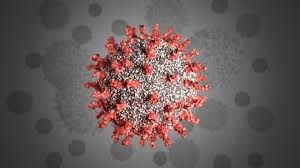
A Strange Beauty

coronavirus-image-iStock-628925532-full-width-wide.jpg | Elsevier ...
A Strange Beauty

Today is Saturday May 2nd.

I woke this morning feeling glum about the situation overseas.

There is some interesting news. The Covid 19 disease seems to be a blood-clotting disease, rather than a lung disease, or a type of pneumonia. The drug Remdesivir shows promise as a treatment. The virus pictured has a strange beauty, don’t you think? It’s not unattractive.  If we could master it….

The morning paper carries lots of interesting articles, including a long piece about the Rosewood Rest Home in Christchurch, where there have been so many Covid 19 deaths. It seems this rest home was doing a really good job, and what has happened has been devastating for them.  As Dr John has reminded us, there is no stigma about having Covid 19, just sadness, and probably some frustration. Our son flew in from the UK, fortunately on a plane from overseas not carrying infected passengers, but we didn’t know that till later.

There seems to be a general feeling that some people are taking advantage of the move from level 4 to level 3: one takeaway staff member is very nervous about the fact that she had to accept cash sometimes, had little time to change her mask, and it had been difficult to maintain social distancing in the kitchen where she worked.

The newspaper is also advertising the TV Guide, which hasn’t been published for the last few weeks, and the Wellington City Council is advertising WOAP (Wellington on a Plate), a food festival which takes place annually in August. Perhaps not this year – I doubt that we would be ready for that.

I listened to a podcast relating stories of some of the people who have died from Covid 19 in England. These are all very sad; in England, as in the US, black people and ethnic minorities have tended to die first, along with elderly folk in rest homes. Although pictures of largely white NHS workers have been displayed, the staff are predominantly coloured people.  One man was in hospital, had a blood test, and was sent home. After he died a few days later, the coroner’s report said his death was due to Covid 19 infection, but neither he nor his family were told about this.

Another sad story was about a widower in his 60’s who was an immigrant and a bus driver. It seems he was at risk, and wasn’t supplied with masks. He became ill, went to hospital and was put on a ventilator, but his daughter was asked for permission to turn off his life support. I immediately thought of the contrast here, where bus transport is free, and remains free; passengers are asked to get on and off using the rear door; and in level 3, passengers are asked to log on and off using their snapper cards to indicate the level of use of public transport, not so that they can be charged. There has been such kindness here.

There were other stories of deaths, too. They all had something in common – none of these cases knew how they had contracted Covid 19.

There is a worrying report about meat processing plants in Ireland having increasing numbers of infections.

Around midday one of our sons visited. It was wonderful to see him, although we were well-behaved and maintained distance. We spoke about his daughter’s 5th birthday, coming soon. So far she is likely to miss out on her last day at kindergarten, and school visits.

There was no 1 pm briefing today, but there are 6 new cases of Covid 19 and one death, another former resident of the Rosewood Rest Home in Christchurch. This brings the total infected in New Zealand to 1485, with the death total now 20. All but one of the new cases are related to existing clusters.  There is a business helpline available, in each district, and some tax relief for businesses has been announced. We are all (mostly) beneficiaries now, and thankful to have governmental support.

I go shopping again today. It is cold and windy and drizzling outside, so we take the car for a spin. JD says it’s very strange to drive the car again. Shopping is fine, quite uncrowded, although there is quite a queue to enter the store when I come out. Again, I buy raspberries and feijoas. Then I remember bread, which is at the back of the store. There isn’t much left, so it’s just as well that I bought some. I go through the aisles in order after this, remembering to buy eggs again. There is a TV Guide, too. Some things are getting back to normal.

At the end of the day, the US figures are as follows: 1.13 million cases of infection (certainly an undercount, given how difficult it is to get tested), and 65,605 deaths.  (Note: on April 20 the US death figure topped 40,000).   There is no official moment of silence for these deaths, and no offer by the federal government to pay for funerals. There will need to be time to grieve and mourn and address some of the issues of caring for very ill and dying patients and enduring so much pain and suffering at some stage in the future.  Such grief will have to be acknowledged.

The stock market was looking healthier, but the US President’s threats to sue China saw the Dow Jones swing downwards again.  The federal government is said to have purchased 100,000 body bags; Trump says that if deaths are kept to 100,000 he will have done a great job. He’ll have to do something fast to keep it to 100,000.  He also claims that the death toll would be far worse were it not for his actions. I doubt that anyone agrees with him. One no longer knows which model he’s following, or whether the White House daily press briefings are on again or off again, or whether Dr Fauci is going to be allowed to testify before Congress. So how can he not be permitted? Oh, I remember, he’s allowed to testify before a Senate Health Committee. There is much discussion about Congress these days, as in it should do this, or that, or take charge more. I think they have worked very hard, and done everything in their power to manage things as well as they have done. They did vote to impeach the President, and although the Senate did not vote to remove him from office, he remains impeached. It has been a delight to see Nancy Pelosi stand her ground.

“Scientific thought is in fetters”.  This is not a quote from a news story or editorial column about White House/Coronavirus press briefings, but from the novel Stalingrad, which I’m presently reading. It describes the view of science in Nazi Germany, where there was also great fear, and disregard for human life and human suffering.  I suppose Trump doesn’t have much reason to trust doctors’ scientific expertise, seeing he got them to write draft-deferments for him, and his doctor during the 2016 election campaign admitted that he’d written what Trump asked. But while science gave us the atomic bomb, and atomic energy, it has given us many wonderful things too. We value doctors and scientists in collaboration with each other at this critical time, where there is so much we don’t know about this virus and how it behaves.

I have been wondering why there is such disregard for the value and gift of human life in the US, and I conclude that it has a great deal to do with slavery, racism, and immigration from Latin America and majority Muslim countries. Fear has been stirred up against these folk, and they are treated, like most slaves were, as subhuman, threatening, and expendable. There have been many tales told about illegal immigrants doing “the work Americans don’t want to do”, according to Ivana Trump, the unkindness to so-called Dreamers, and the separation of children from their parents at the southern border. Such cruelty was horrifying, but now it is seen on a grand scale, when there are armed protests against lock downs, people are ordered to go back to work (at meat plants, and other places) and to put themselves in harm’s way, while it’s ensured that there is no liability on the part of business owners.

In the UK, the number of infections is 177,000 and the number of deaths 27,510. Apparently the UK can now do 100,000 tests each day; and the good news is that a vaccine is being trialled there.

On a different note, I have been enjoying the Second Movement of Mozart’s 23rd Piano Concerto. I particularly like Horowitz playing it. This music was used to great effect at the beginning of The Death of Stalin movie. It is very beautiful.

That’s it for now. Nga mihi nui.

Ignoble

Today is Friday May 1st. Kia ora katoa! Kia kaha!

I have not blogged for the last two days, although much has been happening, most of it not good. However, here we go again.

I think I am developing a kind of Stockholm Syndrome. Part of me doesn’t want this special time to end, although it, will, and must. But I doubt that things will be “the same” again, we have all been irredeemably changed by this experience of managing our situation during this pandemic, Phase 1.  I will call it Phase 1, although I doubt that Phase 1 is over in many places; it’s just getting underway, and one fears things will have to get worse before they get better.

As NZ moved from level 4 to level 3, it hasn’t been so quiet. On Wednesday morning, there wasn’t a lot of traffic noise, but it sounded as though everyone was putting out their wheelie-bins. The next few days it has been quiet again.

I’ve been to the store twice since we moved to level 3.  Although most people are still practising social distancing, and you still can’t take personal shopping bags into the store, there is a much more relaxed feeling up there. It’s as though there’s been a collective sigh of relief. It occurred to me, that if there are only about 3 new cases in NZ, then we can all be less anxious. I read in this morning’s paper that there have been no cases diagnosed in Wellington for the last two weeks. I am also pleased that postal services are available again, so I can post a birthday present to my granddaughter in the US. Fortunately I bought her present before the lockdown started.

It is amazing, although to be expected, I suppose, that there are still some voices complaining about the lockdown. It surprises me because we’ve coped fine, NZ is not like many places overseas where families tend to live in apartments; for the most part, we live in houses with separate bedrooms and front and back gardens, and there are plenty of good walks, even if the parks are closed. The Director-General of Health repeated that if you needed health care, you could get it; the Prime Minister insisted that no one should go hungry. One might well ask what better place could you be under lockdown?

But even in Aotearoa New Zealand, where the situation has been well-managed, the Novel Coronavirus gave us a big shock as everyone scrambled to make their working/servicing/shopping/eating environments safer, before the level 4 lockdown. Indeed, with the numbers of those infected increasing each day, and, in spite of travel bans and “precautions” there were still crazy things happening like cruise ship stops, so-called self-isolation “at home” being totally ineffective in some cases, an infected person visiting a café in Wellington, it was a relief when the Prime Minister took strong action and declared a severe level 4 lockdown to take place within a couple of days. Many of us acted early as if the lock down was already in place. Our son visited from the UK while things were still quite open; he seemed quite surprised by the precautions here. Despite those, by the time he left less than two weeks later, events had moved with great speed, and it was not easy for him and his wife to get back to England.

We had a sample, a taste, here of the enormous grief and disruption caused by cases of the infection leading to serious illness and sometimes death; people dying alone; not being able to hold funerals when people had died of natural causes; of just having to stay put, and hoping and praying that nothing happens to your loved ones.  Many of the stories from overseas record health workers’ despair at the situations they find themselves in ,and bearing the brunt of family members’ grief at not seeing the situation with their own eyes.

And yet..and yet, there is a rush to say “Enough! We’ve had enough of not having simple pleasures like what, exactly? Your old activities? We have all suffered. But did you learn nothing? Someone or something just said No!  One of the main lessons in life, is that, plan as we may, (and it’s wise to plan), the answer to what you want, will sometimes be No. This is one of those times. Sometimes, despite our best precautions, our best insurance, bad things happen, where you are grateful for life itself, life having got down to basics of breathing and staying alive and sheltered. In these situations, people matter, family and friends matter, One’s faith matters.

It seems to me that the pro-life Party in the US should perhaps now be known as the pro-death Party (not their death, of course), for its actions would seem to imply that there is a huge lack of concern for working people, coloured people, health workers, older people, veterans….In the US, seemingly in the pursuit of profit by a few, many are required to put their lives and safety, and by association, that of their family members and their work associates, in danger.

Although the US economy has shrunk by 4.8% in the first quarter of this year, although 21 million Americans (no, now 30 million unemployed) .have filed for unemployment, meat plants are being kept open, in spite of growing numbers of infected staff and some fatalities, and staff are being ordered to work, in spite of their feeing unsafe to do to. Some are told they will lose unemployment benefits. Larry Kudlow, formerly so upbeat about the economy, now warns that the coronavirus is no longer contained, but nevertheless, he’s optimistic about it “bouncing back”.

The US death toll from Covid 19 surpassed that of the war in Vietnam, which took place over 19 years; now it is growing by over 2,000 a day. A few weeks ago there had been no deaths. There does not seem to be any plan to halt this dreadful, growing toll.

Here in New Zealand, there is still a handful of cases each day. The Prime Minister talks about level 3 as being “the waiting room”. Some restrictions have been lifted, but we are urged to be responsible, stay close to home, and only go out if we need to do so. On Wednesday there are two new cases. Testing in level 3 will focus on the following:

  • finding new cases, where there are symptoms suggestive of Covid 19
  • carrying out surveillance testing according to a planned approach.

If someone in a rest home test positive, all residents and staff will then be tested.  Contacts of known cases are to be followed up and tested, and there is interest in studying how the virus spreads within clusters.

Journalists’ questions are quite combative. But Jacinda Ardern handles them with aplomb.

On Thursday, there are three new cases, and no deaths, but 7 cases in hospital.

There are several hundred complaints, but the police are onto these. The Prime Minister says that rather than there being a cult of snitching, most New Zealanders don’t want to lose the ground they’ve won, and feel threatened when they see people appearing to break the rules. On Friday there are three new cases, bringing the total to 1479. This total includes three health-care workers at Waitakere Hospital who have tested positive, related to a nursing home cluster in Auckland. The three new cases represent one from overseas travel, one related to a known case, and one still under investigation. There doesn’t seem to be asymptomatic community spread here. It will be interesting to see, as things are opened up again, just what happens with Covid 19.

Anecdotally, people are pleased to be back at work, to be able to buy barista-made coffee, and to buy takeaways again, despite the limitations.

The library have extended loan due dates again. I wonder how safe it will feel, though, to borrow books again, and to use libraries again. They used to be such havens! I am debating whether it will be safer to use the Book Depository, or buy from Unity Books in future. Goodness knows, I don’t need any more books, but I have a list I’d like to read, and would formerly have borrowed from the library.  The NZ Film Festival says it will show films at home. I’m looking forward to that!

Overseas, here is some of the news from the UK:

  • the search for a vaccine looks promising
  • The promised number of tests (100,000 per day) has not been met yet
  • There is still a lack of PPE
  • Masks not mandated yet
  • Somebody quipped that in London, during lockdown, mainly brown people can go to work.
  • Keir Starmer, the new Labour Party leader, has been grilling the government i.e. the ruling Tory Party about the number of deaths.
  • Rest home deaths are now added to hospital deaths from Covid 19.
  • Amidst all this there has been talk of lifting the lockdown because people are finding it really hard. I suggest they’re not seeing much gain for their recognised pain.

There has been recognition that the death rate in many countries was higher than usual from January, and so, probably, people were  dying from Covid 19 before the first deaths were officially recorded.  This is being used to suggest that the death rate is perhaps lower than thought.  It adds to the many perplexing facts about this disease. It puzzles me that if people were dying from it earlier than thought, why weren’t they showing the symptoms of Covid 19 that now seem to be fairly common?

In the US, there are the following additional facts that caught my eye:

  • In addition to damaging patients’ lungs and kidneys, the virus may do heart damage too.
  • In New York city the smell of dead bodies has been disturbing.
  • In the US, health workers, although praised, have been denied paid sick leave.
  • The US President has signed an executive order mandating meat processing plants, a main source of infection, to stay open.
  • In states where businesses are unwisely opening, workers feel unsafe but desperately need their pay.
  • In Michigan, there was an armed protest that went inside the Capitol; meanwhile the governor there has extended the stay-at-home order for another month.
  • There are still all kinds of problems with testing. The federal government has said it’s the states responsibility. There seems to be little control over how this is done. It seems chaotic.
  • This virus, once targeting poorer workers, is now targeting the middle class.
  • There is a huge risk that it will be so prevalent as to be extremely difficult to control.
  • Polls show that the American people generally support controls.

The figures for the US and the UK are increasingly alarming:

As at midnight 1st May, the US has 1.1 million confirmed cases, and 63,746 deaths, well past the total lost in the Vietnam War. The UK has 171,000 confirmed cases. And has had 26,771 deaths.

In Russia, the toll of those infected is going up in leaps and bounds. The Prime Minister has tested positive for Covid 19, and the big military parade set for May 8 has been cancelled. Meanwhile, there is concern for their “closed” secret nuclear cities. If they’re so secret, how did the virus get in there, one wonders.

Trump has been sending out lots of tweets. One of the funniest ones was where he criticised the “lamestream” media, and said journalists should give back their Noble prizes. I’m sure some of them wish they had received Nobel prizes; I’m afraid it’s their Pulitzers they should be returning!  We’re very grateful for the work journalists do. While we have fun criticising some of them, we appreciate them very much, especially during such interesting times.

To divert ourselves, we have been watching George Smiley on television, the old BBC series of “Tinker, Tailor, Soldier, Spy”, so much better than the later (2011) 0film. The music from that keeps going round in my head, the “Nunc Dimittis”.

That’s it for now. Nga mihi nui.

Rehearsal

Today is Tuesday April 28th. Kia ora katoa! We are officially in level 3 lockdown.

“We are opening up the economy, but we’re not opening up people’s social lives,” Jacinda Ardern announced yesterday.

This morning I wake at 6:30 am to the noise of traffic.  That comes as a shock. I later learn that there are long queues at McDonalds’ drive-throughs.  Apparently you can buy breakfast there.  There is lots of traffic noise, including an emergency vehicle, until around 7:30 am. Then it stops, and we have quiet again.

This morning’s paper is encouraging. There is a letter to the paper praising Joe Bennett, Jane Bowron and Rosemary McLeod’s columns David Armstrong’s column talks about those who’ve shown great kindness and generosity, and others who have not.

My phone is not charging properly, so I read more of Stalingrad. Many are re-reading Tolstoy’s War and Peace; I am reading Stalingrad. What a great book it is: while the Russian names can be difficult to follow, there is a glossary at the back of the book, a timeline of the war, and some useful maps. The book is huge (over 900 pages), but weaves several stories together in a masterful way. In one section I read this morning, characters argue about the truth, and what it means.  There is also a long descriptive section about the beginning of the German attack on Russia (Operation Barbarossa) at a place called Brest. The fear and apprehension of the residents and the military there parallels the  later fear of those at Stalingrad. There are references to the Iliad, and to Heraclitus.

It occurs to me, again, that while we are fighting a kind of war, and health workers are being expected to “go over the top”, we are not being bombed, or fleeing our homes, wondering what to take and when to leave. We are not experiencing a natural  disaster, or sending our husbands or sons to war.

But while many nations are “opening up” their economies,  almost in defiance of the pandemic, despite their death tolls (which have fallen), as if accepting that a certain level of death is acceptable. But the people who die haven’t enlisted in the armed forces; they don’t (for the most part)  choose to put themselves, or their loved ones, in harm’s way; yet this so-called wave may be a rehearsal for what is to come. It’s as though this virus, this unthinking, unresponsive organism, is trying to teach us something, and that if humanity doesn’t get the message, a great many people may have to die to prove – what, exactly? That we aren’t as powerful as we’d like to think? That a greater power is there?

It is interesting to see how compliant, or obedient, different nations are to their lockdown orders or requests, and how these are enforced. In Australia, for example, there are fines for non-compliance, while in New Zealand there have been some warnings and some arrests. It’s also interesting to see how clear, or vague, such expectations are. In New Zealand, the lockdown under level 4 was very strict, which made it easier to obey – it was clear and straightforward, and once you got used to it, it wasn’t so bad. Obviously the meaning of “essential” and “take-out” differs in different countries.

I thought the situation in NZ at Easter, a four-day weekend, was interesting: people were required to stay at home, and not to travel, or put themselves in danger i.e. in need of being rescued. Although many New Zealanders have holiday homes, or baches, or cribs, and many others plan getaways at that time, kiwis were happy to stay at home. That resulted in no deaths by car accident over the long weekend. In Michigan, however, people were really angry at not being allowed to go to their holiday homes. Many protested (in ways reminiscent of the Republican Tea Party Movement), and formed gridlock in the streets in their cars, thus impeding emergency and other health workers. The feeling was there was no empathy for these protesters. Certainly, the lock down is tough, but human lives are at stake here, and the state was dealing with serious cases of Covid 19. More black Americans were dying proportionately than whites.

In New Zealand, at the briefing today there were three new cases of Covid 19. Dr Bloomfield made a distinction between elimination and eradication, saying that elimination would continue to be a sustained effort; he also said that goals the government had set itself for the level 4 lockdown had been achieved. A health worker in Hawkes Bay has tested positive, although being asymptomatic. However this case is related to a known cluster. There seems to be no community infection here, in spite of community testing.

Other interesting facts: Boris Johnson is back at work, where there is both shock at the number of Covid 19 deaths in hospitals, and a desire to lift their lockdown. Confusing messages are being sent, one fears. Several children in the UK exhibited “toxic shock syndrome” and Covid 19 symptoms, although they had previously tested negative for the virus. In Australia, over one million people downloaded a contact-tracing ap on their mobile phones. And I discovered you can have quite a satisfactory funeral using Zoom, a feature which may well come in handy if travel proves to be risky, difficult and expensive in the months to come.

I watch Dr John Campbell’s update, and he talks about research papers. He notes that “the closest we come to the truth is through multiple collaborations”.

Here, it is still pretty quiet, although two planes flew overhead this  afternoon.

The figures for the UK are 157,000 infected and 21,092 deaths. In the US, there are 1.01 million cases of Covid 19 infection, and there have been 56,634 deaths to date.

A piece of music that has been running through my head today is Bach’s Choral Prelude in F Minor.  This beautiful music was used in the first version of the film Solaris.

That’s it for now! Nga mihi nui.

On the Cusp

No, COVID-19 Coronavirus Was Not Bioengineered. Here's The ...

Today is Monday April 27th. Kia ora katoa! Kia Kaha!

At midnight tonight NZ is scheduled to move from level 4 to a level 3 Covid 19 lockdown. In practice, this means little change for me. I will still be encouraged to stay within my bubble. John is permitted to show homes for sale, but it seems the regulations around real estate aren’t that clear. Today the weather is not so nice. It is colder, and it rains off and on during the day.

Under level 3, I may be able to get certain foods delivered, i.e. pizza, but any shopping is still non-contact, i.e. you shop online for delivery to your home. There is supposed to be no contact over payment.

It is Sunday in the Northern Hemisphere, so nothing much is doing in the media world. This morning’s newspaper here is interesting, however. There is regret about coming out of our level 4 lockdown! Jane Bowron writes a nostalgic column (“I Hear Voices -they’re mine”)  missing our time in the “olden days”; Lana Hart writes about the new “normal”, “We need post Covid 19 vision and quickly”) in hope that former injustices will be remedied; and there is a story reprinted from The Times about homeless people in London staying in hotels. Now that is a smart move.

I think that Bernie Sanders’ revolution has happened, or is happening, and while many weren’t ready for it, many of his supporters were. Well, this pandemic has forced and will force enormous social and environmental change, and here we are on the cusp of it.  Most people agree that things will not be the same again as they were before, that they cannot be. While there was much to like, there was a great deal not to admire, namely the excess of wealth displayed so often, and the vast inequality, where surely there should be a warm home and enough food and accessible medical care for everyone.

One feels the kind of optimism there was in 1989, when there was “glasnost” in the USSR under Gorbachev, when the Berlin Wall fell, it was the end of the Iron Curtain and communist rule in Russia and the Eastern Bloc, and Nelson Mandela became leader of South Africa.

While many terrible things have happened since then, it was still a wonderful time, when you felt anything was possible, and there was hope again, as when Barack Hussein Obama was elected (twice) President of the US.

Many countries are now seeking to “reopen” their economies, some against scientific advice. There is huge movement to do this, to restore some kind of “normalcy”, which I guess means primarily that people can pay their rent or their mortgage, their credit card bill, their other bills. What will happen to tourism, to eating out, to travel, accommodation?  I think people will be (or should be) scared of infection for a very long time. So we should continue to practice some kind of social distancing. How does that work for cities? For any kind of queueing? For travel, by plane, train or bus? Or eating at a restaurant, or borrowing library books, or buying anything pre-loved? Spacing out tables at restaurants may well make them unviable; air-conditioning or central heating in any institution may well spread germs; even if a trans-Tasman bubble allows flights to and from Australia, how do you travel safely on a plane, cramped together as you travel,  and then do you have to quarantine for two weeks on arrival?

That makes a mockery of popping over to Australia for a weekend, or even a two-week stay.  Here in Aotearoa, we have proved that you don’t need all this stuff; you don’t need to have a hen do in Bali, or a stag party at Las Vegas. You don’t need excess. We can stay at home, not travel, and cook our own meals. We survive, and we don’t grieve for loved ones killed or badly hurt in road or industrial accidents, either.  I feel it would be great if New Zealand can be a kinder, more egalitarian society in future, respecting all people’s rights and needs.

While some have found it so hard to endure some isolation, have gone “stir crazy”, many introverts have coped just fine. You don’t necessarily feel lonely if you live alone. On the other hand, a person feeling trapped in their family situation or a loveless marriage may feel a desperate need for some relief or escape; I think anyone in a difficult situation needs a break from time to time.

For many people, it has been an eye-opener to see how well they can cope, how they can slow down, be less busy and frantic, and enjoy the peace and quiet of this special time. It’s also been nice not to have to put up with many advertisements that would now be highly inappropriate. I guess they will return, or some of them, eventually.

Another encouraging thing to come out of all this is a great deal of thought and discussion. I am a podcast junkie – I listen to lots of things, and I have learnt so much, about different people’s situations. At some point, though, I will have to get a haircut and buy some new shoes! In the meantime, it’s nice not to have to dress up, or wear makeup.

Today there is a bit of a mess-up with the numbers of Covid 19 cases. There are a handle of new ones, but some previous “probables” turned out to be negatives, so the upshot is minus one new cases, making the total 1,469, I think. There has also been a further death, of a woman in her 90’s, in a care home, bringing the total number of deaths to 19.  So like the oil price last week, we are in negative territory!

We went shopping this morning, or, at least, I did, and JD drove me there are back, given that it was raining. We had run down the food supplies, so it was good to re-stock. The store had most things I wanted, too. Seeing we have so few cases of Covid 19 now, I feel much more secure in going shopping.

In the UK this morning, 20,732 people had died in hospital, while in Spain children are allowed to go outside. In the US, the total infected is 986k; the number of deaths, 55417. The number of Americans who lost their lives in the Vietnam War was 58,220.  No doubt there will be more news tomorrow.

On a lighter note, I enjoy reading. At the moment I’m reading Vasily Grossman’s Stalingrad, a huge and well-written novel. At one point, a character sings Gilda’s aria from Verdi’s Rigoletto.  I play this on YouTube. There is a version sung by Maria Callas. I also find out the beautiful song sung by Bill Nighy in “Their Finest”: it is called “Will you go, Lassie, Go”:

Oh the summertime is coming
And the trees are sweetly blooming
And the wild mountain thyme
Grows around the blooming heather
Will ye go, Lassie go?

And we’ll all go together
To pluck wild mountain thyme
All around the blooming heather
Will ye go, Lassie go?

I will build my love a tower
Near yon’ pure crystal fountain
And on it I will build
All the flowers of the mountain
Will ye go, Lassie go?

And we’ll all go together
To pluck wild mountain thyme
All around the blooming heather
Will ye go, Lassie go?

If my true love she were gone
I would…

That’s it for now.  Talk again tomorrow! It’s almost time to say haere ra to level 4.  Nga mihi nui

War and Peace

Today is Sunday April 26th. Kia ora katoa! Kia kaha!

I called this entry War and Peace because we are at war with a common but unseen enemmy, the coronavirus. And peace really refers to the absence of war. We hope that at some time in the future there will be a vaccine for the coronavirus, and it will not pose such a threat to our lives, families, friendships, and general well being.

Yesterday was Anzac Day. We went for a walk in the afternoon, and saw poppies in people’s windows. The weather has been very kind: it continues to be fine most days and not too cold; sometimes it is windy, but really the weather is no problem. We seem to have settled into this quieter, more relaxed way of life. Once more, I am relieved to be under 70 years of age, not to be looking after young children, and to be in a relatively settled situation. I do miss some different foodstuffs, but I can cope.

On Saturday morning I wake up to learn that Trump recommends UV light (there may be something in this, but externally, not internally), and injecting disinfectant into one’s body. One doesn’t know whether to laugh or cry. This is the “leader of the free world”? It’s tragic, that he should speak so. Many have rushed to say don’t do this, it’s a really dangerous suggestion.  Dr John advises you shouldn’t take anything unless it’s recommended by your doctor.

Meanwhile there is a really alarming news story about young men infected with Covid 19 having strokes, arising from having blood clots in the brain. One surgeon spoke about how he would normally remove the clot, following a scan showing where it was, but found it went on to form other clots. This really is Alien (the movie) type stuff. These patients did not have risk factors for stroke. This shows how severe the virus can be, and what huge damage it can cause. We knew about blood-clotting problems, and organ failure, but strokes?  These can cause a long recovery and recuperation, as well as significant permanent damage such as paralysis and chronic fatigue. Stroke is a thief.

It seems that the more we know about this virus, the less certainty we have; we risk running down rabbit holes of misinformation. The WHO warns that people can be reinfected; so how safe is testing? Testing for antibodies has not been as effective as hoped; there seems to be no effective treatment, and a vaccine is several months away (although a new flu vaccine is put out each year, so how does that work?) There seem to be different strains of this virus, some more deadly than others.  They all seem to be extremely infectious.

Another anecdote: a woman eating in a restaurant infected nine other diners. She wasn’t eating with them. Air-conditioning, widely prevalent now, on cruise ships and American homes, is thought to play a part in spreading infection.

Chris Cuomo’s son has now tested positive for Covid 19. But tests are still difficult to get in many if not most US states. Yet tests have been sent from the US to Iceland! No problem.

At the end of Saturday the US has 925,758 confirmed cases of Covid 19, and 52,217 deaths.

On Saturday, New Zealand has 5 new cases of Covid 19, and 9 on Sunday.  No further deaths have been recorded.  The total remains 18. There are 7 cases in hospital, and one in Intensive Care. It seems we are on the right track, and we are relieved that this is so.

The Deputy Prime Minister, Winston Peter, suggests that New Zealand and Australia share a trans-Tasman bubble with regard to travel.

Overseas, in Europe’s worst affected countries, Italy, Spain and France, the numbers or deaths each day, although still appalling, have been dropping. In Europe governments are looking to relax their lockdowns, and the world looks on with great interest. In the UK, however, there are officially 148,000 cases of Covid 19, and there have been over 20.000 deaths in hospitals.  They still don’t have the level of testing that was promised.

In the US, there are now (11 pm Sunday April 26) 959k cases of Covid 19, and there have been 54,161 deaths.  And the person in charge just doesn’t seem to care. I’m sure the fake news media would be prepared to print any sign of regret, remorse, or apology. One struggles to understand this approach. It is beyond comprehension.

On a different note, last night we watched “Their Finest” on Māori Television. What a fine film it is! I had seen it before, but was pleased to see it again, with a fine cast including Gemma Arterton, Bill Nighy, and Sam Clafin.   During the film, Bill Nighy sings a very beautiful song. It has a strong script too, in spite of a rather weak premise. As a period piece, it does a great job.

Tonight we watched “Labyrinth of Lies”, again on Māori Television. A very thought-provoking film. At the end, the Kaddish is said at Osweicim (Auschwitz). The kaddish is the Jewish mourning prayer.

That’s it for now. Nga mihi nui