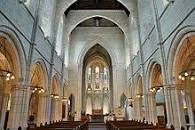
Yesterday afternoon we returned to Wellington from Napier. We had driven up there last Thursday afternoon, after my last singing session for Term 3. As usual, I felt exhausted before we left, with the stress of getting away. But the drive north went fine. We took the car, which meant I could take plenty of clothes I wore most things I had taken, the temperature ranging from quite hot to quite cold. We mostly had fine, sunny weather, apart from Monday, when there was a very gusty wind in Napier.
Apparently there was a storm in Wellington over the weekend, and snow and road closures in the South Island, but when we got back everything was fine.
Last Friday I went shopping in Napier. What a joy! After JD dropped me off, I walked into town, bought the newspaper, and had a cup of coffee and a mini doughnut. Then I went shopping, browsing through sale items at Farmers, checking the shoe shop, the bag shop (there are lots of sales), and buying a new charger for my mobile phone (it’s in very sad shape, especially with scanning all the QR codes).
I also went to the bookshop, and after a good browse, I had lunch. Then I walked to Clive Square, where I caught a taxi back to the motel.
That evening JD picked our daughter up, and we went to meet the group and have dinner at one of the pubs in Ahuriri. They were super busy! It was a nice evening, although there was a chilly breeze. Our group hadn’t booked, and one guy was having difficulty with his son. In the event we were down to five, and although we had to sit at a high table on bar stools, this seemed to me to be the best option. It gets really complicated to move people, cars, find another venue, and so on. Although they were so busy, we ate very well, and our daughter (and I) managed the high stools.
The next day we had arranged to pick up our daughter after lunch. We bought a newspaper, and had a leisurely lunch (an omelette and corn fritters), before picking her up. We then went to the Aquarium, always great value for money. We looked at the tsunami exhibit, at the fishes, turtles, tuatara, and at the penguins. Although it wasn’t feeding time, there were two penguins out. We did the fish ramp-walk, and entered the kiwi house. It was very dark, but eventually we saw three kiwi, bigger than I expected.
Afterwards we went for a walk and wondered about going inside the Dinosaur Tent, but someone told us the show was over for the day.
We then went back to our motel where we had a wee birthday party for my son in the UK. Our daughter blew out the candles!
That evening we went to Lone Star for dinner – her choice. They are always welcoming there, although we couldn’t go until 7:30 pm, they were so busy.
The next day was similar, although even hotter. We took our daughter to Pirimai Park for a swing and slide. The beautiful park was almost deserted. Afterwards, we went into town for coffee and cake (the café at Pirimai closed at 2:30 pm). After some games at the motel, we went to Café de Laos for dinner, where we had beautiful meals.
The next day, we did some legal stuff, and picked up our daughter for dinner again. We went to the Boardwalk, where (on a Monday evening) they were super busy! We had to wait a few moments for a table.
The next day we did some more legal stuff, and went to the Hohepa Shop, where I bought some Danbo cheese, some more raspberry jam, and some peach chutney. That evening we ate toast for dinner!
Next day we were due to meet our daughter and a carer at Hastings Hospital. This all went fine, too. Afterwards, we drove back to Wellington.
On the way, we managed to listen to some of the debate between Joe Biden and Donald Trump. Oh dear, oh dear. What a ghastly display. The near-universal response is that people felt sullied (soiled) by it; they felt ashamed for America; they were shocked by it; that Trump’s approach to Biden paralleled his approach to Hillary Clinton when he stalked her in a menacing way back in 2016. The many notes in response reflected the general anguish – please let this be over.
When we got back to Wellington we went shopping. I found, to my surprise, that the Listener magazine was on sale again! In missing the puzzles, I had forgotten how annoying it can be! But there are lots of puzzles, and I’m happy with that.
Next day there was lots of washing to do, and the mail, which had been on hold, was delivered: a copy of the Listener (thanks, Magshop – I ordered this months ago), and another edition of LRB – very welcome, too.
Today is fine, although it was very cold last night. In Hawkes Bay I was very tired. I had no energy. I was a bit worried about this, and put it down partly to the change to Daylight Saving, putting our clocks an hour back. At least we weren’t in a rush to get back to Wellington.
Here in Aotearoa, there have been no new cases of community transmission of Covid 19 for the last few days. This is very encouraging, although some risks have certainly been taken. It seems that the contacts have been very responsible. There continue to be a handful of cases in managed isolation each day, although today there were twelve new cases in what they are calling MIQ. Ten of these came on a flight from India. There certainly seems to be some risk there. There seems to be growing frustration with the restrictions here, such as they are. I am (and continue to be) truly grateful that the infection isn’t rampant here. Australia have brought their outbreak under control, but in the rest of the world, infections are increasing.
Today is Sunday September 20th. Kia ora, kia kaha.
“Be strong in the Lord, and the might of his strength”, Ephesians 6:10.
I am quite rattled by the death of Ruth Bader Ginsberg, which I heard about yesterday, just before 1 pm. I just heard today (via Dr John Campbell) that the US has passed the milestone of 200,000 deaths from Covid 19. Another website gives the total as 199,000 thousand. Worldometer gives 203,000 deaths. I am feeling quite anxious. There is lot’s to be anxious about.
The US election looms, a few weeks away now. While I can do nothing to influence the outcome in any way, it is hugely consequential for my family, for the US, and for the entire world.
The death of RBG, while not unexpected (she was 87, after all, and had suffered four forms of cancer), sets off an unwelcome train of events. Mitch McConnell signalled right away (within one hour of the news of her death, according to one source) that a new justice will be put to the vote on the Senate floor. Trump has indicated that this will be done “without delay”, although it was RBG’s dying wish that she not be replaced until after the election. One gets the feeling, that she was a wonderful woman, so wonderful, that they just can’t wait to replace her on the Supreme Court.
There will no doubt be a fight of sorts over this. Many people feel justly grief and despair, and a huge sense of frustration, that the McConnell and Trump not only cannot be counted on to do the right and honourable thing, they have indicated already that they will not. It occurs to me that should the election be close, the Supreme Court may well be called upon to make a determination as to the outcome (cf. Bush v Gore and the Florida recount). In such a case the party of Trump would want a Supreme Court stacked with conservative justices, who might be expected to vote in his favour. Most commentators agree that RBG’s death changes everything. The question is, how?
RBG was heard to say (and I am paraphrasing her here), that the symbol of America is not the bald eagle; rather that it is the pendulum (implying that it’s time for it to swing the other way). She also said that Trump’s election in 2016 was an “aberration”.
A republican was quoted as saying that she would rather put up with Healthcare for All, rather than see justice so perverted. One might be very sceptical about the merits or otherwise of the American system of justice, but it did result in the conviction of Paul Manafort and others. The justice system means a very great deal to many Americans: witness the number of podcasts eloquently exploring legal decisions and possible outcomes. Many detest the way Trump has used the legal system to his own ends. There is a saying here that “the law is an ass”, and everyone knows that it is usually very costly to hire a lawyer.
Having said that, even Republicans against Trump seem to be strongly right-wing and dread any move to the “Left” on the part of the Democrats, or any move towards socialism, while refusing to see that the military is socialistic, and that the government’s support for many rich individuals is also socialistic. Just what are they so afraid of?
We went to see the Da Vinci film A Night at the Louvre: Leonardo da Vinci. I had pre-booked, and amazingly, we got a carpark nearby and got there early. It was a very good film. It’s always nice to retrace places we’ve been to, picking out which paintings we had seen, and where. This time I noticed how his women are real people, with a brain: they aren’t sex objects. This reminds me of RBG, who, while always civil and well-spoken, even amusing sometimes, had a good brain and a very good memory. In one of Leonardo’s early paintings of the Annunciation, his angel looks rather feminine and his Mary quite boyish. The movie was in French, with subtitles, another bonus.
The beauty of Leonardo’s paintings formed a rather nice counterpoint to the passing of RBG. One is reminded that talented people are usually talented in many fields: Leonardo besides being a great artist put his knowledge of mathematics, geometry, anatomy and science and nature to great use. The women he painted always seem like real people, who enjoy life. The smiles become enigmatic, strange, hidden, perhaps there is a secret joke; only the woman depicted in the painting in Washington is not smiling: she seems to be pouting, even (Ginevra de Benci, c. 1,475, is apparently one of his earliest paintings). Evidently he was still working on his technique.
Afterwards we have a nice, late lunch. We shared arancini, hot bread with EVOO and oregano, a pizza with leeks and artichokes, coffee and tiramisu. It’s nice to share a meal and talk about the film, and our trips – we have seen the Cenacolo in Milan, and La Joconde; we have been to the Louvre three times.
Again we marvel that we can do this: even at level 2, we can go to a movie and have lunch in a café. Cuba Street has plenty of people, but it’s not crowded. Just the way I like it, really.
In New Zealand Aotearoa today there are two new cases of Covid 19, both in the community, household contacts of an arrival from overseas who had had two negative Covid 19 tests. This person has now tested positive, more than a week after leaving managed isolation. His family members are self-isolating. That is strange and rather scary. As usual, it is very difficult, looking at a newspaper’s website, to identify today’s news and not old news. We had assumed that returning travellers were “safe” after being in managed isolation for 14 days. This finding casts even more doubt on our recent trip to Auckland.
There’s a lot of community testing for Covid 19 happening in New Zealand, for which I am thankful. I know several people who’ve been tested recently – all negative.
Today there are no new cases of coronavirus, although there were 7 yesterday, all in managed isolation. All pupils at Chapel Downs Primary School in South Auckland have been asked to get tested. Another Maori elder has died from Covid 19, bringing New Zealand’s death total to 25. Two travellers from New Zealand have tested positive for Covid 19 on arrival in Malaysia. There have been no new cases in the “community” for two days now. That must give us great hope and encouragement. In Australia there are 45 new cases and 5 deaths to report. That must be encouraging for them.
In the US, “herd mentality” is advocated by Trump. He means, it is said, “herd immunity”. In the eyes of the rest of us, it’s “herd insanity”. The UK advocated this approach initially, before they instituted lock downs, (some) testing, and restrictions on movement and gatherings. The UK have hugely mismanaged the outbreak; in their case, as with the would-be Brexit agreement, they show enormous incompetence. You can’t really believe that they want people to die; one assumes that their high death rate is the net effect of their mismanagement rather than malevolence. With the herd immunity approach, estimates vary, but some say that one in three persons would have to contract Covid 19 for this to be true. It’s not known for certain how this works, or even what the rate of re-infection may be; it’s also not known how effective a trusted vaccine would be, or at what level it should be administered to be effective.
In the US, it seems that human life has little, if any, value. We see this time and time again in the refusal to limit gun ownership, and the type of lethal weapons allowed; the refusal to acknowledge the need for universal health care, while having huge rates of obesity and ill health; the continued meanness to the poor and homeless; the way women are treated in general; and the violence in the way police treat most matters of protest or minor crime. To be a black person is to be afraid for your life. To be a white person, is to be afraid. You do not want to cross the police, even if you don’t know what’s expected of you. In many places (not just Flint, Michigan, or the city of New Jersey), the water quality is appalling, if indeed you have running water in your home. In many places, particularly poorer areas, chemical spill-offs causes contamination. The rich can afford better homes, better schools, a private jet, yachts, and holidays. The poor scrape by, millions of them without health-care insurance. Being a woman is seen by some as a pre-existing condition, despite the fact that every human being has at least one female relative! Money speaks louder than human life, although Republicans claim to be “prolife”. What a heartless joke. The US is just about the worst place in the world right now to have the coronavirus, unless you count India and Brazil. Most countries won’t allow entry to US citizens.
Then there is the insanity of many people continuing to defy the coronavirus, despite the continuing evidence: crowds thumb their collective noses by having parties, weddings, church gatherings, refusing to wear masks, and insisting that those who provide food continue working, sick or not, so that some can be “free” (to be idiots). There are no consistent guidelines for schools to reopen, in spite of Trump’s insistence that they do so; sending your children to school must be a terrible test of your willingness to believe Trump at any cost. And still he mouths on, in spite of tapes where he acknowledged to Bob Woodward that the coronavirus was a deadly serious disease. There have officially been 197,000 deaths from Covid 19. The US media wonders how to mark the occasion of 200,000 deaths from Covid 19, a milestone which is fast approaching.
Back here, it has been very noisy. This is unusual for us. Last Saturday night there was a party. I couldn’t see where it was; I know noise carries at night. It wasn’t that bad – just high-pitched sounds of revelry, but this is unusual in our area. Then on Wednesday and Thursday mornings, right on 8:30 am, noisy machinery started up, and went for several hours. Lawnmowing? Tree cutting? Digging? A circular saw? I couldn’t really see through the trees, but I suspect building is going ahead on the marshy ground below our house. I had decided to stay at home on Wednesday, but the incredibly loud noise forced me out. I went into the city, where I spent enjoyable time at Te Awe, the popup library in Panama St. I had lunch there, and spent some time reading the New Yorker magazine.
I am reading Camus’s The Plague (La Peste). It is a very dense book, very well-written, It is a pleasure to read Camus again. I studied L’Étranger (in French) years ago. So far, it is a very measured account of the effects of the plague on a city of 200,000 people on the coast of Algeria.
Yesterday I was very lazy, after being quite busy on Friday. I went to the library to return a book I’d reserved and not read. I couldn’t renew it, so I guess I’ll have to reserve it again.
Today I am listening to Bach’s Violin Concertos. They are so beautiful, I think I prefer them to his Brandenburg Concertos. Bach was extremely prolific and he’s left us a great deal of wonderful music.
I miss my friend so much. I can’t really believe that she’s gone, although I saw her body in her plywood coffin, which was open at her funeral service. But it didn’t really look like her, not as I remembered her. For one thing, I don’t remember her wearing makeup. I know that the funeral directors try to make a dead body look good. With her funeral brochure, too, it all seemed to be at one remove. I think to myself, what would she say? What would she do? A line from her poem comes to mind: “You will find your voice, and you will know what to do”.
Today I have been reading the LRB online (this latest version hasn’t arrived in the post yet). I am reading the third part of The Suitcase, a fascinating account that takes in wartime Europe, particularly Romania. It reminds me a great deal of two trilogies I have enjoyed by Olivia Manning: Fortunes of War: The Balkan Trilogy, followed by The Levant Trilogy. The works echo each other, there are no discordant notes. Saunders conveys well the sense of dislocation, when things change so suddenly, lives are in danger, and “homes” abandoned. It strikes me that this is a bit like what we are experiencing with the novel coronavirus: we cannot travel, or see our loved ones as much as we would like to; lives are in peril, from the virus, and in the Western US, from extreme fires, and we are subject to special rules for our protection, such as the New Zealand managed quarantine of all incoming travelers. As one of my friend’s sons said, on returning from New York, he was really well looked after, during his 14 day quarantine, staying somewhere nice, but it got really boring!
About walls, a quote from the Saunders narrative reads: “Erected to express power and permanence, it was, like all such walls before and since, a confession of weakness, a last resort when all other options had failed”. This referred to the “Atlantic Wall, a concrete and steel monotony that stretched from the northern tip of Norway to the Pyrenees”.[1] I had never heard of this wall before! It reminds one of the wall on the US Southern border, a triumph of insanity, costing a great deal of un-approved money, falling over in places, and failing to keep determined asylum seekers out. One of its great ironies is that the US, far from being desirable, has proved to be a truly unkind, unwelcoming and toxic place, where coronavirus is rampant, and healthcare is only available for those who can afford it.
Our trip north the week before last was strange, with some places being really careful to avoid infection, and others just seeming to carry on as they did before. Today there are two new cases of Covid 19, one a traveller, in managed isolation, and one a worker at the Jet Inn Hotel where infectious patients are isolated. We have stayed there, by the way. We were very comfortable there.
Evidently two workers at the DHB in Waitemata have tested positive, as have three school students. The Herald published names of cafés and times of bus routes used by people who turned out to be infected. There was also a funeral connected with the Mount Roskill Evangelical Fellowship that prompted several cases of infection. I find all this very frustrating. We know that people can be asymptomatic, and still carry the virus. There are not tell-tale signs like a rash or a boil: many people have spring allergies, such as hay-fever and a cough; at any event, everyone needs to take this seriously!
When the news media claim that these folk were not infectious, one presumes they mean that the person was presumed not to be infectious before they encountered an infected person, or a contact of one. Schools, churches, hospitals and hotels all have huge and far-flung networks of people associated with them.
Today there was a march in Auckland to protest against lockdowns, under the auspices of the new Advance NZ Party; this seems to be an extreme far-Right party where Jami-Lee Ross has found his spiritual home. It’s co-leader is a Maori who believes in conspiracy theories. So the important bases are covered. He was previously treated for mental illness. These folk, estimated to be around 1,000, were marching for Freedom. Ho hum. More craziness. This rally represents some of the resentment against the current restrictions in Auckland, and across New Zealand. Most marchers did not wear masks. This contrasts with the BLM March in Auckland a few weeks ago, which also caused some ire. It is so amazingly good not to be afraid of getting this virus, because we have been so well looked after. Our grandchildren can go to school, and play sport. I think New Zealand is still the envy of the world. We can handle these restrictions.
Today we are waiting for news from the US, where not only is the coronavirus an ever-present danger, but also there are severe fires in California, Oregon and Washington, where our daughter-in-law’s family live. The news this morning seemed even worse than yesterday. Things just seem to get worse and worse there. Trump remains undaunted by recent revelations about him: the 18 Woodward taped interviews, Michael Cohen’s book, Mary Trump’s book, Stephanie Wolkoff’s book, Michael Schmidt’s book, Peter Strzok’s book, the Senate Intelligence Committee’s bi-partisan 1,000 page report, another whistle-blower complaint, that a Trump employee was ordered to cover up Russian interference in the 2020 election, the Atlantic article by Jeff Goldberg, and so on and so on. I’ve probably missed some out. And Woodward and Goldberg claim there’s more sad data to come. Trump, cornered, continues to attack Joe Biden and the Democrats. I remember when the Access Hollywood tape came out just before the 2016 Presidential election, and many thought his chances of winning were doomed. Sadly, not. His “reptilian” cunning continues.
Although this year’s election is not far away, the prospect is fraught with fear and confusion: the pandemic, changes to the US Postal Service, purging of voter rolls, and different states’ rules all contribute to the difficulty not only in casting a vote, but having it counted appropriately. That’s to say nothing of what damage foreign actors (especially the Russians) may inflict. Voting rolls were never that secure in many states. While the prospect of another four years of Trump is truly terrifying, and Biden is doing all right in the polls, the election still has to take place, and votes to be determined legitimate, and counted, and reported. Trump is hugely unpopular, but nonetheless he’s pretty determined to win, by any means. The pandemic is deemed to have caused over 194,000 deaths.
This afternoon I went for a walk. This was nice, although I didn’t buy much at the store. Today’s paper advertises another NZSO concert, to be held next Friday evening. I would love to go, but don’t know if we can attend physically: the government is due to announce tomorrow if we are to go to level 1 in Wellington (and what levels will apply to Auckland and the rest of the country). Actually I’m quite happy with the current restrictions. They aren’t arduous. Nga mihi.
[1] Frances Stonor Saunders, The Suitcase: Part 3, London Review of Books Volume 42 Number 16 13 August 2020
Today is Friday September 11. Kia ora katoa. It is now almost 9 years since I became ill.
Last week we made a kind of pilgrimage to Auckland:
Whan that Aprille with his shoures soote,
The droghte of March hath perced to the roote,
And bathed every veyne in swich licóur
Of which vertú engendred is the flour;
Whan Zephirus eek with his swete breeth
Inspired hath in every holt and heeth
The tendre croppes, and the yonge sonne
Hath in the Ram his halfe cours y-ronne,
And smale foweles maken melodye,
That slepen al the nyght with open ye,
So priketh hem Natúre in hir corages,
Thanne longen folk to goon on pilgrimages,
And palmeres for to seken straunge strondes,
To ferne halwes, kowthe in sondry londes;
And specially, from every shires ende
Of Engelond, to Caunterbury they wende,
The hooly blisful martir for to seke,
That hem hath holpen whan that they were seeke.
I have cited the Prologue to Chaucer’s Canterbury Tales because this work has great resonance for me. As American news anchors say, there’s a lot to unpack here.
The Canterbury Tales is one of my favourite works, in fact I did a paper on it for my MA in English Literature. One of my sons is named after Geoffrey Chaucer. Another son lives in Canterbury, I have visited Canterbury Cathedral twice, and know T.S. Eliot’s poetic drama, Murder in the Cathedral, quite well. The “holy blissful martyr” is St Thomas à Becket, who was killed on his return to Canterbury Cathedral; this was also the object of Chaucer’s pilgrimage, and this work was written sometime after England had been devastated by the Black Death.
There’s also the fact that two of our dearest friends visited our son in Canterbury not so long ago, and they also came to that son’s wedding. And while it is not April here, it is September, and so is springtime here, although we are still feeling winter’s chilly winds. We may have had the warmest winter on record here, but although the sun shines most days, you still need a jacket.
We headed north last Friday afternoon. We had lunch in Otaki and reached Taupo at 6 pm. At the café in Otaki they were being very careful about the spread of the virus, having added in extra separated seating where the shop used to be, having separate exits and entrances, and bringing cutlery to the table. Later on, it was so beautiful driving along the Desert Road: we had wonderful views of the mountains. I wondered how often we would do this drive again. We stayed with some friends at their very well-appointed motel in Taupo, and had dinner at a Thai Restaurant. I did notice the very wide streets, and lack of pedestrian crossings. I have to confess I was rather apprehensive about the whole trip.
The next morning we went to see JD’s mother’s headstone at Taupo Cemetery, and then visited his aunt, before heading north. We stopped for lunch at Tirau, where there are now masses of cafés (I should have googled them). I picked one that looked all right, but I didn’t feel particularly safe there. No one was wearing masks.
We chose to approach Auckland via the expressway rather than route 31. The expressway speed limit is 110 kph! I didn’t know that! At least it has a dual carriageway. When we reached Hamilton, we had to drive through the city (isn’t there a bypass?) before rejoining the expressway, aka State Highway 1. I picked we needed to take exit 432 to reach our motel.
Eventually we got to our motel. Despite a rather unprepossessing appearance, it was just great. Although it was on the busy Manukau Road, we were at the back, well away from the busy road. It was opposite a lovely park. There was plenty of room, a spa bath, and a well-equipped kitchenette. The TV had all channels. There was a heat pump, which blew hot air not directly onto the bed. The motel was handy to Greenlane, Epsom, Ellerslie, the city, everywhere in fact. We were warm and comfortable, and unbothered by noise.
That night we walked to an Italian restaurant – about 15 minutes’ walk away. They couldn’t take us until 8:15 pm. No one seemed to be observing any kind of distancing, but we were seated at the front, quite a way from other diners.
The next morning, we went to visit a cousin who has a very nice apartment in Parnell. My attempts at navigation messed up again, and we had a nice drive through the museum grounds. Afterwards we went to the Art Gallery, always a treat. Car-parking in the building opposite was tricky, but we mastered that. JD had the Father’s Day Special: a pie, chips and salad, and I had French toast with boysenberries. Afterwards we looked at paintings; JD was pleased that they’ve got rid of the wine-red walls as backgrounds to the paintings (this was very fashionable for a time, although I have to agree with him that it does nothing for the paintings). There are several old favourites there, including a painting by Salvator Rosa. At the Art Gallery the staff were very careful about infection, ensuring that we’d signed in; there was someone wiping the handrails with disinfectant. I was very pleased that I’d loaded the Covid tracer ap on my phone: I went around everywhere scanning QR codes.
That evening we ate at a Thai restaurant in Manukau Road. No one else was eating there, and I felt very nervous about being the only ones. But as it turned out, it was very clean, and we had delicious meals. They were playing movie themes on guitar, and we had fun identifying them: Lara’s Theme from Dr Zhivago, and the Godfather theme.
The next morning it was my friend’s funeral at St Matthew’s in the City. We booked a taxi the night before, to be sure of getting there in good time. I had pressed my skirt the night before. We were early, but so were many others, including two dear friends of ours who had flown up from Wellington for the day. I almost cried but managed to hold it all together. Everyone was masked, everyone signed in. Fifty people is actually quite a lot, when you’re only sitting in every second row. We filled up the beautiful and gracious church nicely, so although quite large, it didn’t feel empty.
It was a sad occasion, but so special to be there. I have to admit that the service was not quite what I expected, although I don’t really know just what I expected. The Requiem Eucharist was celebrated by a woman and a man. The doors were open, and you could here the rain outside, although the sun was shining sometimes, too. The two-hour service was live-streamed.
There were four tributes, including one from my friend’s eldest son. There was a lot of ground to cover here! My friend’s youngest grandchild (just a few months old) made happy noises. I learnt that wearing a mask does not stop you hugging someone. The readings were nice; I did not know the hymns.
There was some wonderful music: Handel’s Arrival of the Queen of Sheba, and Louis Armstrong’s What a Wonderful World. There was a photo montage played with Sting’s Fields of Gold and Eric Clapton’s Tears in Heaven, both sung by a female vocalist. I sing these songs with one of my singing groups.
Afterwards we went outside and placed sprigs of rosemary (for remembrance) on the plywood coffin. Then we went inside again to have a light lunch before the family went to the crematorium. It was good to speak to most people there. They served tea and coffee and finger food, asking what each person would like, and using tongs to put it on a plate.
I spoke to each of my friend’s children. This was very special – mostly they live overseas, and I don’t see them very often. We also marvelled at our friend’s husband – he played a song for his wife on the piano there.
These are the main things I remembered about her. She introduced us (actually her husband introduced us) to a principle of Catholic Social Services, the principle of Subsidiarity (or, reworded, Local is Logical). We introduced this at Hohepa, and it became a tenet of their approach to management: that decisions affecting Hohepa Hawkes Bay should be taken at its local level, rather than at a national level. It makes such good sense, once it is explained. The other main things I recall are her care for others, and ability to take care of us; her down-to-earth, sensible nature; and her way with words. She could be quite direct too! And although we didn’t always agree, I was always interested in her views. Our friendship goes back a long, long way. I will miss her greatly.
Afterwards, JD and I walked into the CBD. JD was feeling cold and bought a very nice jersey. Although it was on a special price (they were having a sale), it cost much more than what I would have thought was reasonable. He needed to be warmer, and this seemed like a good opportunity. Sadly, the jersey disintegrated the next day! We couldn’t go back to the shop. Perhaps a friend in Wellington will mend it. We drank more coffee, and walked some way, around multiple roadworks, looking for a taxi stand! Eventually we found one.
That evening we had another beautiful meal, at a restaurant in Great South Road where we’d been before. We spoke to the woman there, who felt that the latest lockdown in Auckland was a bit of an over-reaction. Sadly, I have to disagree with her. Local cases of Covid 19 infection seem to bear out that some Aucklanders “broke the rules”. It is very scary when pupils in schools are infected, and bus routes and cafes are named as being used by infected people. Schools and cafes, like churches, have wide networks. I can certainly understand the frustration, though.
And what about the Mt Roskill Evangelical Fellowship? What kind of madness infects certain people who call themselves “Christians”, who seem to forget that God gave them a brain, to think with, and who fail to remember that we live in this far-from-perfect world, replete with infections of all kinds, as well as many things to be thankful for. It seems to me that if one wishes to display God’s love, it would include showing respect for others, and using sensible measures to ensure their (and one’s own) safety.
The next morning we visited our bereaved friends. It was sunny, and everyone was very welcoming. Afterwards we went to the Auckland War Memorial Museum. We were looking for a handicapped carpark, but there were two parks there for electric vehicles! As at the Art Gallery, the staff were also very careful about attendance. We shared food and looked at some of the Pacific exhibits.
Later that day our nephew and his wife and three children came to our motel, and after a drink we went to a burger joint together. It was so good to see them all! The burger joint was being very careful, too. We found two tables at the back, well away from other people. Not many were eating there. They had a non-meat burger, too. There are aspects of “social distancing” that I really appreciate.
Next morning, we headed off for Napier. Again, we took the Expressway, rather than route 31 through Matamata. It was quite a long haul. We had lunch in Taupo – mushroom soup and pasta, at what I thought was a café but turned out to be a rather nice restaurant. The food was beautiful. We assured them that we would come again, better dressed, and with more time to spend.
Then it was the two-hour drive to Napier: a rather dangerous road, with very few stopping places, and some steep and winding hills to navigate at the Napier end. We had a lovely dinner with our daughter, and drove back to Wellington the next day. All’s well at home.
Now we are settling in again to Wellington and adjusting to the latest news: the extremely severe fires in California, Oregon and Washington State; and Trump’s interviews for Bob Woodward’s latest book. Is it truly horrifying? Yes, it is, and I thought I couldn’t be shocked any more. This comes on top of his disparaging of the war dead. But the attitude to the coronavirus, is really disgusting. We are continuing to learn of the aftereffects suffered by many; meanwhile, there is a halt in the testing of a vaccine, and in many places, infection rates are rising again. But the frustration is echoed by so many: we (actually they, in the US) endured this – for so long – for this? Can the children ever safely go back to school? Will we ever be able to travel again? Certainly, our lives have changed for ever, but can’t we look forward to doing some of the things we love and seeing our loved ones again? In the US over 192,000 people have died of the coronavirus, officially.
Two of my friend’s sons could not see her while she was still alive, because they were in quarantine for 14 days after their return. No one would dispute the need for this, coming as they do from Germany and New York. Sadly, they could not bring their wives and children with them. It would be extremely unwise to do so. They will probably not need to quarantine on their return, although the son who lives in Melbourne will have to. What does this do to people?
One thing’s for sure: this disease demands to be taken seriously, by everyone.
In NZ, it’s election campaign season again. Thankfully, this is very brief. One hopes there won’t be too many silly promises, like keeping the Tiwai Point Smelter (owned by Rio Tinto) open. Surely it’s high time it closed. Certainly some jobs will be lost, and that’s sad, but it seems like sending folk down the mines, and we surely wouldn’t want to do that.
The resurgence of coronavirus also highlights some new issues. While many of us found we coped just fine with the severe lockdown (level 4), we certainly don’t want to go back there. But it is really disappointing to see more conspiracy theories emerge, and be promulgated on social media, and some Aucklanders appearing to thumb their noses at the community spread of coronavirus. The authorities are doing their utmost to find out how this cluster originated, but the role of the Mount Roskill Evangelical Ministry has to be really disappointing. The government has its work cut out in Auckland, getting people to see sense and obey the rules. Goodness, they aren’t hard. And it’s for a good cause, however frustrating. Look at anywhere else in the world: where would you rather be?
That’s it for now. Nga mihi.
This song is by John Bunyan, who wrote A Pilgrim’s Progress (which I also studied in English 1). Apart from the obvious misogyny, it’s a fine hymn.
1 He who would valiant be ‘gainst all disaster, let him in constancy follow the Master. There’s no discouragement shall make him once relent his first avowed intent to be a pilgrim.
2 Who so beset him round with dismal stories, do but themselves confound— his strength the more is. No foes shall stay his might, though he with giants fight; he will make good his right to be a pilgrim.
3 Since, Lord, Thou dost defend us with Thy Spirit, we know we at the end shall life inherit. Then, fancies, flee away! I’ll fear not what men say, I’ll labour night and day to be a pilgrim.
It is now Sunday September 6th. We are now in Auckland, where new adventures await us.
I wrote this on Wednesday September 2nd but did not post it. Kia ora katoa.
All the news has been quite dispiriting, lately. The concert we were to go to on Saturday evening was cancelled; instead the orchestra played and the concert was live-streamed, so we watched that at home. The music was intense, and the NZSO played beautifully: Elgar’s Cello Concerto, and Tchaikovsky’s 6th Symphony, the Pathétique. It was conducted beautifully by a young New Zealand woman, Gemma New. What an amazing experience. We were wowed by it. The seats at the MFC are very close together, so best perhaps not to be there; Ticketek have promised to refund the ticket price, in due course. On Sunday evening we were supposed to go to an old friend’s house, but JD’s cold put paid to that – it was rescheduled to one week out.
On Sunday evening Auckland was due to go to a level 2 alert for coronavirus. In fact, in spite of more cases of Covid 19, it went to a new level, 2.5. The maximum gathering size is ten people, although you can have 50 for funerals and tangihanga. Imagine our joy at getting a call on Monday morning, inviting us both to our friend’s funeral. We are honoured to be asked, and said we planned how to be there. This will give JD plenty of time to get over his cold. I go shopping and buy more masks, more cough mixture, and more echinacea capsules.
There is an element of risk in going to Auckland, but this is one of my most special friends, and it would take a great deal to keep me away, once invited. We did not expect to “make the cut”. Presumably the cafés and restaurants can open again. On Monday evening we watch a documentary about another strong woman, Ruth Bader Ginsburg (RBG). It is very interesting and well worth watching. She did some very interesting things.
We have planned a trip, driving there and back, and stopping in Taupo and Napier en route. There’s no rush. We have booked accommodation, but there is no restaurant where we are to stay. There is free parking.
On Tuesday I go to my Tai Chi class, and tell them I will be away next Tuesday. It will be the end of Term 3, so I will have a few weeks before seeing my friends there again, (perhaps to their relief – Auckland is a dangerous place to go to, according to some). Mask-wearing is now compulsory on all public transport. I have no argument with this. On the commuter train back to Wellington, everyone is wearing a mask, and there is a QR code.
I go to the pop-up library Te Awe in Panama Street, and settle down to read The New Yorker for 30 minutes (the allotted time for a library visit), but a woman sits quite close and keeps coughing, so I don’t stay there. I wear a mask on the bus back to Johnsonville, but there is no QR code on the bus.
Overseas, there seems to be little good news. In the US, Trump’s latest advisor favours herd immunity – a grossly failed strategy first favoured by Boris Johnson, who continued shaking hands and denying the reality of the coronavirus until he had it himself (and was hospitalised and in Intensive Care for several days). Schools are “open”, with a mix of online and in-person learning, but there seems to be chaos, and no firm guidelines, to keep children, students, teachers and support staff safe. Some universities have re-opened doing in-person learning, and consequently there are many new cases of infection.
My granddaughter is in a pod with three other children, and this seems to be working well for her. Hopefully this continues to work well.
There is now some violence in urban centres, spurred no doubt by Jacob Blake’s being shot in the back 7 times. Any lessons learnt from George Floyd’s death seem to have been forgotten by the police in Kenosha. Meanwhile, along with largely peaceful protests against police violence and racism, right-wing armed supporters have turned out too. Trump, incoherent as he is, seems to encourage his supporters, and remains totally deaf to the very real protests that many folk demonstrate, against the very raw deal that black people tend to receive.
These demonstrations are relieved by the ongoing dramas of the Conway household, and extreme conspiracy theories, up against the continuing death toll, which now seems forgotten. It is now over 184,000, with over 6 million infections. I remember watching a Bill Mayer show, where he interviewed Kellyanne Conway, and asked her what she would say to her children about her support for Trump. She waved this away, but the birds she’s unleashed are coming home to roost. Her 15 year-old daughter, Claudia, feels very hard done by, and indeed, why shouldn’t she?
There are now three desperate issues in the US: the election race, schooling, and the coronavirus infection and death toll. Other issues, such as health care, unemployment, lack of normality, evictions, seem to take a back seat. It is hard to get news without hearing Trump, which I have no wish to do. People sometimes talk about the time back in January – February, when we were (mostly) so innocent, living our lives, concerned about “gut health” and climate change, and whether we should plan another trip. They were different times, back then.
Today is a special day. It was my mother-in-law’s birthday. She passed away one month after her 90th birthday, at the end of September 2018. Her funeral was the occasion for a great family gathering – people came from Auckland, Nelson, Dannevirke, Dunedin, Australia and the US, and someone brought my daughter from Hawkes Bay. We spent several days together – a special time. We’re a large family, and this time was not without controversies, but we were all joined in a sense of grief and loss. It was a time of great gratitude. The weather was kind. Pre-Covid 19, this was a special time, when travel was not limited, and the size of gatherings was not restricted. We hugged, wept, and laughed, as you do.
One of my oldest and dearest friends died in Auckland last Monday morning. We found out on Monday afternoon. We are still devastated. We have shared a lot over the years. The pandemic creates all kinds of problems, not least of which is Auckland being at Level 3 and the rest of New Zealand at level 2. My friend’s daughter was with her, but her three sons were overseas, and had to endure managed quarantine for 14 days on their return. We had known for less than a month (1 August) that her cancer had returned, and her condition was terminal. Still, I don’t think anyone expected that she would pass so quickly, that in the space of 24 days her life on earth would be over. It is a relief that her passing was peaceful, and her husband was with her.
It seems very sad that we cannot be together at this time. My friend had a large family, and she kept in touch with them all. She and her husband had many, many friends, both here in Wellington (where they used to live), and in Auckland, after they moved. One longs to speak to and share emotions with her family, and with our many mutual friends. One remembers other funerals: my friend’s parents (her mother’s death from a heart attack before her daughter was born); her father moved back to Wellington where he lived alone, and although quite deaf, remained cheerful. He died in his 90’s. He was a dear and godly man.
I first met my friend at a prize-giving ceremony for the Hors Concours French competition, when I was 14. The ceremony was held at my alma mater, Wellington Girls’ College, and I had won a prize. (unfortunately, in spite of future attempts, I won no more prizes).
My husband went to school with her husband. He was at our wedding. We attended their wedding. They married in St Mary of the Angels, in Boulcott St. Fr Frank McKay married them. We all knew everybody – Frank had been an English Lecturer at Victoria University, and he was also a friend of the poet James K Baxter. My friend was always very concerned about social issues.
I am getting slightly ahead of myself here. At university, she was part of the Student Christian Movement, which I also joined. We had several mutual friends, who have kept in touch over the years. One of these friends died of fatal heart attack in Australia in winter recently (2018?) His funeral service was held in Sydney, but he was buried in a family plot at Karori Cemetery a few days later. I remember this as being such a special time. Strangely for Wellington in winter, it was sunny, fine and warm. There was a very good grave-side service before the burial. Afterwards, there was a very nice occasion nearby, with plenty of food and drink – tea, coffee, and alcohol. This was a special time, but you don’t want to have special times at only at funerals.
We saw our friend and her family frequently over the years, as children were born, and they moved from Lower Hutt to Seatoun. More than once I took my sons to her house and we walked down to Scorching Bay, where the children would go swimming. I remember going to a farewell party at their house before they moved to Auckland. I think that this move was a wrench for my friend, but her husband got a job there, so they moved.
Before they moved, a mutual friend arranged a lunch for us women who had three sons. I remember three others, but I think there were 6 of us. Another time she invited me to attend a series of career lectures, called “What Colour is your Parachute?”
In Auckland, they rented a house in Onehunga for a while, before they moved to a larger home, which they made some alterations to. We spent quite a lot of time in Auckland: we had a house up there for a time. Sometimes we would have dinner at “GeeGee’s” in Greenlane. Sadly, it is there no more.
After our children grew up, I enjoyed meeting my friend alone, and the two of us would eat, drink tea (her) and coffee (me), sometimes a glass of white wine. One thing we wondered about was (in the chaotic 1970’s and 80’s) who would our sons marry? We are so thankful that they have linked up with wonderful wives and partners. My husband and I joke that our wonderful grandchildren have chosen their parents well. My friend and I shared with both our husbands great joy in being grandparents, while noting, that while we were good mothers ourselves, and parented differently from our own parents, everything has changed. For each of us, motherhood was a huge part of our lives, and it takes some time to let go of that intensity and joy and replace it with relief and a different kind of joy.
As time went on, we ceased to spend time together alone. We had to share social occasions with our husbands, and these took on a different hue. Health matters took over, and although we were not “old” or “elderly”, we had to acknowledge that we were aging. We all suffered serious health issues, apart from my husband, who continues to dodge bullets that sometimes catch the rest of us. One has to “make accommodations”, my friend would say, and I have to admit that I have envied sometimes the moves she made. Sadly, she is no longer with us, and I fear that their present house will not be suitable for her husband much longer. Thankfully, he has family and friends who will continue to support him.
We visited our friends in Auckland last winter for a few days, when we were privileged to see them more than once and spend time with them, despite our increasing frailties. Again, she had much wisdom. She was good at enunciating things which I was tentatively exploring. One liberating things she said was not to do things one doesn’t like, because one can, or it’s “good for you”; rather, get help with the less pleasant things (without feeling guilty) so that you can spend what energy you have doing things you enjoy. She also said that aging and death are part of the process of living. She was sensible, matter-of-fact, realistic and unemotional about this. It doesn’t mean we won’t miss her, or that her death at 68 is not a huge loss. She should have lived to a ripe old age, like her father.
Speaking of enjoyment, our friends came to our youngest son’s wedding in early 2018. This was indeed a special time – a wonderful wedding (and not a funeral). We saw them both before and afterwards, and both said how much they had enjoyed it. I think we all received a special shot of energy at that time. We also enjoyed sharing details of our travels overseas, anchored in the main by visits to our children, and their new babies.
Speaking of enjoyment, this afternoon my husband and I saw the wonderful Prado movie at Wellington’s Penthouse theatre. Although there was lot of traffic, it was sunny and warm, we found somewhere close to park, and got to the cinema in time. I have been to the Prado! It brought back many memories. We had a lovely time in Madrid, and greatly enjoyed this museum. We shared memories of the Prado over a very nice lunch of savoury crepes and salad, afpel strudel, and coffee. We agreed that some of the paintings featured in the film had not been on display when we visited the Prado.
My friend’s funeral will be live-streamed in a few days’ time. Not many people can attend, and I imagine it will be a difficult choice, as to who should be invited. I like the idea of knowing in advance who will be there, but these pandemic limitations, which we have coped with up until now, have real repercussions. On Sunday we are to spend the evening with mutual friends in Wellington. No doubt that will be a special time, and we will share more memories. I just want to rush to Auckland, but Auckland under level 3 cannot be a very social place, if one is even allowed to go there.
Switching now to the US, it is really saddening to hear about the Republican National Convention. I have listened to several podcasts about it, all uniformly depressing. I don’t know what is more upsetting: the terrible and neglectful response to the pandemic, that continues to destroy so many lives, and so many jobs; the appalling violence in Kenosha; or the fact that Trump and his enablers continue to be so tone-deaf about these very real hurts and harms, that affect the whole world. It seemed that George Floyd’s death had really affected people, but now you just wonder: it seems all right for police to shoot a black man, Jacob Blake, seven times (he does not die, but is paralysed), but the 17-year old (white) who shot two people dead is arrested in a gentle manner, and is praised on Fox News for his vigilante type actions, in addressing violence (with more violence?). As many have pointed out, it is not his job to take the law into his own hands. It is all really shocking. It seems too that rather than Trump’s style being an aberration, many applaud him for it, and appear to enjoy the chaos, hurt, and division he has unleashed. Many of us despair that, despite the many good, “decent” Americans who spoke at last week’s Democratic Convention, this genie of hatred cannot be put back in the bottle.
Still, there are things to be thankful for, many of them, including each other, and one’s faith, family and friends. Nga mihi.
Last Wednesday was a very quiet day. I continued to read “Olive Kitteridge”. What a strange book it is, but interesting and very readable. On Thursday morning I go to singing in Khandallah. We can’t use the kitchen to make a cup of tea, so we sing from 11 am to noon. There’s quite a good turnout, and it is good to sing together again. Some people were quite disappointed that we didn’t sing at the Retirement Home as planned.
On Friday my cleaning person is supposed to come, and afterwards I am to meet a friend for coffee. But the cleaning person doesn’t come (he is away sick), so I meet my friend for lunch at a French Café. It is very nice there. Although there is a queue, we are soon seated at a comfortable table, and we get table service. I have a salmon and leek tart with a very nice salad; she has pumpkin soup. It is actually quite mild and sunny. I wear a cotton shirt and a vest.
On Saturday we drive to Johnsonville to return some library books, and do some food shopping. A new LRB arrives, to my delight. I read Part Two of The Suitcase. Part 3 will be printed in the next issue. I am hooked. This issue provides lots of interesting reading.
The coronavirus outbreak here is not really such a big deal, although there are plenty of conspiracy theories around. There have been 6 new cases today, all connected to the community cluster; nine people are in hospital, and three are in Intensive Care. Two postal workers have tested positive, and their (70) co-workers are in self-isolation. So far, there have been no new cases diagnosed south of Auckland, and the numbers are minimal: numbers like 6, 9 perhaps; it is difficult to get earlier information. The Prime Minister will announce on Monday whether Auckland is to remain at level 3, and the rest of New Zealand at level 2.
Here in Wellington, everyone seems pretty relaxed about the situation. You have to sign in everywhere, but I have the Covid 19 ap on my phone, which makes it very easy – I just hold my phone up to the QR code. There is a lot of hand sanitiser about. If you are signing in physically, you should use your own pen, surely! There aren’t many masks around in Wellington.
In the US, interesting things are happening. The Democratic Virtual Convention was held to be a success, with wonderful speeches from Barack and Michelle Obama, and from Kamala Harris and Joe Biden, amongst many others. There were wonderful clips (the rollcall) from all states and territories given their elected delegates. And there were several Republicans there, including Colin Powell, who also spoke well. John Kasich spoke well. Bernie Sanders spoke very well. Even Fox News’s Chris Wallace, a woman commentator, and Karl Rove spoke well of Biden’s speech. Republicans acknowledge that not only did the Democrats not mess it up, they actually did rather well. People talk about having goose bumps during parts of it. Americans are very emotional about politics! It’s also been pointed out that their 2016 Convention was chaotic. The Republican Convention is due to start next Monday. Apparently the press have been barred, although it’s hard to imagine Trump not wanting press coverage, so he can rant and tweet about it.
A Senate Intelligence Report (bipartisan!) has been published (at last), all 1,000 pages of it, which is particularly damning about Russia’s intervention in the 2016 election, and the Trump team’s willingness to accept this help. Several people are severely criticised, including Trump himself for lying to Muller, and Manafort, for his direct link with a KGB operative. So why didn’t this come out earlier? Why didn’t these Republican senators vote to convict Trump when he was impeached by the House of Representatives?
And then, Steve Bannon was arrested, along with three other men, in connection with a fund-raising effort to build the Wall on the Southern Border between the US and Mexico. There are plenty of ironies here, but suffice to say that the sense of schadenfreude is being enjoyed. Corey Lewandowski, watch out!
It seems there are all kinds of problems with learning, both online and in-person. More and more young people are falling ill, and, once again, there is no plan for safety of those concerned.
In Russia, Alexei Navalny has been poisoned. This is a common MO for dealing with Putin’s enemies.
Things in Wellington are semi-normal. My Tai chi class returns in the Hall next week: the authorities have decided that we can use the Hall after all. Last Tuesday it was great being outside, but if the weather is unkind, it’s good to have the Hall as back-up. It’s to be hoped that we will be back at level 1 soon.
This morning it is very cold again, and there is a frost, but it is sunny too. I go to Tai Chi, which will be held outdoors, since the Hall we normally practise in is closed. I get there early and wonder just where we will exercise. Others turn up, and we find a lovely sheltered, sunny spot on the grass, which is still wet from the frost. Soon we warm up, and take off our jackets, scarves, and jerseys. It is strange that we have a large turn out today, far bigger than the five classes we have had so far this term.
It is truly lovely here. We don’t do the Walk, but we do some warmup exercises which involve swinging our arms around. Then we do the Flexibility and Balance Set, and then the set that we were supposed to do during lockdown. I have done it before, so it all comes back to me.
After a break we do the Lotus Qigong twice, then we do the Dr Lam form – the long form. Then we do our warm-down exercises and call it a day. I walked to Mana Station, where the electronic information sign said the next train was due in 15 minutes. I read my book, glancing up every now and again. The train was still due in 15 minutes. Then, all of a sudden, it was there! I climbed on and found a seat. There weren’t many masks around today, although the guard was wearing one. Most of the way into Wellington I read my book: Olive Kitteridge, by Elizabeth Strout. It’s a strange book, but very readable.
Back in Wellington, I went to Te Awe in Panama Street. A guard at the entrance showed me how to scan the QR code and register my visit. I then scanned it at the coffee bar. A friend of mine turned up, and we had a good chat, and took in the 1 pm news.
There are 13 new cases of Covid 19 reported today, but it is a more complex situation than previously thought. One of the positive cases is someone who did maintenance tasks in rooms where quarantined guests had stayed. He had worn full protective equipment. Six people are now in hospital. The rest of the cases are linked to the community cluster. The source of this cluster remains a mystery. The Americold Plant has been ruled out as the source. Tonight we learn that a second New Zealand Post employee has tested positive. I assume both these people are part of the community cluster, although it doesn’t say this specifically in news reports.
In the rest of New Zealand, I think we’re still pretty relaxed about this outbreak. Back in March, there were cases breaking out all over the place. This still seems managed, for now.
There was great mirth today about Trump’s noticing New Zealand, according to a story in the UK’s Guardian newspaper. Among other incorrect things, he claims yesterday’s nine new cases represent a “big surge”. For many American states, only nine new cases in one day would represent huge success. It’s also been pointed out that to date New Zealand’s death toll is 22, whereas the US has had over 173,000 deaths to date.
I caught a bus to the Johnsonville Library. There wasn’t any social distancing going on – most seats were taken, and I didn’t see any masks. At the library, I had 4 minutes to get upstairs, pick up a book I had requested, and issue it. But I had to sign in first. This time the scanner didn’t work, and I had to give my name and number to the person at the entry. I went upstairs, got my book, issued it, and came down the stairs. Fortunately, I was still able to catch my bus.
Tonight we went shopping at New World. There is a Gold Card discount on Tuesdays. This time, the Covid tracker/scanner worked just fine. It is very easy to use. Forget about privacy! I want to be notified in need.
Tomorrow, I have nothing on. My hymn singing is cancelled. I am very tired, although I really want to be doing things again and keeping busy.
Today Wellington seemed more relaxed than yesterday. Despite the need to sign in everywhere (or scan the QR code), there were very few masks around.
I think things are not back to normal, for many of us. There is a new appreciation of things we may have taken for granted before. After all, where would you rather be? Even with the hiccups in Auckland, we are still far better off than our nearest neighbour, Australia, Europe, the UK and the US.
I listened to some of the Democratic Convention speeches tonight. They are truly uplifting.
The last three mornings have been very cold, but each day the sun shines for a while before it becomes cloudy and cold again. Yesterday’s newspaper seems more reasoned. While New Zealanders are upset at finding community transmission of Covid 19 after over 100 days, people generally seem accepting of restrictions, and resigned to them. Is there a bit of overkill/underkill? Probably yes, I guess it’s a bit like advertising: you don’t know just what works, so if resources permit you employ a scatter gun approach to advertise your product; or in the case of coronavirus, exercise extreme caution, by taking measures to limit infection.
The note in Sunday morning’s newspaper is one of acceptance. New Zealanders seem philosophical about the latest community outbreak of Covid 19. There are uplifting stories of New Zealanders who have had their business fail, or who have been made redundant, finding some other paid work, not what they wanted to do, but they’re coping. Some of the offshoots of the tourist industry, such as cafes, are now finding things really hard. It is interesting to read their stories. We need to remember than any successful business is created to address a recognised need. If that need no longer exists, there probably needs to be some adaptation, to address another need, and perhaps some expectation management too. We tend to loathe change, unless it’s seen as change for the better.
On Sunday, there were 13 new cases of Covid 19, including one in managed isolation – a child. The rest are all in Auckland, and all part of the “community cluster”. Three people are in hospital. It is good that diagnoses have not been made south of Auckland, although of course that may come.
On Monday there are 9 new cases, all from the Auckland cluster. There are 5 people in hospital. Testing is being carried out on people involved with managed quarantine of arrivals from overseas. It was remarked yesterday that this outbreak was hitting Maori and Pacifika folk; one hopes that they won’t be severely affected. It has been noted that to date, ethnic groups have not been hard hit here by the coronavirus, although elderly people have been.
By and large, there seems to be more reasonableness today. New Zealanders are pretty well behaved. While we are alarmed at these new numbers, they are still very low by international standards.
Today I caught buses into the CBD. I wore a mask, as requested by Metlink, although not everyone did. But there were definitely more masks around. I went to Unity Books, and had lunch at one of my favourite cafés. It was very quiet there, although more people came in after me. You could only sit at every second table. But this is not nearly as scary as back in March, when new cases of Covid 19 were being diagnosed every day; new clusters kept springing up, and there seemed to be repeated instances of communion cups being shared, and cruise ships visiting. It was a relief when not only were the borders shut down, but arrivals from overseas were held in managed quarantine for 14 days. This “relapse” is scary, but not nearly as scary as it was back then, when the coronavirus seemed out of control here, and infections were being diagnosed all over the country.
There is still probably some over-reaction here: the hall where I practise Tai Chi is closed till the end of August, but a class will be held on the lawn outside (for those of us brave enough to try this!). Wednesday’s hymn singing is cancelled; and Thursday’s singing hangs in the balance, for now. The wage subsidy will be extended. Jacinda Ardern has chosen to put the election off for one month; it will now be held on 17 October. This is probably a wise decision, as it will allow for campaigning. In every election I have voted in, I have never had to queue. How fortunate we are that elections are held in a civil manner in this country.
Later this afternoon we went to Petone, to Schrödinger’s’ Books, as recommended by the lady from Unity for buying Asterix books. What a lovely and amazing shop! We bought books for our grandchildren. What a joy a good bookshop is, and how nice to find this one.
Overseas it is still Sunday in the Northern Hemisphere, so things are fairly quiet. A very strange conundrum occurs to me: In America, people are enraged at limiting their lifestyle (their “freedoms”) for the coronavirus, yet they accept an inordinate number of deaths: over 173,000 at present. In the state of Georgia, someone dies every 20 minutes. How is this acceptable? Surely you would take any action you could to limit this terrible toll of sickness and death? It’s not just you who is affected; it’s your neighbour, as well, and your network. New Zealanders, on the other hand, are by and large very obedient, very compliant, and obey official directives to take caution, register their movements, wash and sanitise their hands, and maintain some distancing (although someone coughed near me today without making any effort to cover their mouth). By and large, we have not had to learn about our loved ones suffering and dying, for which we are very grateful. Most people recognise that you can’t have a healthy economy without a healthy patient, and a confident patient.