Haere mai, te whanau

Today is now Monday April 19th. Kia ora.

Well, things have been pretty humdrum here Nothing much is happening here at present. The Trans-Tasman travel bubble is open with much fanfare; I guess that’s a good thing, although I hope we get plenty of Aussies coming here as well as Kiwis going over there. On the other hand, do I want many of them coming here? This quiet time, which we really want to be over, is gradually going to be over. We (that is, my husband, my daughter and myself – Group 3) look forward to getting our first Covid 19 vaccine shots from the end of May. How pleased our government and Ministry of Health must be that they chose the Pfizer vaccine, now that there are question marks over the Johnson and Johnson one and the Astra Zeneca one, for the minimal possibility that they could cause blood clots – which are, indeed, potentially very serious, sometimes fatal, should you develop one within a few days of receiving the vaccine.  There’s been more good news too – the Pfizer vaccine now needs to be stored at -20 degrees, not minus 70 degrees as previously thought. Two jabs are required, giving an opportunity for follow-up. JD and I are booked to have our flu jabs in late April; you’re supposed to allow two weeks between vaccinations, so we should be in the clear for that.

What’s been happening? While it’s been school holidays (a moveable feast, it seems, for everyone) for most of my activities, I’ve continued going to hymn singing, had coffee with friends, and been to Church.  I’ve enjoyed that, in fact a huge feeling of guilt has been lifted off my shoulders. I feel that by attending Church on Sunday, I’m honouring one of the commandments.  I also listen to Bishop Robert Barron’s sermon most Mondays.  This Easter, his sermons are different from last Easter. The scripture readings for his sermons are the same as the Church I attend on Sunday mornings, so it’s interesting to see what his theme is. Yesterday I was late getting to church (it was a beautiful fine, warm day and there were lots of people out and about), and there was no organ music. Instead, we had piano and guitar. People there are very kind and friendly. There is even some Te Reo.

I’ve been reading Ratline, by Philippe Sands. For much of the book, I couldn’t stop reading, I found it so exciting, having read East West Street first. But then, after Otto’s death (was he poisoned?), I began to find it boring, and could no longer be bothered with the different names and intricate details, although I did want to know how Bishop Hudal was “defrocked”, as it were. (Actually he wasn’t defrocked but was potentially disgraced and resigned from one of his leadership positions), I found the author’s encounter with John le Carré very interesting. While much of the world was hunting former Nazis, after World War II, (and trying, with difficulty, to bring them to account), there were some (the Americans, the Catholic Church) more interested in helping them escape (to Argentina via the Ratline), or “turning” them as spies, than in punishing them for their serious misdeeds of mass murder, to say nothing of stealing people’s things and destroying their livelihoods, denouncing them, in some instances. The Russians had become not allies but the Soviet Union was now the number one enemy, not defeated Germany.

I listened to a couple of podcasts where Philippe Sands spoke about this book and his research, and it was very interesting to hear him talk, and bring to life Horst Wächter’s decrepit castle; Horst’s vibrant, and influential, though Jew-hating mother; his meeting with Le Carré, and most importantly, his pointing out that things are complicated, and seldom black and white, although his family had suffered so much at the hands of anti-Semitism and the Nazis. Rereading the histories of this period, of Hitler and Stalin, and of the Holodomor, one is reminded of this. Stephen Kotkin perhaps views Stalin with more fascination (yes, he was truly evil, but, like the Emperor Augustus, look at what he achieved! Do take him seriously!)

All this is a huge distraction from things happening in the US, where there is a good President, and true diplomacy, and yet almost every day seems to being a mass shooting. While the trial of Derek Chauvin continues, and the conclusion seems clear cut (that he’s guilty of murder), a guilty verdict is by no means assured.  I heard police witnessing in court called “testiflying”, not testifying. The police tend to protect their own.  Where are the “good apples?”, Trevor Noah asks. It seems just crazy to me that black men should be in fear for their lives; that a police stop for some minor misdemeanour should result in death. How can that be permitted to happen? Surely the police are there to protect us first, and our property, second.

Last week another book I had reserved suddenly became available: The Vanishing Half, by Brit Bennett. This was recommended reading, but I confess it’s quite hard work to read. The story revolves around twin girls, one dark-skinned, the other able to pass as a white girl, then woman. The story jumps around a bit and there are various stray characters to keep track of, yet already, only part way though the book, I can sense how different are the experiences of white-skinned and dark-skinned people. I would have to say this is quite a depressing read.

I listened to a New York Times podcast recently that featured how hard parenting has been in the US for the last year, in times of varying restrictions, mainly on in-person learning. It featured a primal scream, a sentiment I can well relate to. It’s hard bringing up children under any circumstances. I know it was hard here in NZ for many people during our strict lockdown, and for the most part people have houses, and a fenced section; the weather was kind. Imagine if you were caring for your family in a small apartment, in a large city, where it is unsafe to go outside. While some fathers are very domesticated, I gather most mothers did most of the work, caring for children and the challenges of their online tuition, and sometimes older folk too. It has been such a hard time. Many women complained that they couldn’t even use the bathroom on their own. While it seems many in the US have been careless about the risks posed by Covid 19, many too have been caring and responsible, trying to keep themselves and their loved ones safe and well.  The novelty soon wore off!

It is now Wednesday, April 21st. Here in NZ an Auckland Airport border worker has tested positive for Covid 19, despite being vaccinated.  He did move around – three sites that he visited have been named, and evidently he had several close contacts. (I have been unable to verify just how many).

It has also been revealed that during the year that NZ’s borders have been closed, Australia has deported 300 people deemed to have a conviction, thus causing the NZ government to pay for the costs of their quarantine, and then rehabilitate them, or not; or at least, find somewhere for them to go. How did the Australians learn to be so cruel? What happened to forgiveness, and learning one’s lesson? Australia was populated in many instances by people (criminals) deported from Great Britain, for what we would term as minor crimes in many instances. Their vindictiveness is astonishing, and hurtful.

It has also just been announced that Derek Chauvin has been found guilty of George Floyd’s murder, almost a year ago. While this verdict does not bring George back, it is very significant for America on so many levels. I’m sure the pods will have a field day.  I just hope this verdict isn’t appealed, or a mistrial declared. Still, it’s good news.

Despite vaccines, the coronavirus continues to dominate our lives, in many ways.  It seems it often outwits the vaccines, while some countries, presently India, experience an overwhelming amount of infections (and deaths). Some of the vaccines have problems of their own. Distribution remains a challenge for many countries, notably, Australia. We do not know what lies ahead. Ngā mihi.

Haere ra

Today is Sunday April 11th. Kia ora.

Haere rā, Prince Philip.

Whatever one may think of the royal family (a waste of taxpayers’ money, a museum piece, great role models – or otherwise, an endless source of fascination), one has to admire Prince Philip, and feel some sorrow at his death. While this was neither tragic nor unexpected, he remains for me a source of inspiration, and a degree of admiration.

His legacy is fascinating, too. Some would argue that no-nonsense Princess Anne, the Princess Royal, is the best of his progeny. While there is some sympathy (and a great deal of disdain) for Prince Charles, there is no doubt that when the Queen dies as she surely must, some time soon), things will be very different for the monarchy, and perhaps for us all who are her subjects. It seems Prince Charles was rather an egg-head, to the great frustration of his sporty and energetic father, while his mother remained a distant, remote figure. The odious Prince Andrew has stepped back from public duties (thank goodness), and Prince Edward, while remaining colourless, has somewhat redeemed himself by marrying (and staying married to) the his lovely (and gracious and unassuming) wife Sophie.

Prince Philip, it must be said, has not been a great role model as a husband, either, given that three of his four children’s marriages fell apart. But then, none of them was married to the Sovereign, and they all seemed to lack his sense of humour. Anne perhaps inherited this, but hers has been acerbic, rather than laughable.

All this goes to show, I guess, that you can’t predict how your children will turn out, whatever their upbringing, however much time you spent (or didn’t spend), with them.  Thankfully, some of the next generation are marvellous, although there are huge contrasts here, too. Prince William and his wife, Catherine, don’t appear to put a foot wrong. They are unfailingly gracious, good parents, and provide a degree of being real people as well as being “royal”.  I do have to marvel, when photos of their “perfect” children are displayed, that they’re perfectly clean and tidy; there are no food stains (on their or their mother’s clothes), and, remembering my own children, I wonder at the effort that’s gone into making them look so angelic. Zara (no title) Phillips and her husband Mike Tindall seem genuinely nice and down to earth people; Zara’s brother, Peter, less so (his marriage has broken up, too). Princesses Beatrice and Eugenie, especially Eugenie, seem to comport themselves well, despite their awful parents, and Eugenie’s marriage and baby photos have been a delight. She, too, seems to be a down-to-earth person.

I remember Prince William coming to New Zealand (before his wedding), and attending the mass funeral for the victims of the Pike River Mine disaster; he then visited Christchurch and addressed the crowd, speaking about the earthquake of 2011. I remember his saying something along the lines of “ You don’t realise how the rest of the world holds you in awe”.  He also said that his grandmother, the Queen had reminded him that the price of love is loss. He spoke in a very moving manner.

About Harry and Meghan, the less said the better. Any credibility for things she said in That Interview was shattered quickly when the Archbishop of Canterbury said that her legal wedding to Prince Harry was in St George’s Chapel, at Windsor Castle (despite her claim that she and Prince Harry were married privately three days earlier).

I went to church again this Sunday morning. It was a Harvest service, and I enjoyed it, but there was no Communion. That seems really strange to me; I thought Sunday Communion replaced the hallowing of the Sabbath (Saturday), that was a big part of the old covenant. Of Communion,  Jesus said “Do this, in remembrance of me”. It was a long service, and the minister spoke graciously about money, and about God’s gifts. I think it is appropriate to give something back.

We still wait for vaccines, although strides are being made with MIQ workers being vaccinated, and a vaccination centre opened at the Manurewa Marae. New Zealand has opted for the Pfizer BioNTech two dose vaccine, which I think is a wise choice, but it’s not happening any time soon. I had a message from Hohepa last week, and they still don’t know when they’ll be vaccinated. I wonder if any research has been done on special needs folk receiving the vaccine?  It seems not. Some research has been done on young people, suggesting vaccinations are safe for those over 12.

Australia has ordered the Astra-Zeneca Moderna vaccine, but there is now concern about this in many countries because of a slightly added risk of blood clots in some (very few) recipients. Well done, Oz!  That has cast further questions on their vaccination program. A Trans-Tasman travel bubble is now open between New Zealand and Australia; people don’t need to be vaccinated in order to travel (why not, one wonders?), but they don’t need to quarantine for 14 days as they have done to date. What will the fares be like, one wonders?

Meanwhile, the odd case of Covid 19 pops up, here and in Australia. Last week an MIQ worker returned a positive test, someone who had chosen not to have the vaccine for “personal reasons”. This person seems to have stayed in their room (and presumably watched television), and not to have gone to gyms, supermarkets, takeaway joints etc -there is no list of places where one might have caught the infection.

Overseas, rates of infection continue to increase. There is encouragement to get vaccinated, anyway, as the vaccine probably offers some protection – you may still contract Covid 19, but you probably won’t have it so badly, if you do. Severe variants abound – will they outwit the vaccines? Who knows?

Michigan is one state in the US that has been very hard hit, by this current “wave” (3rd? 4th?). At Governor Gretchen Whitmer’s insistence, they did quite well earlier on to avoid infections, despite armed protests against lock downs. Now, it’s suggested, the people there (Michiganders) are even more susceptible to the new variants of Covid 19, having protected themselves earlier. That could be very bad news for us in Oceania.  We have done well to date, but in future – who knows? Will loved ones from Australia be able to come to my party later this year? Deo volente. Covid permitting.

Here in New Zealand it’s school holidays again. Last week my grandchildren went back to school for two days – Wednesday and Thursday. We went to see The Courier (Benedict Cumberbatch) at the Penthouse, where there were a great many people, many of them children. It’s a good movie – very interesting, and Cumberbatch acted well. It’s an amazing story (based on true events).

I also saw The Father, with Antony Hopkins and Olivia Colman. This packed a real punch.  Hopkins is a wonderful actor, of course, but the movie has a way of drawing you into the drama while trying to puzzle out what is really happening. One is confused, presumably to resemble the confusion in Hopkins’ mind.

One thing I noticed (warning, spoiler alert here), was that the hallway of the flat, while always green, is not always the same. It’s shown repeatedly, but the pictures, the umbrella stand, the furniture, changes. There are several shots of the kitchen, but while it has to be the same kitchen, things are different – in ways that are difficult to put into words. There are several totally plausible situations, yet the same characters pop up in confusingly different roles. There is a carer (presumably) who looks very like Colman. The old man loses his inhibitions, and there is a desperately sad scene at the end where he cries for his mother. One thing I did learn from this movie: rather than joining in with the lie to humour the person (“Yes, of course she’s coming”), or deny their falsehood, one assures the person things will be all right. That seems to me a far better solution to getting through the day. It’s desperately sad, though, to see another’s confusion. I think that dying in pain but still lucid would be preferable to this confusion.

That’s it for now. Nga mihi.

Happy Easter

Tuba definition and meaning | Collins English Dictionary
The Tuba

Today is Good Friday, April 2nd. Kia ora. In New Zealand we have Good Friday before the rest of the world.

Last Easter was one week, a year ago, before this one. That was a different time! Most of the world was in some kind of lock down, churches were closed, and I shopped around for beautiful music and live-streamed services. In New Zealand, Prime Minister Jacinda Ardern asked us to have a “staycation”, and stay at home over Easter.  The pandemic was still quite novel, and different economies were investigating (or not) how much help they would give to allow citizens to survive. Easter seemed an intensely solemn, and beautiful, time. People wanted to go to church, and couldn’t. People were concerned for their parents, and people in care, whether they be people with a disability, or the elderly, immuno-compromised, or imprisoned. Then there came concern for people working closely together, as in meat packing plants or Amazon warehouses. It was very interesting to see how different governments treated workers, and how disposable human life became, in many shocking instances.

This year, many things have changed. It’s apparent that although vaccines are being delivered, many countries are experiencing another wave of Covid 19 infections, and some (In Europe) are imposing new lockdowns. There also seems to be much less concern given to religion, both here and overseas. I am having difficulty finding out what church services are on here – formerly this has been quite simple.  The local weekly “rag” is sometimes delivered, sometimes not.  Some churches’ websites have not been updated. This is kind of upsetting. In the Christian tradition, this is the holiest time of the year.

The world seems filled with problems, although I guess ‘twas ever thus.  The vaccine rollout is slower than expected. Covid 19 infections are now rising again in many countries, including the US, which has been strenuously rolling out vaccines since President Biden’s inauguration. It’s evident that life’s not going back to “normal” any time soon; there will be a new “normal”, freer than this one, we trust, sometime not too far away.

It is now Easter Sunday. Happy Easter, everyone! This morning I went to church in Khandallah. It was nice, I enjoyed it. Last night was a long night- the end of daylight saving in New Zealand. So there was an extra hour of time to get up and ready.  We did not sing the Easter hymn, Jesus Christ is Risen Today, but Malcolm played it with great fanfare on the organ. It was very cold and windy in Ganges Road, but JD came to pick me up afterwards and we had morning tea together.

Yesterday I visited my neighbour whose husband died recently. We went over his service together – it was beautiful.  I did not know that amongst his many skills, he was a lay preacher.

I have been playing the St Matthew Passion by Bach, but it is a little trying – my Youtube feed keeps jumping, stopping for advertisements, or restarting. I found a shortened version from King’s College, Cambridge, with a very helpful narrator. I have listened to this several times.

On Tuesday I met one of my sons and his children at the library – a special time. On Wednesday morning I enjoyed hymn singing, where we had our biggest turn out yet. People really do enjoy singing the old hymns.

On Thursday morning we had our last singing session for the first term, followed by a shared lunch. This time I made cucumber sandwiches, in contrast to asparagus rolls, my previous party piece. As usual, there was plenty of food, and we left some for the Scrabble group that was meeting that afternoon.

On Thursday evening we went to another concert at the Michael Fowler Centre – our first for 2021. We heard part of the pre-concert talk. After the overture, the wonderful Deidre Irons played Mozart’s 23rd Piano Concerto with a slimmed down orchestra. What a beautiful piece of music this is!  In the first movement, I felt she was warming up a bit, with slightly less control than usual, but she played the Second Movement with exquisite pathos and beauty.

After the interval the NZSO played Stravinsky’s Firebird (45 minutes). We moved seats, sitting just under the overhang (there were some spare seats, although upstairs the hall looked full). This was a good move – the acoustics were still fine, there was much more room, we were away from the Philistines who insisted on talking, and it was cooler. I watched the tuba player, with his enormous tuba and large mute. Even muted, the tube made a big sound. I wish I’d taken a photo of him with his instrument.

The orchestra played with great power, control, and subtlety. They are, in my estimation, a great orchestra. How fortunate we are to be able to attend concerts like this.

On  Friday I was really tired, but I went to the library and picked up another book by Philippe Sands, The Ratline.  This book is the story of Otto von Wächter, another Nazi fugitive.  Having read his East West Street made reading this much easier; indeed, it is very readable. I am also reading Anne Applebaum’s Red Famine, Stalin’s War on Ukraine, another story of the Holodomor. It strikes me, reading the early chapters, that what is happening now (in terms of Russian aggression in the east of Ukraine), is very similar to what happened before. Poor Ukraine!  I think it should be its own nation, but, of course, it’s complicated. In fact the more I learn of history, the more complicated things are, I learn.  People have been migrants, nomadic, as much as they’ve tried to form nations anywhere. We are mostly, if not all, immigrants. Over the centuries people have fled from oppression of various kinds, whether it be racist or religious bigotry or the threats posed by climate change, conflict, or disease. This is not new, to want to move to somewhere where one and one’s children are perceived to have a better chance of survival.

Ngā mihi.

Too Much Reality

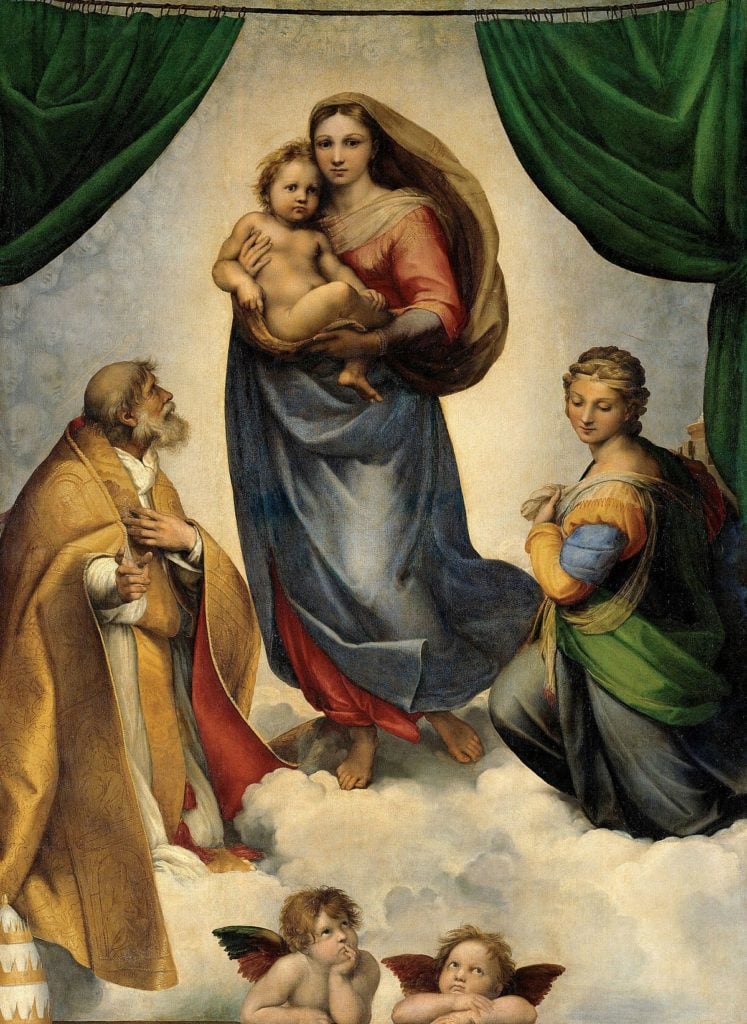
The Sistine Madonna, by Raphael

“Humankind cannot bear very much reality”, T.S. Eliot, Four Quartets

Today is Wednesday March 24th. Kia ora katoa.

Worries, worries, worries. Perhaps writing this will put things in some perspective. We’re not being shot at, being flooded, or falling ill, so on that scale we’re much better off than many folk.  But still, there are a few frustrations at the moment.

Yesterday I went to Tai Chi (second to last class of Term One), and afterwards went shopping at Moore Wilson’s. I had made a list, but sadly, they had no apricots, black doris plums, or greengage plums. Avocados were dearer than at my local supermarket. They also didn’t have vegan Easter eggs, although when I asked, I was shown some that were dairy-free and gluten-free. I selected one large one, and a bag of little ones, but when I got home, I had left the little ones behind. How very annoying. It’s quite a mission to go to Moore Wilsons. I did buy some yummy donuts, and some raspberries. They do have feijoas, although I already have some at home.

This morning I went to hymn singing. I was a few minutes late, and the group sounded wonderful. We sang Bach’s Passion Chorale. Afterwards  I had morning tea (coffee and a savoury scone), and then caught a bus to Johnsonville Library, and then a bus home.

I zoomed into a Stroke Foundation session which featured a talk by Bob Kerridge. While this was interesting, it didn’t really have any bearing on what happened to me. He had had a mild stroke, had been diagnosed by his GP and spent two weeks in Hastings Hospital. He had already retired, and moved to Havelock North. He had all kinds of advice about listening to the Stroke Foundation, and working hard at recovery. I did find this extremely frustrating. My life has been totally affected by what happened to me, and, once again, I found myself grieving for my former life. Unlike Kerridge, my fatigue has not gone away. I suspect many of the participants found it frustrating, too.

I feel very conflicted about the party I am planning. But I am determined to behave myself in public, and have a good time – set a good example. Last week we had to choose between attending two funerals, and at a recent chat with friends about funeral arrangements, we joked that we would rather like to be at these parties we were arranging at our own funerals.

On a slightly more positive note, I spoke to an aunt recently about trying to use crutches and not finding them useful. I realised then that I no longer fear falling backwards, like I did in the early days. I guess that’s a good thing.

Overseas, there is pretty awful news. While more people are being vaccinated, new variants of coronavirus are spreading too. Now experts are saying that if you’ve been vaccinated, you may still get Covid 19, but it won’t be so bad. You’re less likely to be hospitalised, or die.  So it may not be quite the Get out of Jail free card that we’d anticipated. There is talk of a trans-Tasman bubble from some time in April.

It is now Sunday March 28th.

In New Zealand, Covid 19 isn’t really a thing. It’s certainly not a big worry. Here we are back to being really concerned about other things – pre-Covid objectives, the housing crisis, what flavour Easter eggs (and buns) to buy, what should be done to the house that I live in. I had thought that my party later this year would leave plenty of time for vaccinations, and a Trans-Tasman travel “bubble”, but now this may not be likely. While we have put off any thoughts of travel “overseas”, we still worry desperately about our loved ones overseas: when will they be vaccinated?  What terrifying new strains of Covid will emerge, in the meantime? Will enough people be vaccinated to provide a degree of safety and assurance to relegate this coronavirus back to the status of other diseases we were afraid of: pneumonia, influenza, and the consequences of falls and aging.  I read a story in the Guardian about how Australia is messing up vaccine distribution. Australia! This is so frustrating. I hate to generalize, but it does seem that right-wing governments continue to make a mess of this. All through 2020 the hue and cry was for vaccines, and several have been developed, super-fast. Now, their distribution seems to be taking almost as long as their development, in many places. For the most part, Covid 19 has not interfered much with my life. Now, potentially, it will. I didn’t have a party for my 70th birthday. I should like to have one later this year.

Recent news from the US continues to disturb. While it’s such a relief to have President Biden, and not to have the constant bull-horn effect that we had from 2016 to 2020, the fear engendered by T (What has he said/done now?) has morphed into another fear, that of the coronavirus, which has been politicised beyond belief. The recent mass shootings in Atlanta (why were the spas even open?) and Boulder, Colorado have both terrified us and reminded us of other dreadful mass shootings. Our granddaughter is Chinese. Our grandchildren are half-Chinese. This violence feels very close to home.

Also terrifying is the Republican Party. Although they lost (just) Congress, the Senate, and the Presidency, these losses have not inspired reflection on why they lost, a new policy platform, or better candidates; rather, Republican-controlled state legislatures have sought to make it more difficult (than it was already!) to vote, presumably because they think these moves will favour republican voters. Many have also given themselves the legal right to change the outcome of an election, if they don’t like the majority result. They are determined that this interlude of 2020 won’t happen again. Guns and conspiracy theories abound. Republicans don’t seem at all interested in courting disappointed voters who have turned Democrat; they don’t need to, if they can change the results.  I watched a video of Mike Duncan on Vice News again speaking about the downfall of the Roman Republic; about the overturning of voter urns, so as to render elections null and void; and the stupidity of some emperors, the way power went to their head. Now we have the lie of the so-called “steal”, guns, and conspiracy theories. Someone else spoke about the lack of accountability, and we have seen this in Ted Cruz’s recent (and repeated) comments, both about the Texas power crisis, and the mass shootings. “Thoughts and prayers” were bad enough, but the current cynicism shown by some politicians is just so desperately sad and scary.

Joe Biden and his team are quite wonderful, and doing an amazing job (which people like, by the way); but I fear this will just be an interlude.  If 2016-2020 was terrible, I fear worse is to come, and what’s more, although we fantasise about doing another trip, and revisiting some places, visiting new ones, I have to accept that this may never be within our reach again.

Here we have new things to worry about (although thankfully cruises and gut health are not yet rearing their ugly heads); overseas, the coronavirus continues to work its wicked way throughout the world: Brazil has a record number of deaths; Europe is experiencing a “third wave” (?); the UK’s new rules are confusing, as ever.

Yesterday we went to see another art movie: Raphael: The Young Prodigy. This was a very good film, focusing mostly on Raphael’s paintings, thankfully without much other stuff. He was contemporary with Leonardo da Vinci, Michelangelo, and other great Renaissance artists, yet, although his works bear the influence of Leonardo, he brings his own genius to them. What a great painter he was! How interesting his paintings are – his madonnas, his Cherubs. How beautiful his women are, and they look happy! Some of his work is like that of Caravaggio, where he does amazing things with light. We saved our comments for later, and then discussed the movie. When we got home, we got out books about Renaissance art (and architecture), and “bathed” in this again. I remembered that when we last went to Italy in 2010, we were busy, yet only saw a fraction of what we could have seen. And, when it comes to the Renaissance, should the stress go on the second syllable, or the third? Although we can’t go to Italy right now, we can go to the cinema, and see great movies. Ngā mihi.

A Pandemic Year continues

America's Cup 2021: Team New Zealand and Luna Rossa locked at 3-3 but low  action racing pattern continues
America’s Cup Yachts

Today is Sunday March 21st. Kia ora.

I haven’t written for a few days now. So what’s been happening? Easter is coming, and with it the prospect of loneliness, of needing to get through the long weekend. The local supermarket is closed for Good Friday and Easter Sunday. JD and I generally don’t go away for long weekends, mindful of the increased traffic (and risks that entails), and increased prices. It spells the start of school holidays, an end to Tai Chi for term one, and a break from singing. It marks the end of Daylight Saving here, and we are suddenly plunged into darkness, i.e. darker mornings and evenings starting earlier. I hope there will be some good movies on; I must ensure I have good books to read (this shouldn’t be a problem).  I posted a parcel of Easter eggs to my daughter in Wednesday morning, hoping it would arrive in time for Easter, bearing in mind the vagaries of NZ Post: it arrived on Friday!  So she’s already eating her Easter eggs.

I have been to Tai Chi, and two lots of singing. We went to see Blackbird, starring NZ’s own Sam Neill, but I hadn’t realised that it was about in effect a suicide plot.  It received very good reviews, and besides our Sam, it starred Susan Sarandon, Kate Winslet, Lindsay Duncan, and Mia Wasikowska. So that was a bit of a downer. Nevertheless, it was well-written, and well-acted. Last Friday I had not one, but two funerals that I wanted to attend so I had to make a choice. I then decided that, whatever my reservations, I would arrange a gathering for later this year, while we’re still alive.

NZ won the America’s Cup last Wednesday!  I found it difficult to watch at times, what with my double vision, the moving lines, the delays, the moving yachts, and ever-changing camera angles. I also found the Louis Vuitton Cup races pretty boring, although it was interesting to see Sir Ben Ainslie, skipper of Ineos, the UK boat, doing rather well.  The vagaries of wind shifts, delays, and near disasters made this frustrating. But I did watch the last race. Emirates Team NZ and Prada Pirelli’s Luna Rossa (sailed by former foe Jimmy Spithill and the Italian owner), were tied for the first three days. The last, and winning race, was delayed, but was the best yet – a definitive win. And now, all of a sudden, it seems, it’s all over!

Things I remember: Jimmy Spithill’s graciousness in congratulating the NZ team on their win; the elegance of the Italian team at the press conferences after each two-race session; the anger of Dean (I kept forgetting his Christian name) Barker – he used to be quite a dish! The beautiful Italian spoken by one of the Italian team; for Peter Burling, ever cool and calm under pressure, it’s just another day at the office (but what a day, he almost makes it look easy); the patient crowds at the America’s Cup Village (I do hope they will go touring and help the flagging tourism market); and, last but not least, Rod Stewart’s rendition of Sailing (we sang it the next day, too). 

There was a family discussion about the taxpayer funding supporting this event. Most of us concluded that it was worth every penny, to be able to do this here, to bring in many visitors, and for NZ to win decisively, in the end. Would their “boat” be fast enough? Would the famous foils work? The innovative Kiwis did it again, and we are so proud of them.  Sure, it’s costly, but no one gets hurt (other than some egos).  We go for good sportsmanship, and a sense of fair play.

In Aotearoa/New Zealand, vaccinations are proceeding, although not as quickly as one would like. We are to have the Pfizer vaccine, but MIQ workers are being vaccinated first, then Counties Manukau. This is as it should be, of course, but I suspect we will get this year’s flu vaccine first. It’s suggested that JD, our daughter and I are in Group 3, likely to receive the first dose of the vaccine in May (end of May?), and the rest – under 65’s – later.  There is a suggestion of a trans-Tasman travel bubble from April. So that would open the way for some Australian visitors to come to my party later this year.

Overseas, one member of our immediate family has received her first jab – my daughter-in-law in the UK. She expects to receive her second jab towards the end of June (not the ideal three weeks).  There seem to be all kinds of issues with vaccines. Although we were hanging out for them, and it’s wonderful that several have been developed so quickly, distribution seems to be really difficult, I gather NZ is trying to build a new IT system to record who has the jabs, but it’s not as though administrators haven’t had several months to think about this and plan for it.  Then there are the people who won’t have a vaccine. While there is a risk to having it, it’s far less than the risk of having Covid 19, and you’ll probably need to be vaccinated in order to travel. That said, there are alarming cases of vaccinated people catching Covid 19.  There are also alarming stories of deadly new variants, one doing damage in New York, while Paris is to impose a new four-week lockdown. Then there are alarming situations in the US of Republican-governed states throwing caution to the wind. American people are fed up with restrictions, and who can blame them? Except it’s unwise to be unwise, as President Biden and Dr Fauci keep telling them.

There is great and legitimate horror and upset about the killings in Atlanta, where it seems Asian women were targeted by the lone gunman (who was said to be “having a bad day”). While this is terrible, why were these businesses open? If massage (and sexual relations) isn’t close contact, then what is?

I recently watched New Amsterdam, all three series, and while some of the stories are rather far-fetched, it’s impossible not to like some of the characters and be interested in them. Series 3 (only a few episodes have been made and released so far) concentrates on life several months after the pandemic struck, and the impacts are evident on everyone’s already stressful lives – of doing everything remotely, and always being afraid. The last episode I watched brought home to me just how difficult things are for folk overseas, and how scary; not only to have one’s way of life so disrupted, but one’s way of work, too; what strains this has put everyone under. Yet again, I feel guilty here, that I have not really been affected by this schemozzle, but my loved ones have. 2021 may be a New Year, but we are not out of this mess yet. However I discovered during our strict lock down, now a year ago, that one can hug one’s grandchildren (they are much shorter than us!), and at my dear friend’s funeral, that wearing a mask does not stop you hugging someone.

I am reluctant to comment on US politics. It is such a relief to have President Biden being “presidential”, and not to have Trump reacting to everything on twitter.  I have been reading Mike Duncan’s The Storm before the Storm. I read the story of Tiberius Gracchus, and how he was murdered, and his body thrown into the Tiber, after introducing agrarian reforms. Then his brother Gaius came to power, and did immense good for the Roman Republic. But it all went sour, the conservatives came to power, and Gaius, in ignominy, took his own life, It had all gone sadly wrong for good statesmen.

Some have said that the riot at the Capitol on January 6 represented a turning point in American history. These dreadful events are now being “normalised”. Others say the turning point was the failed plot to kidnap and kill Governor Gretchen Wittmer, of Michigan.  Whatever they say, some truly terrible things have been happening in America, with alarming death threats made against many officials. This time is a relief, fraught as it is with other crises; further backsliding is feared as Republican governing bodies introduce voting laws that will make it even more difficult to vote. I am reminded of the scene in Germany after The Great War (WW1), when the lie was perpetuated that Germany hadn’t really lost the war. The Nazis, led by Adolf Hitler, told many lies, and made the Jews he scapegoat for all troubles. It strikes me that a certain person is very like Hitler, and the perpetuation of the lie that Joe Biden didn’t really win the 2020 presidential election is very dangerous. Some say he is weakened; others that he is just biding his time, and the republicans won’t let this happen again: Democrats in charge of the White House, Congress, and the Senate, albeit by very slim majorities. What the Dems are doing, is actually very popular.  We’re enjoying the sanity break. Ngā mihi.

A Shake-up

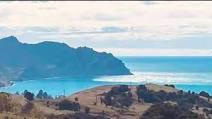
A Big Wave at Tokomaru Bay

It is now Sunday March 7th. Kia ora katoa.

On Thursday night there was a strong earthquake, the first of several, as it turned out. This woke many people, except for those who, like me, were awake already. Here in Wellington the shaking wasn’t particularly strong, but it seemed to go on for a long time. A quick lookup on geonet.org showed it was centred 125 km east of Te Araroa, on the East Cape of New Zealand.  It is now rated at 7.2 on the Richter scale, at a depth of 12 kilometres (it was initially thought to be much deeper). The initial level of severity varied, this earthquake was out at sea, but our thoughts turned to the possibility of tsunamis around the NZ eastern coast line, which includes Hawkes Bay.  Our two sons overseas were monitoring this situation, too, with some anxiety. We conversed on Messenger.

The advice here is “if an earthquake is long, or strong, get gone”; in other words, get to higher ground. Things were a bit confused initially. Nema, a division of Civil Defence that I hadn’t previously heard of, recommended initially that anyone in a coastal area get to higher ground.  We tried to work out how close our daughter’s home was to the coast – it’s quite a way inland. Anyway, we figured, if her house needed to evacuate it wouldn’t be a big deal to rouse them and move them. Meanwhile, our sons overseas were sending links to twitter feeds which had some people heading to Bluff Hill in Napier; not a great idea, I thought, seeing it had been thrown up in the 1931 earthquake. We thought the Hohepa settlement at Clive would need to evacuate, but a new advice came from Nema: only residents from Cape Runaway to Tolaga Bay in the East Cape should evacuate. We didn’t ring our daughter’s’ home in Napier, figuring they would be quite busy enough doing whatever needed to be done. Fortunately, although there was strong shaking in Napier, there haven’t been any reports of major damage.

I flicked between Stuff, the NZ Herald, and radio NZ websites, trying to ascertain information. At 5:36 am a message came from Hohepa, advising that they had not evacuated, but were ready to do so if needed. As expected, they had the situation under control. But the drama wasn’t over yet. There were several aftershocks during the night, and then a big earthquake (8.1) near the Kermadec islands at 8:30 am. These islands are not inhabited, and are administered by the Department of Conservation. There was a further tsunami warning, this time for the north of New Zealand. There were photos of queues of cars moving away  from coastal zones on narrow roads, and some remarkable photos: someone filmed a large wave coming into Tokomaru Bay, and someone else sent a picture of the Kaipara Harbour, with the tide out, and much more land visible than usual.  The folk at Clive went up to the Hohepa School site at Poraiti, where they had pizza for lunch, before returning to Clive. In the event, there was no tsunami damage recorded – just interesting times, and some strange behaviour by nature during that day, last Friday. I rand my daughter, only to find that she and the other residents in her house had slept through the ordeal!  The wake-over, of course, had woken up.  It was a relief to know there was no damage there. We had several lovely messages from Hohepa during the day.  Exciting times, and a night with very little, if any, sleep. We are reminded that we live in shaky isles.

In other news, New Zealand has returned to Covid 19 level 1, while the Auckland area has moved from level 3 to level 2. No new community cases of Covid 19 have been diagnosed. Vaccinations continue for MIQ workers, and the rest of us, hearing of many overseas who have been vaccinated, are getting a little restless at what now seems the rather slow pace here. Our party, later this year, is looming ever closer, and I fear it will be limited to locals only if our borders are still closed and require 14 days in MIQ – at guests’ expense. JD’s two sisters intend to come from Australia. I hope they will be able to.

I am reading a most interesting book at present, called Hitler and Stalin, by Laurence Rees (an Englishman). Why has my interest been sparked again by this conflict? During our lockdown I read Stalingrad, by Vasily Grossman.  Just recently, I read East West Street by Philippe Sands,  which made a huge impression on me, and introduced me to the city of Lvov, (which I’m ashamed to say I had never heard of), in what is now Ukraine. I’ve also listened to several talks by an American historian, Dr Stephen Kotkin, who is writing a biography of Stalin – two of the three volumes are out so far.  I have read with great pleasure A Gentleman in Moscow, by Amor Towles.  I see books in Unity Bookshop, and then request them from the library. When they turn up (completely at random), I have to stop and read them. They’re issued for three weeks, and sometimes can be renewed – once only, so that’s generally not enough time for me to get through a big book, especially when several arrive at once.

We watched the US series Winds of War, and then have just finished watching a British series, Fortunes of War, starring Kenneth Branagh and Emma Thompson as Guy and Harriet Pringle, based on Olivia Manning’s series of novels (which in turn are based on her own experiences of escaping the Germans through the Second World War. He was a teacher of English Literature, sent to Bucharest, whence they escaped to Athens, and then to Cairo. Guy and Harriet have an unusual relationship, which rather reminds me of my own; or shall I say, Guy Pringle reminds me of my own husband. I don’t at all claim to be like the inimitable, witty and beautiful Emma Thompson. What adventures they have! And how strange their “homes” are, often a room in someone’s house, with close connections to the British Legation. Guy and Harriet are very different people, without familial connections. They have very different friends, but their relationship works, somehow, with a great deal of acceptance on her part. He loves her, of course, but doesn’t seem to need her, until she’s not there, in the background. He thinks her lovely friends are crazy. They think he is, too, and wonder how she puts up with him. She has a certain independence of her own (and of course, her writing including her keen powers of observation). A later novel tells of their going to the Caribbean, and of losing an unborn child. This must have been a devastating and lonely experience.

In all of this, and my re-reading of Roman history, and, of course, the recent pandemic (which has now dominated everything for over one year), I am reminded how tenuous civilisation is. Reading about Hitler and Stalin, I am reminded how unbelievably cruel they were. Human life had little if any value. Before World War II officially began, they were prepared to move thousands of people in Poland. Stalin was the reason behind the Great Terror, and the Holodomor the famine in Ukraine in the 1930’s. Hitler had no qualms about starving the inhabitants of St Petersburg (or Leningrad, as it was then called), where the Bolshevik Revolution had started in 1917. They were both strange, quick-tempered, difficult to communicate with, and had no qualms about betrayal. Each was loyal to himself. 

I’m also very aware of the desperate decisions people made, trying too ensure their safety, which often resulted in fleeing for one’s life, splitting up families, and not knowing sometimes for years what had happened to one’s loved ones.

There’s plenty of history here for Americans to be wary of right wing and left wing extremism, but I do wish the Democrats would exhibit something socialist!!! Why does one read history? It’s so interesting, for one thing; it also tells us what can happen in desperate circumstances. Meanwhile, despite right-wing forces’ success worldwide, NZ elected a Labour Government, and for all its failings, I’m happy to be right here. Ngā mihi.

Accountability

The Primavera | painting by Botticelli | Britannica
Bottivelli’s Primavera

Today is Tuesday March 2nd. Kia ora.

Yesterday morning I was listening to an American conversation, and contemplating NZ’s housing situation. The speaker, Dr Stephen Kotkin (a historian for whom I have great respect), noted that the elites are not accountable. This remark greatly struck me at the time; and then I thought, well of course, the elites own most of the land, they have rarely if ever been held accountable. If overthrown, they’ve generally been overthrown by revolution, an end result being if they are allowed to remain alive, they no longer own stuff, and are forced to “share”. So why are elites always so reluctant to share?  Why would they not want others to enjoy some comfort and ease in their lives? Why why why? Doesn’t it make sense for all children to be vaccinated? For everyone to enjoy good roads and footpaths and safe bridges? For everyone, not only children but their parents too, to enjoy somewhere safe, warm and affordable to live?

When NZ was first colonised by white people, there was a sense of compatibility, that although there was wealth, and “old money”, things by and large were quite egalitarian, although to be sure there were elements of conservatism and privilege. It strikes me that the situation preceding the Spanish Civil War was similar, inspiring many to join the International Brigades in the fighting to preserve the Spanish Republic. Sadly, this war was taken over by other elements, including anarchists and communists, and became a weapons testing ground for the Second World War that was to follow. Australia was colonised largely by so-called criminals deported from Great Britain, and that has greatly affected their history too. So New Zealand was a bit of a training ground for the egalitarian society, where, when I grew up in the 1950’s, everyone was a lot more equal than they are now. Sadly, American influence has crept in, not in a good way.

At this time we are noting many anniversaries, as we remember our growing concern a year ago as coronavirus cases spread around the world. It was a relief when New Zealand went into a strict lockdown on March 25, at alert level 4. Since then, regimes for testing, precautions, and managed isolation have been modified to adjust to changes in what we know about the virus, but it would be safe to say that NZ’s situation has been very well managed, and the four level system is a big relief – we have a pretty clear idea of what happens at each level. Many organisations react accordingly, advising what precautions they are taking. It is extremely ironic that there have been no new community cases of Covid 19 diagnosed since Auckland went into its latest level 3 lockdown. I assume the government had good reasons for acting as they did, to re-impose restrictions.  People up North have found it very frustrating; I expect here in Wellington we accept restrictions and we just get on with it.

Young people are said to be angry with Jacinda Ardern, about her communication. She’s an excellent communicator, in my view; but some people are saying they didn’t realise they needed to self-isolate after taking a Covid 19 test; or they didn’t need to isolate when Papatoetoe College was closed.

Today I caught the Guardian newspaper, usually a sound purveyor of news, having it both ways. They claimed the other day that the NZ birth rate was the lowest it’s ever been; then today they were claiming that the pandemic has been good for the birth-rate.  I don’t think both can be true.

The weather her has been extremely weird. Some days it’s been quite warm (though seldom rising above 23֠C). Sometimes it’s been very muggy. Although officially the humidity rate is around 70%, it sometimes feels much stickier than that. Then it usually gets cold at night, so it’s worth having warmer stuff to hand if you wake up cold and need to warm up.

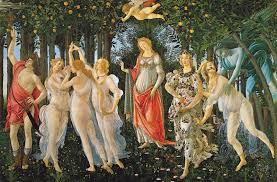
Tonight JD and I went to see a very good  film about Botticelli. It was fun to share thoughts about this afterwards, and, of course, a luxury to see his wonderful paintings, many of which we have seen.  I have always thought he was a marvellous artist. I first saw the two most famous paintings – the Primavera and the Birth of Venus – in the Uffizi Gallery in early 1974, when we first went to Europe. They were quite hard to find, and not well displayed – a big contrast to our next trip to Europe in 2010 when we had to pre-buy tickets to a revamped Uffizi, and share these beautiful paintings with the crowds that were there.  The women are so beautiful – they don’t look unhappy, and nature features – the Primavera is in a rustic setting.

It’s now Friday, and there have still been no further community cases or Covid 19 reported. While this is good news, I guess there is a sense of fear about other cases that  may be lurking out there. It seems that some folk catch the coronavirus very easily, while others are resistant.  Vaccine delivery continues, and is expected to be transformational; meanwhile, people are still getting very sick and dying from Covid 19, and the variants are scary. Some say we will have to have an annual injection to counter different variants as they emerge.

It’s clearly unwise to make plans. Nevertheless, we have made a booking for a party later this year. I need to lose my “Covid curve”, so that I can fit into a party frock. I think that even if people can’t come from places like Australia, we can still have fun and celebrate and commemorate here;  there are big birthdays, deaths, a wedding anniversary…

We return to the question of accountability. For years we have been told that rich people deserve a good return on their investments, such as retirement “homes”, technology companies, weapons-related industries. This argument justifies the high remuneration paid to chief executives, and the minimum hourly rate paid to most workers. Yet surely investors always take risks, and their  wealth should not be at the expense of those who should earn a “living wage”.  Texas recently experienced a major power outage, and desperate situations in which many people didn’t have access to water. Yet their mainly Republican politicians take no accountability at all for this situation, and fail to represent many of their citizens. Ted Cruz was seen to skite at the recent CPAC conference in Orlando about his (much derided) trip to Cancun. Governor Greg Abbott has declared, prematurely, that Texas is open for business, and that any existing mandates are to be lifted.

In Sunday at 6 am Auckland is to come out of Covid level 3, and into level 2. The rest of the country goes back to level 1. No new community cases of Covid 19 have been found, yet I’m sure the government made the decision to go to level 3 for a week based on information they received.  That’s it for now. Ngā mihi.

Reality Bites Again

It is now Sunday, February 28th. Kia ora katoa.

Last night the government held a press conference at 9 pm, where the Prime Minister, Jacinda Ardern and Dr Ashley Bloomfield addressed the nation, followed by the Deputy Prime Minister and Minister of Finance, Grant Robertson.  Auckland is to go back to level 3 Covid 19 restrictions for one week, starting at 6 am this morning, and the rest of New Zealand will be at level 2. I guess we know the drill, now, and are quite familiar with these levels. Another community case has been found, connected to Papatoetoe College; this person had had three negative tests for Covid 19, then went to their GP because they had symptoms of Covid 19. While awaiting the results of their test, they went to a gym! How stupid is that? Their mother has tested positive, too. Consequently Auckland is at level 3 for a week, and many events have been affected including a Round the Bays Run (cancelled), a T20 Cricket Match (relocated), and America’s Cup races will probably have to be delayed too. I can understand Aucklanders’ frustration with this situation – Auckland has been affected three times since the whole country went into lockdown, but at least we are used to this – the kinds of restrictions; mask-wearing; QR code scanning, and, of course, washing our hands. My cousin in Auckland will be so relieved her son’s wedding went ahead last Saturday, in between level 3 lockdowns (8 days!).

In the meantime, I’ve had an update from Hohepa, and I’m waiting to see what will go ahead this week; I would pick tai chi, and singing on Thursday; Wednesday’s events (hymn singing and a movie) may be cancelled. So really, it’s no big deal for me here. I guess it’s a reminder, though, to take this ever-mutating disease seriously: we have vaccines approved here now, and MIQ staff are being vaccinated; but new variants of Covid 19 are out there, sometimes with no symptoms, or different symptoms; some people contract this virus, despite being only “casual contacts” of an infected person; other people, who would be regarded as “close contacts”, stay free of the infection. So we’re not out of the woods yet, and we still don’t really understand the risks involved. One asks again, is infection airborne? Or just carried on surfaces, such as hand-rails, door knobs, lift buttons? One wonders what risks are being taken and not owned up to. It seems there are questions about the air-conditioning system at the Pullman Hotel, used for MIQ, and the scene of some infections. I wonder about bathrooms where, when you turn on the light, the fan comes on too. One may  prefer to do one’s business, flush the loo, close the toilet seat, and then put the fan on, to avoid circulating faecal germs. But if you don’t have a choice between using the light and the fan, you’d prefer not to be in the dark. Has anyone in the government thought about this?

It transpires that these new Covid 19 infections are the UK variant.  There are no new community cases today (Sunday), but more are expected. I imagine that Aucklanders are furious. I went up to my local store this morning, and they’ve already put distancing stickers in place (I almost tripped over one), and separated the entrance way for people going in and out. Nevertheless, someone ambled in the exit door, and someone else tried to hurry me up at checkout. I suspect many people still don’t know we’re at level 2 again, although my cell phone beeped loudly and messages have been displayed on Maori television: that’s great, but not so great when the message obscures the subtitles of their rather good Sunday evening movie, The Gilded Cage (the language was French, about a Portuguese family living in Paris, but it was mostly so quickly spoken that I couldn’t understand it).

While thankfully levels of deaths and hospitalisations are falling in most places overseas, it does seem, though, that if you’ve been vaccinated, and subsequently get Covid 19, you have a much better chance of having this disease lightly. So that’s a relief.

There is still quite a lot of superstition about vaccines, although we’ve been hanging out for vaccines, to get us out of this situation, and let parents feel safer about sending their children to school, and teachers about teaching.  Vaccination is underway here, with the Pfizer vaccine being chosen, and MIQ staff first in line, as they should be. Jacinda Ardern has undertaken to post information (an Instagram post), but I found the comments below quite amazing, ranging from the truly grateful to the amazingly sceptical. While I accept there’s always some small risk involved in having a vaccine administered, I am a strong believer in vaccines. Two of my mother’s siblings had polio, and NZ schools were closed during the polio epidemic of 1951. I remember the huge fear of often deadly diseases, and the relief when the first vaccines arrived, when I was at primary school.  Vaccines are just huge, and have transformed many aspects of our lives, along with a woman’s ability to control her fertility. Vaccines and contraceptives are among the factors that enable parents to expect their children will outlive them, and for women to pursue careers.  Chris Hipkins has suggested that South Aucklanders be vaccinated first, and I’d have to say I agree with him.

There continues to be a housing crisis in this country, with prices to buy or to rent having risen enormously. This situation has arisen largely because of the Covid pandemic.  Kiwis are coming back to New Zealand, often very well off. Meanwhile, New Zealanders can’t go overseas, so consequently there are few properties available, and more buyers wanting to buy them. The cheaper houses are, of course, in places that don’t have many jobs available, and have smaller populations, which doesn’t suit everyone, although there are many more options for employment with more people working from home. The average house price is about $1m. While interest rates are low, and it’s relatively “easy” to buy a house (using Kiwisaver for a deposit), you still have to have a good-paying job to service that mortgage, or that rental (the average weekly rental is $600).  So how do people on a benefit, or on National Superannuation, cope? How much are rent subsidies? Is private ownership not out of reach for many families? People have a right to feel secure about their living arrangements, that they can afford the rent, or the mortgage, in an environment that works for them in terms of schooling, transport, and services, like shopping and medicine.

There’s a huge fashion for tiny houses at present.  While this suits some folk, the coronavirus pandemic has made us re-evaluate everything we value. I was relieved that my three sons who own homes have nice ones, with a yard and a garden, and fencing so there is room for the children to play outside as well as inside (a blessing, since you couldn’t use equipment at the park). I was glad of my large house, and pleased I hadn’t got rid of my books – I had plenty to read, and re-read.

It’s easy to forget, while blaming Jacinda Ardern for this housing crisis, and saying she should “do something”, how bad the housing crisis was under National. The situation was dire then, with many houses standing empty (how many houses does one person need?), and state houses sold, while folk lived in their cars, in someone’s garage (not always rent-free), shared a small house with others, shared beds, and many had far from adequate living conditions. We have come some way since then, with the Labour government having a kinder attitude towards prioritising needs, but there is still a great deal to be done. A friend spoke about driving around the poorer South Auckland suburbs, where housing conditions are truly dire. Surely everyone that wants one deserves a home, that is in reasonable condition, with adequate heating.  It is not as bad here as many countries overseas, including the US, where some don’t have reticulated water or plumbing, but surely we can do better. It seems to me whenever there’s a more liberal, democratic, kinder government elected, they’re so scared of annoying their right-wing, Tory/Republican opposition that they fail to do the things they were elected to do, namely, make things better for poorer people!  How often have the right-wing seriously annoyed me, valuing money, and return on their investments, more than human life itself? I should point out here that despite the failure of Kiwibuild, a record number of building permits have been issued, and councils are opening up more land for building houses. That’s well and good, but still doesn’t take into account people who are not well-off and need a safe, affordable place to live.

It seems to me that the Hohepa model works well, where each home/ household is a community, and where there’s some give and take. While the residents are carefully matched, there is an understanding that everyone is entitled to their own room, and to be safe and warm, and have their basic needs attended to. The government went through a phase of asking folk what they’d like, and setting them up in flats for one, with help. What a lonely situation! Nobody ever asked me what I’d like!  The question is worth asking, but more than once. There are many factors that go into what “one would like”, including good company, more lightness or darkness, peace and quiet, or background noise, what kind of pets, if any; what kind of neighbourhood. My daughter lives a good life. If one needs to be cared for, it’s worth thinking about these issues. Fundamentally, any living arrangement requires compromises, which may well change as one gets older. Married, single, having a family, multi-generational, it’s advisable to have a schedule, and some kind of discipline within doing what you like, with occasional treats, and respect for others.

While the Hohepa model has people living in homes/houses, they come together for many events: the frequent festivals, celebrating the changing seasons – Harvest (autumn), Blazing Star/Matariki (mid-winter), Spring Carnival, and, of course, Christmas is a special time, with plays that are performed every year (the Paradise Play and the Shepherds’ Play), and Christmas carols. They all come together for funerals, and someone stays with the body until the funeral has been held. There is a great richness of events, celebrations, and the beauty of nature, with most of it accompanied by good food, singing, music, and folk-dancing.  The emphasis is not to “normalise” these special people, like our daughter, but to accept life and celebrate nature’s goodness, while being aware of her potential threats.

It is now Monday. The number of newly diagnosed Covid 19 cases has not yet been announced, but the Prime Minister is to hold a press conference at 3 pm. Somewhat predictably, my Wednesday’s planned activities have been cancelled – hymn singing (in the organ loft, it’s quite a small space), and a movie at the Khandallah Community Centre. Debate continues about singing on Thursday; I’ve had no word about Tai Chi tomorrow.

Apparently there’s one new case in MIQ (another case of Stuff publishing misleading information – how annoying is that?), and none in the community. We look forward to the 3 pm press conference. That’s it for now. Ngā mihi.

Plus ca change…

Little Gidding Church | History & Photos
St John’s Church at Little Gidding

Today is Friday February 26th. Kia ora katoa.

It strikes me that now in fact I’m able to “write in my own voice”, something I wanted to do when I started studying Classics again in 2006. Whether anyone takes me seriously, is another matter. But I guess it doesn’t really matter. I enjoy writing, from time to time, and it’s interesting now and again to look back on what I’ve written. It’s good to have a voice.            

I have been reading and reflecting on political systems, as I think many are doing, watching the political scene in the US.  The political situation in the UK is awful, too, but that doesn’t have nearly such a bearing on the rest of the world.  The political situations I am most absorbed with include the history of Rome, and that of the Roman Republic, in particular; that of Stalin, in Russia, and that of Nazi Germany. Many of us look to these “episodes” in history perhaps to provide guidance, and warnings, about the present, mainly the present situation of US politics, and the future that lies ahead. Nazism affected almost the entire world; the US political system affects us all too, although we are not at war.

I have been reading Mike Duncan’s The Storm before the Storm, which tells about the killing of Tiberius Gracchus in the Roman Senate, when he tried to push through land reforms that would have helped poor people, but which the rich saw as a threat. The event of Tiberius’ murder resonates with the violence that took place within and outside the US Capitol on January 6th; this was an unbelievable event, but it really happened. Many people, not just politicians, were in fear for their lives. Of course, the story of Tiberius Gracchus is complicated, and (somewhat fortunately), Mike has a voice I don’t particularly enjoy listening to – he’s done many podcasts about the history of Rome and about Revolutions.  What fascinates me the most, I guess, is that while I know all this stuff (I studied it for years, both at school and at university), I didn’t really know it: Reading it again, I feel that I was desperately ignorant, before, and that I didn’t understand the real meaning of these events. I am reminded of T.S. Eliot’s poetry – “In my end is my beginning”, and about coming back to a place, and knowing it for the first time (see below).

Other notable comparisons include the Reichstag Fire of 1933, which occurred just four weeks after Hitler was sworn in as Chancellor of Germany.  There is lots of discussion about Stalin’s Terror which followed the Holodomor, the manmade famine in Ukraine in the 1930’s; the practices of the Nazis, and the practice of tyranny. What is even scarier is its normalisation, and how difficult it is to condemn legally such acts of domination: another recent read, East West Street, recounted the difficulties of the Nuremberg Trials, and bringing a few of the perpetrators of such terrible deeds to account. Of course, prosecutions don’t bring back the dead, return the possessions, or undo the dreadful fear and deprivation caused, but one hopes that it won’t happen again, and that lawful actions will prevent recurrence.

In the US, politicians (especially Ron Johnson, the senator from Wisconsin) are already downplaying the violence at the Capitol.  Some politicians (e.g. Marjorie Taylor Greene) believe in the Q-Anon conspiracy theory; some (e.g. Lauren Boebert) insist aggressively on carrying guns to the Capitol, and Republicans everywhere are making it harder to vote. There seems to be no ideology, or platform of policies, unless the hard-right gun-toting, anti-women, anti- science, anti-immigrant, anti-coronavirus, generation of fear is a platform; meantime, despite the odds, we have President Biden and his team working valiantly to get vaccine supplies and get folk vaccinated, get a relief package passed into law, and make things better for everyone. I rather suspect that his political opponents actually like these actions.  There is so much to do in four years (two, if you count the mid-term elections), for the democrats. So many good things that need doing, as well as so many to be undone.

I don’t like to make predictions, but I think we are seeing the end of the American Empire, the end of American exceptionalism. When George “Dubya” Bush invaded Iraq in 2003, one of my sons remarked that we were seeing the end of the hegemony (what a lovely word!). There were huge protests against this war, based on some very shonky “evidence” that Saddam Hussein had weapons of mass destruction (WMD), whatever they were. It’s difficult not to think they just needed some excuse to go to war, a war marked by propaganda, the creation of imbalance between Sunni and Shia Muslims in the Middle East, the creation of Isis, killing of thousands of Iraqi civilians, to name some. It’s ironic that now Dubya’s presidency is seen much more graciously compared with that of Trump, and that hawk Doug Cheney’s daughter, Liz, now a praised Congresswoman who speaks out against Trump. What a turnaround, huh?

The recent extreme cold in Texas, and the ensuing power and water outages, saw some residents burning fences and furniture in order to keep warm Several people died in the cold. Some went “feral” in their attempts to survive. For a time, the US was a great place, in some respects. Many of our best scholars, including one of my sons, went there to study in preference to England or Scotland.  The US was on a roll with modern gadgetry, good infrastructure, good medical care (if you could afford it), and a generally high standard of living. Of course, this masked many deficiencies, including a widely prevalent gun culture, and racism and sexism, to name a few. Now the coronavirus pandemic has exposed deep injustices within the system. When I last visited the US, in November 2017, I remarked that it was both “wonderful and terrible”.  At that time, there were three big issues: the Las Vegas shooting, the arrest of Harvey Weinstein, and another season of alarming Californian wildfires. One would have expected that those great centres of white population, the US and UK, would be well-equipped to handle the pandemic. Sadly, they’ve been just awful. Thousands have died, all our lives have been disrupted, and it’s not over yet.  It’s shown us that at a very basic level, we depend on food, water and power; and government that’s trustworthy to make some rules and impose some restrictions that people can see are sensible in the circumstances.

Is the US getting better? Maybe it is for old white men with their tax cuts (Mitch McConnell does not face re-election for another six years); but white people will be in the minority, however desperately they try to hold on to power.

Sadly, I foresee more and more desperate situations in future: more environmental emergencies – flooding, hurricanes, earthquakes; and more weather-related crises of extreme heat and cold, more pollution, and the failure of utilities to cope. What price, civilisation? We had it so good, folks. But now investment is needed to safeguard such systems: no one is speaking about the recent widespread cyberattack on US computer systems – a very scary event, that may well be ongoing. It seems to me that people need to use much less of the earth’s precious resources.  How about moderating that heating/air con – to have it a fraction colder in winter, and the aircon up a notch in summer.

Many Americans are wonderful people, generous with many things.  I wish more would see sense, in wanting a more effective civilisation. Reputedly, someone once asked Mahatma Gandhi what he thought of British civilisation. He is said to have replied, that it would be a fine thing.  Ngā mihi.

We shall not cease from exploration
And the end of all our exploring
Will be to arrive where we started
And know the place for the first time.
Through the unknown, unremembered gate
When the last of earth left to discover
Is that which was the beginning;
At the source of the longest river
The voice of the hidden waterfall
And the children in the apple-tree

From Little Gidding, by T.S. Eliot

We took back control

World famous in New Zealand: Aratiatia Rapids, Taupo | Stuff.co.nz

Today is Wednesday February 17th. Kia ora!

Here in New Zealand we are waiting for a news conference to state whether the level 3 lock down will be lifted at midnight tonight, i.e. whether the current levels will be changed. There is a government meeting at 3 pm. There are not many changes at level 2: my tai chi and singing sessions continue; you have to wear a mask on public transport (I found my old one, but cannot find the supply of additional masks that I bought).  

For background, a woman, her husband and one of her teenage children received positive Covid 19 diagnoses on Sunday. Another teenager tested negative. They all have a more infectious UK variant. As the woman works for Sky Chefs, it was assumed initially that she had caught it somehow from a traveller/workplace interaction. Then yesterday there were no new cases of Covid 19 diagnosed, either in MIQ or in the community, but the Director-General oof Health stated that the mother may not have been the source. Today it was announced at 1 pm the two Papatoetoe College students had tested positive, both being “close contacts” of the original teenager. So we are all agog for the coming announcement. We are also on the point of vaccinations starting – they must be almost due to arrive, and MIQ staff are first in line to be vaccinated.

In Wellington, we are at level 2. Institutions have hurried to enforce the rules again – we have been her before – but most people are pretty casual about it all. In the ANZ Bank you have to queue to go in – I asked if I could wait in their entrance lobby, out of the wind. In the local Westpac, there is no enforcement, but you have to queue, anyway. In the new library, they are quite fussy about logging in. In some places, it is still hard to find the QR codes.

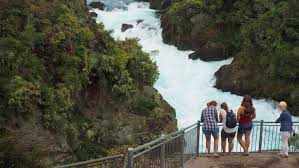
I am so pleased that we went to Taupo for Waitangi Weekend, before the new levels of lock down were imposed here. We saw a lot of things. The town seemed busy, but apparently it can feel far fuller than that. It was nice; the weather was kind, and it was good not to have to queue for things, although the day we bought our cruise tickets that day’s sailings had all been booked out. Everywhere we went, things were humming along, with no sign of recession. I am sure some people are hurting, but it is so nice to be able to do and see stuff in our own country.  I think people all over feel this. Many are not hesitating to see the country, seeing we can’t go anywhere else!

In the US, I have been glued to Trump’s second impeachment trial. At the end of it, the Senate voted to acquit him, with just 7 republican senators breaking ranks with their own party and find Trump guilty. The evidence was very compelling.  It seemed that everyone agreed Trump was guilty, yet the majority voted not to convict him.  Afterwards, McConnell spoke very strongly about how Trump was responsible for the riot in the Capitol.  The backlash has already begun, with Trump having had a go at McConnell. Well, guys, fight it out, why don’t you?  I cannot feel sympathy for McConnell. And where are the Evangelical voices?  Finding and acting on your conscience, perhaps? There is great debate about what will happen to the Republican Party. Meanwhile, President Biden and his super-competent team quietly get on with things. It’s amazing. Trump, now no longer a politician, faces a number of lawsuits and financial difficulties.  The case brought by the new Attorney-General of Fulton County in Georgia may be the first.  This amazing black woman, Fani Willis, only took office at the beginning of January.

Meanwhile, Texas and other southern states are gripped by icy, cold weather. Oregon and Washington State aren’t having it so good, either. Not only are these folk thoroughly unused to snow and ice, it is terribly cold (below freezing point, in many places), and there are power outages.  Thankfully, official death rates from the coronavirus are falling, although you’d think it would be very hard to get to a hospital in such bad weather.  Bring on the vaccines, and I hope they keep a step ahead pf the virus.

It’s now Tuesday, and things have moved on. It was announced last Wednesday that Auckland would move to level 2, and the rest of the country to level 1. Three weddings (that I know of)) went ahead on Saturday – one in Auckland, one in Wellington, and one in Nelson.  By all accounts they all went well. The weather was beautiful – fine, and not too hot.

Now Auckland is at level 1, along with the rest of the country. We had a brief scare, but we’re back to the new ”normal” again. A difference is that it is now mandatory too wear masks on public transport, anywhere in New Zealand. Some people seem unaware of this – you don’t see masks anywhere else much – but buses seem to have supplies of masks and are giving them away. That’s a very kind and welcome gesture, as I still can’t find my supply of masks, and I suspect you’re supposed to change them every so often.

I picked up another library book this afternoon, Mike Duncan’s The Storm Before the Storm, and I’ve read the first chapter and listened to him reading the second.  Although the story’s quite complicated, the short of it is that Tiberius Gracchus tried to introduce land reform to the Roman Republic in 133 B.C. For his troubles, he was killed on the Roman Senate floor. Someone mentioned this incident, and this book, in connection with the U.S. Capitol insurrection on January 6th, and indeed, it’s a very moving incident, too.

When New Zealand first went into a strict lock down, almost one year ago, It was a very scary time here, with new cases of Covid 19 popping up all over the country. It came as a huge relief when the government took decisive action in closing the borders, introducing managed quarantine, and a strict lock down. Consequently case numbers eventually started, and continued, to drop. Modifications have been made as required, but these constraints have been quite amazingly effective, to the extent that now we can do pretty much as we please, live “normal” lives, although we can’t go anywhere overseas yet. We took back control, in effect – and we now have very good coffee, too! There have been a couple of community outbreaks in Auckland – in August last year and just recently, and we don’t know just where they emerged, but they seem to have been contained. Vaccinations have started here, too.

Initially, I read a great deal about plagues – Thucydides’ account of the plague in Athens; Albert Camus’ famous novel, The Plague, and many others. I also watched films like Contagion and listened to many podcasts. There was a kind of fascination, at a safe remove, of course, with the concept of a dread disease, and with famous tourist sites being now devoid of people and traffic. I continue to liken it to being at war, without the rationing.  This sickness, while truly awful for many, does not include swellings or boils, or diarrhoea and vomiting. For that, we must all be thankful.

Sadly, the end results of plagues are alarmingly similar. There tends to be a breakdown in society, where the rules are flouted with gay abandon, unless there re steep fines imposed. The degree of civil obedience is tested in many places. Thankfully, here in New Zealand, most people are reasonable, and comply with requests to limit their freedoms. Overseas, we have seen protests, sometimes armed, against restrictions.  There are actions of great altruism, and those of supreme selfishness. The rich try to get away – sometimes they get sick, too. Everyone tried to deal with the situation they’re faced with, and makes accommodations as required. Conspiracy theories abounded. With the benefit of being older, I think that this too shall pass, and I really don’t mind. I’m not badly impacted in any way. I’m happy to do as I’m told (provided services are available!) The other day our water was cut off, without warning, and I couldn’t have a shower when I wanted to. There is a building site quite close – they hadn’t realised we’d be affected by having the water cut off.  This brought home to me the privations suffered by millions of Texans, who, not only suffered freezing cold temperatures, and power cuts, then had the further indignity of not having fresh water.  What a strange place the US is.

The US has now passed the sad milestone of experiencing 500,000 deaths from Covid 19. It hasn’t gone away yet. But there are vaccines, and although people will continue to die from this for some time, the end is possibly in sight.

Ngā mihi.